Physical Address
Indirizzo: Via Mario Greco 60, Buttigliera Alta, 10090, Torino, Italy
Physical Address
Indirizzo: Via Mario Greco 60, Buttigliera Alta, 10090, Torino, Italy

The head of the Global Sumud Flotilla’s Turkish delegation, Hüseyin Durmaz, spoke to Daily Sabah on Thursday about the process of the detained Turkish activists and the expected updates after communication was cut off.
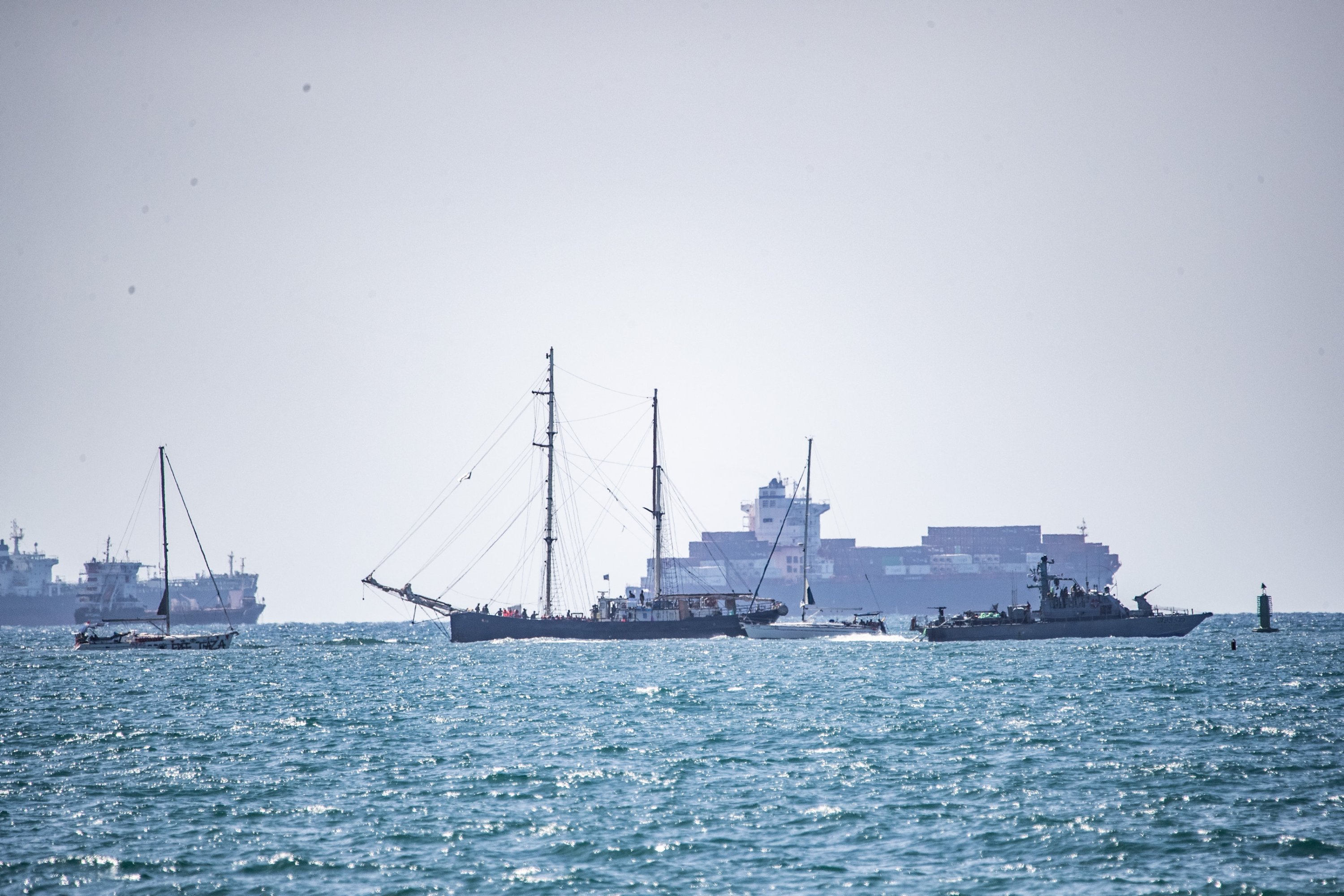
Israeli forces early Thursday intercepted all ships of the Gaza-bound Global Sumud Flotilla, seizing the vessels and detaining activists. Organizers said communication was cut off, sparking protests across Türkiye and fueling calls for accountability and broader international action in support of Gaza.
Durmaz pointed out the importance of the flotilla and the global support for the activists, saying: “The flotilla was actually a reflection of humanity’s long-standing desire to show willpower and take action against what has been happening in Gaza. People around the world could not accept that international institutions and Western states remained silent in the face of Israel’s oppression and illegality. Many actions were carried out, but a strategy and idea that would yield results were needed. When we created this idea and strategy, we already expected it would receive such support.’’
Durmaz said the mission broke psychological barriers, inspired solidarity and proved that civil will could challenge state and military power.
“We believe today will go down in history, and that from now on, every kind of action, every result-oriented action, larger flotillas and new projects will emerge. The whole world agrees on this point. In the coming days, we will witness massive demonstrations in many countries, starting with Italy and European states. Humanity has now crossed a threshold; it has overcome feelings of despair and hopelessness,” he declared.
According to Durmaz, the activists are expected to be taken to the Port of Ashdod later in the day, where legal teams hope to establish their first contact by evening. One ship, the Mikeno, carrying a Turkish national, reportedly reached Gaza’s territorial waters before being intercepted. It seemed impossible – the psychological and physical blockade perceived as unbreakable – but according to reports, the barrier had in fact been broken.
“We expect Israel, under global pressure, to quickly repatriate our friends,’’ he stressed.
Demonstrations in support of the flotilla have already spread across Türkiye. In Istanbul, hundreds gathered in front of the Israeli and the U.S. Consulates, chanting slogans against Israel’s actions. Protesters first convened at Barbaros Mosque before marching to the consulate building, where speeches were delivered before the crowd dispersed peacefully. Another group gathered at the U.S. Consulate, condemning what they described as Israel’s “genocide in Gaza.”
Beyond Istanbul, protests spread to other provinces. In Diyarbakır, Elazığ and Mardin, crowds gathered waving Palestinian flags and chanting slogans, condemning Israel’s violations.
The attack on Sumud is yet another episode in a long history of maritime assaults on activists seeking to break Israel’s illegal blockade.
Since 2009, Israel has illegally intercepted and attacked all flotillas attempting to break its 18-year siege on Gaza, which was further tightened in March when Israel closed border crossings and blocked food and medicine deliveries, pushing the enclave into famine and starvation.
Israel’s attacks on humanitarian sea missions aiming to reach Gaza go back more than a decade, with at least eight previous flotillas intercepted or attacked.
On June 29, 2009, the Israeli navy intercepted the Spirit of Humanity, a vessel operated by the Free Gaza Movement, some 20 nautical miles off the Gaza coast.
The boat, which departed from Larnaca in the Greek Cypriot administration, was carrying humanitarian aid and medical supplies, with 21 passengers onboard.
Surrounded by Israeli gunboats, which threatened to open fire, it was seized and escorted to Ashdod, where all the passengers were detained.
One of the most high-profile Israeli attacks on humanitarian attempts to break the blockade came on May 31, 2010, when Israeli forces stormed the Turkish ship Mavi Marmara as it was sailing in international waters toward Gaza.
The raid resulted in the deaths of 10 activists and injuries to more than 50 people. The vessel was part of a larger flotilla of eight ships carrying about 750 people from 37 countries and 10,000 tons of aid.
Severely straining Türkiye-Israeli relations, the attack prompted Ankara to demand an official apology, compensation and an end to the blockade.
In November 2011, Israeli naval forces intercepted two vessels, the Canadian Tahrir and Irish MV Saoirse, in international waters about 50 nautical miles from Gaza.
Sailing under the “Freedom Waves to Gaza” banner, the boats carried activists seeking to break the blockade.
All the passengers were detained and later deported.
In June 2015, the Swedish vessel Marianne was intercepted by Israeli forces around 100 nautical miles from Gaza.
The vessel was part of the Freedom Flotilla III, which carried 48 rights activists and journalists.
Most of the participants were detained in Israel’s Givon Prison before being released.
The Marianne was taken to the Port of Ashdod, while the other three ships in the group were turned back.
In summer 2018, two boats, the Al-Awda and the Freedom, tried to protest the blockade. On July 29 and Aug. 3, they were intercepted and seized during another Freedom Flotilla mission.
The ships were stopped in international waters, and activists on board reported being beaten during the seizure.
On May 2, 2025, the Freedom Flotilla Coalition boat Conscience was struck by drones in international waters off Malta while en route to Gaza.
The coalition, which operated the vessel, accused Israel of carrying out the attack. In a statement, the group said: “Israeli ambassadors must be summoned and answer to violations of international law, including the ongoing blockade and the bombing of our civilian vessel in international waters.”
The Maltese government said 16 people – 12 crew members and four civilians – were onboard.
The Madleen, an 18-meter vessel part of a mission organized by the Freedom Flotilla Coalition (FFC), was intercepted by Israeli naval forces in international waters on June 9, 2025.
Less than 100 nautical miles from Gaza, all 12 people on board-including 11 international activists and a journalist-were detained, and the boat was towed to Israel’s Port of Ashdod.
The Madleen was carrying several hundred kilograms of flour, rice, baby formula, and medical and sanitary essentials for the Palestinians in the blockaded Gaza Strip.
On July 26, Israeli naval forces intercepted the Handala aid ship as it neared Gaza’s shores.
It detained all 21 activists on board and escorted the ship to Ashdod.
The vessel had reached about 70 nautical miles from Gaza, surpassing the distance covered by the Madleen, which made it 110 miles before it was stopped.
Legal scholar Sergey Vasiliev said Israel’s attacks on aid flotillas are unlawful and violate international law.
“Israel’s interception of the Sumud flotilla on the high seas and/or within Palestine’s territorial waters off the coast of Gaza violates international law,” Vasiliev, a professor of international law at the Open University in the Netherlands, told Anadolu Agency (AA) on Thursday.
Vasiliev also said the long-term belligerent naval blockade of Gaza is unlawful.
“This blockade serves no purpose other than to starve the civilian population and deprive it of objects indispensable for survival, in violation of the Geneva Conventions Article 54 of Additional Protocol I and customary international law,” he said, adding that it causes disproportionate harm to civilians in Gaza.
The current Global Sumud Flotilla, like its predecessors, poses no threat to Israel, he said.
“It is a purely civilian initiative with no intention or capacity to engage Israeli forces militarily; its sole purpose is to deliver humanitarian aid. The delivery of relief may not lawfully be prevented by a naval blockade.”
He argued that interception of vessels and the arbitrary denial of passage, coupled with harassment, detention or abduction of activists on board, are incompatible with Israel’s obligations under international humanitarian law to facilitate humanitarian assistance and the applicable regulations on naval blockades.
“The interception of foreign-flagged ships carrying humanitarian aid in this context constitutes interference with the flag states’ sovereignty and amounts to an unlawful use of force against them. The relevant flag states may seek to enforce their rights under international law,” said Vasiliev.