Physical Address
Indirizzo: Via Mario Greco 60, Buttigliera Alta, 10090, Torino, Italy
Physical Address
Indirizzo: Via Mario Greco 60, Buttigliera Alta, 10090, Torino, Italy

There are cities that seduce artists not through intellect but through temperature. Miami is one of them. It is a city that glows rather than shines, where light doesn’t simply illuminate but persuades – persuades the eye to see more, the heart to feel more and the body to slow down just enough for the soul to catch up.
As I walk through Wynwood, through those infinite walls covered in art that sweats under the sun, I can’t help thinking: what does heat do to creativity? Why do so many artists seek the tropics, the Mediterranean, the Aegean – the places where air is heavy with salt and color? Perhaps because heat, unlike cold, dissolves the border between thought and feeling. It makes art less cerebral, more alive.
The relationship between climate and art is as old as civilization itself. The earliest pigments were mixed under the sun–ochres, reds and charcoals that came alive in the flickering heat of firelight. Even back then, humanity learned that color and warmth are kin. When the world cooled, imagination contracted. When it warmed, art bloomed.
The Northern Hemisphere, with its clouds and restraint, gave us introspection – the grays of Turner, the quiet anguish of Munch, the careful geometries of Mondrian. But the South – ah, the South – it gave us freedom. Matisse’s blazing reds, Gauguin’s feverish Tahiti, Picasso’s Andalusian light, Frida Kahlo’s volcanic palette, the cobalt of the Aegean and the coral of Miami – all emerged from climates that refused moderation.
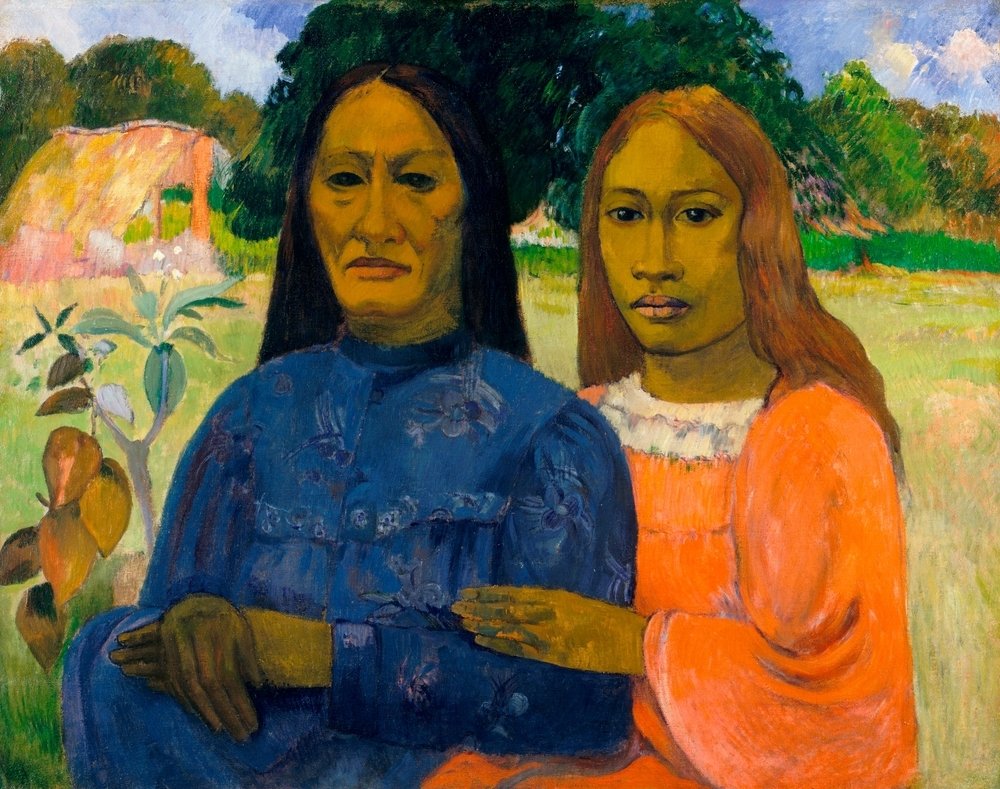
Heat is not simply physical. It is psychological. To paint in heat is to surrender control. Colors run faster. Oil dries too soon. The artist has to make peace with imperfection. Maybe that’s why warm places produce bolder art – because the act itself becomes an improvisation, a dance with evaporation.
Miami is such a dance. Its air has weight, its light has texture. The city itself feels painted – pastel facades melting into turquoise water, neon nights vibrating under palms. Even contemporary art here absorbs humidity: metallic sculptures corrode into beauty, murals fade into new tones with the rain. Time itself is softer in Miami. Art ages differently. Nothing stays frozen, literally or metaphorically.
And yet, it is not only Miami. Around the world, artists have always migrated toward warmth. Gauguin fled Parisian gloom for Tahiti’s sun, Matisse left northern France for Nice, Van Gogh sought Arles to “feel the yellow heat of life.” Each discovered that color in a hot climate is not an aesthetic choice; it is a physiological event. Sunlight alters perception. Shadows disappear. Everything vibrates.
In warm air, emotion expands. The mind loosens its grip. Even the brushstroke breathes differently. Perhaps that is why, when you think of “passion” in painting, you imagine the South: Italy, Spain, Greece, Mexico, Brazil, Türkiye. Coasts where salt and light merge, where people live outside and life itself feels less divided from nature.
Geography, in this sense, is not merely where we are; it is what we become. Artists don’t just travel; they transform. They carry the weather inside them. The humidity of a place influences its color choices, rhythm and silence. When you look at a Matisse, you can feel the sea breeze of Nice. When you gaze upon a Frida, you sense the dry, fierce light of Coyoacan. When you stand before a painting born in Bodrum, you can taste the Aegean wind.
In Türkiye, the migration toward Bodrum is our own version of that southern pilgrimage. Artists leave the gray pulse of Istanbul not just for beauty but for clarity. The light there has discipline; it strips everything unnecessary. The blues are clean, the whites almost spiritual. It’s as if the Aegean light edits your mind while you paint. Every thought becomes more straightforward, more accurate. The body slows, the ego melts. That is when art starts speaking honestly again.
I believe geography has always been destiny for artists, not in a fatalistic way, but in the sense that where you stand changes what you see. A mountain teaches patience; a sea teaches flow; a desert teaches silence. The earth is not passive; it is a teacher. And climate is its language.
Artists learn to listen to that language. The thick, tropical light of Miami speaks in rhythm and pulse – you can see it in the music of Basquiat’s lines, in the flamboyance of Latin American painters who use pinks and yellows that would be unthinkable in northern latitudes. The misty air of Northern Europe speaks in introspection and shadow. Both have their truth. But the South whispers of joy, of surrender, of unapologetic color.
There is a certain courage in painting under the sun. The brightness leaves no room for hiding. Every mistake glows. Every hesitation is visible. In that exposure lies a peculiar honesty, the same honesty you find in people who live under constant light. Miami’s warmth teaches transparency. The city wears its chaos proudly, its contradictions flamboyantly. Artists respond to that. The heat here is not a backdrop; it’s a collaborator.
As I walked through Perez Art Museum, watching the reflections of Biscayne Bay tremble across glass walls, I thought of how the sea itself participates in the art. Light bounces, dances and distorts. Nothing is static. And maybe that is what this city teaches most: that art, like heat, must move. It cannot stay still, cannot freeze into perfection.
In Miami, art is not curated serenity; it is organized chaos – murals sweating, sculptures oxidizing, colors fighting humidity. Yet within that decay, there is beauty. Because life in hot climates teaches impermanence. Everything blooms and fades fast, but what remains is intensity.
Perhaps this is the true meaning of “climate as destiny.” The artist does not choose it; the artist absorbs it. Each latitude writes a different kind of truth. In the North, truth is analysis; in the South, it is emotion. The colder the air, the more the mind dominates; the warmer, the more the heart rules.
That is why, throughout history, creativity has followed the sun. Ancient civilizations rose near the equator – Egypt, Mesopotamia, Greece – where light defined proportion, myth and ritual. Later, the Renaissance blossomed in Florence and Venice, not in foggy London. The Impressionists sought the Riviera. Even the American modernists found their muse in the desert, from Georgia O’Keeffe’s New Mexico to Donald Judd’s Marfa.
And now, in our own era, the migration continues: Berlin artists winter in Lisbon; New Yorkers relocate to Miami; Istanbul’s painters retreat to Bodrum. Climate is no longer only a backdrop; it’s a creative ecosystem. Global warming may threaten the planet, but warmth still fuels imagination.
When I paint or build installations for “I Declare Peace,” I realize how much temperature shapes mood. Peace, to me, is not cold white; it is luminous gold, gentle blue – it has a thermal quality. It expands when it’s warm. Just like empathy, just like love. I sometimes think peace itself has a climate: it needs light to grow.
Miami reminds me of that. It is a city where heat and art are inseparable – not because galleries need sunshine but because ideas here sweat. The energy, the rhythm, the proximity to the sea; all dissolve the stiffness of modernity. You cannot stay detached in Miami; the air insists on intimacy.
If coasts are mirrors of humanity, then Miami is the mirror that smiles back – radiant, unpredictable, alive. Here, art doesn’t whisper from the walls; it shouts from the streets, dances on buildings, breathes salt. The geography itself has character. And that character seduces even the most cerebral artist into feeling again.
I have often thought: perhaps the truest studio is not a room but a climate.
A place that matches your internal temperature.
Where the light outside speaks the same language as the light within.
That’s what heat does. It doesn’t just surround you; it invites you in.
It makes art less about mastery and more about surrender.
And in that surrender lies truth; the kind that no theory, no manifesto, no technique can replace.
Geography, then, is not a map. It’s a mirror.
And for the artist, it always shows not where you are, but who you are becoming.