Physical Address
Indirizzo: Via Mario Greco 60, Buttigliera Alta, 10090, Torino, Italy
Physical Address
Indirizzo: Via Mario Greco 60, Buttigliera Alta, 10090, Torino, Italy
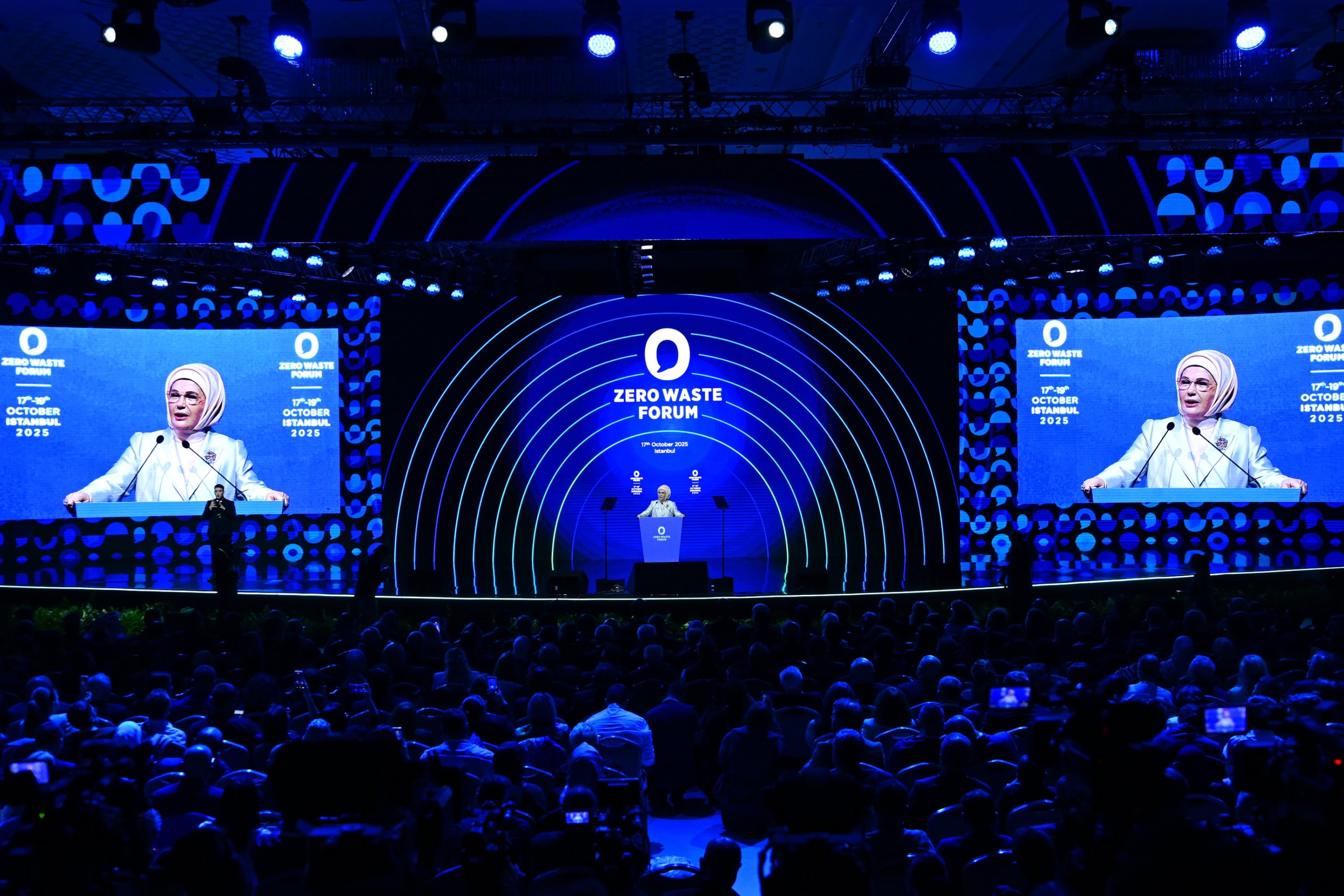
Global leaders, ministers and U.N. officials gathered in Istanbul on Friday for the International Zero Waste Forum, which will continue for three days, focusing on advancing sustainable waste management and promoting the Zero Waste Movement as a shared global mission.
Held in cooperation with the Zero Waste Foundation, Türkiye’s environment and agriculture ministries, and key U.N. agencies, the forum’s opening session brought together influential voices highlighting Türkiye’s leadership, international cooperation and the growing urgency of sustainable urban development.
As honorary president of the Zero Waste Foundation, first lady Emine Erdoğan delivered the keynote address, describing the event as “a historic gathering for the future of humanity.” She said it was a great honor to host the first International Zero Waste Forum in Istanbul, as she called the city “the meeting point of civilizations and the birthplace of universal environmental awareness.”
Erdoğan emphasized that the real transformation humanity must undergo is not in the world itself, but in people’s habits. She criticized excessive consumerism and what she called “a culture of artificial happiness,” pointing out that modern life has replaced meaningful values with wasteful consumption. Quoting surveys showing that “85% of people buy more than they need,” she questioned the hidden costs of production, from the water used to make a pair of jeans to the plastic waste contaminating oceans.
She questioned the real cost of consumer goods, asking: “If we knew that producing a single pair of jeans consumes 3,781 liters of water, would we still call it a bargain? If we knew that electronic waste poisons our soil and water, would we rush to buy the newest phone every year?”
Calling for a cultural and moral shift, Erdoğan said the world must “revive the wisdom of the past,” noting that “zero waste is not a new concept.” She described how traditional Anatolian households once reused and repaired instead of discarding. “In Anatolia, ‘throwing away’ was an unfamiliar concept. What we now call upcycling used to be a way of life, repairing broken items, repurposing materials, passing children’s clothes from one sibling to another.”
Turning to Türkiye’s progress, Erdoğan highlighted that the Zero Waste Movement, launched in 2017, had already yielded significant results. “Our national recycling rate has risen from 13% to 36%. We have recovered 74.5 million tons of waste and contributed TL 256 billion ($6.1 billion) to our economy,” she said, noting also the recovery of “285,000 tons of marine litter.”
She recalled that the United Nations General Assembly adopted Türkiye’s resolution on zero waste with the co-sponsorship of 105 countries, declaring March 30 as International Zero Waste Day.
Erdoğan announced that the Zero Waste Foundation, established in Türkiye in 2023, now serves as “the center of global zero waste efforts.” Through its Zero Waste Institute, she said, countries exchange innovative policies and success stories. She also mentioned the Global Zero Waste Awards Project, launched in New York earlier this year, to honor pioneering contributions to sustainability.
Speaking about environmental destruction caused by conflict, Erdoğan drew attention to Gaza, describing it as “the most tragic example of ecocide.” She said, “While Israel commits some of the most brutal acts of our time in Gaza, it is also committing ecocide. 97% of trees, 82% of crops, and 95% of grasslands have been wiped out.” She warned that “as long as wars continue, the wounds of nature cannot heal,” stressing that “the environment destroyed in Gaza belongs to all of humanity.”
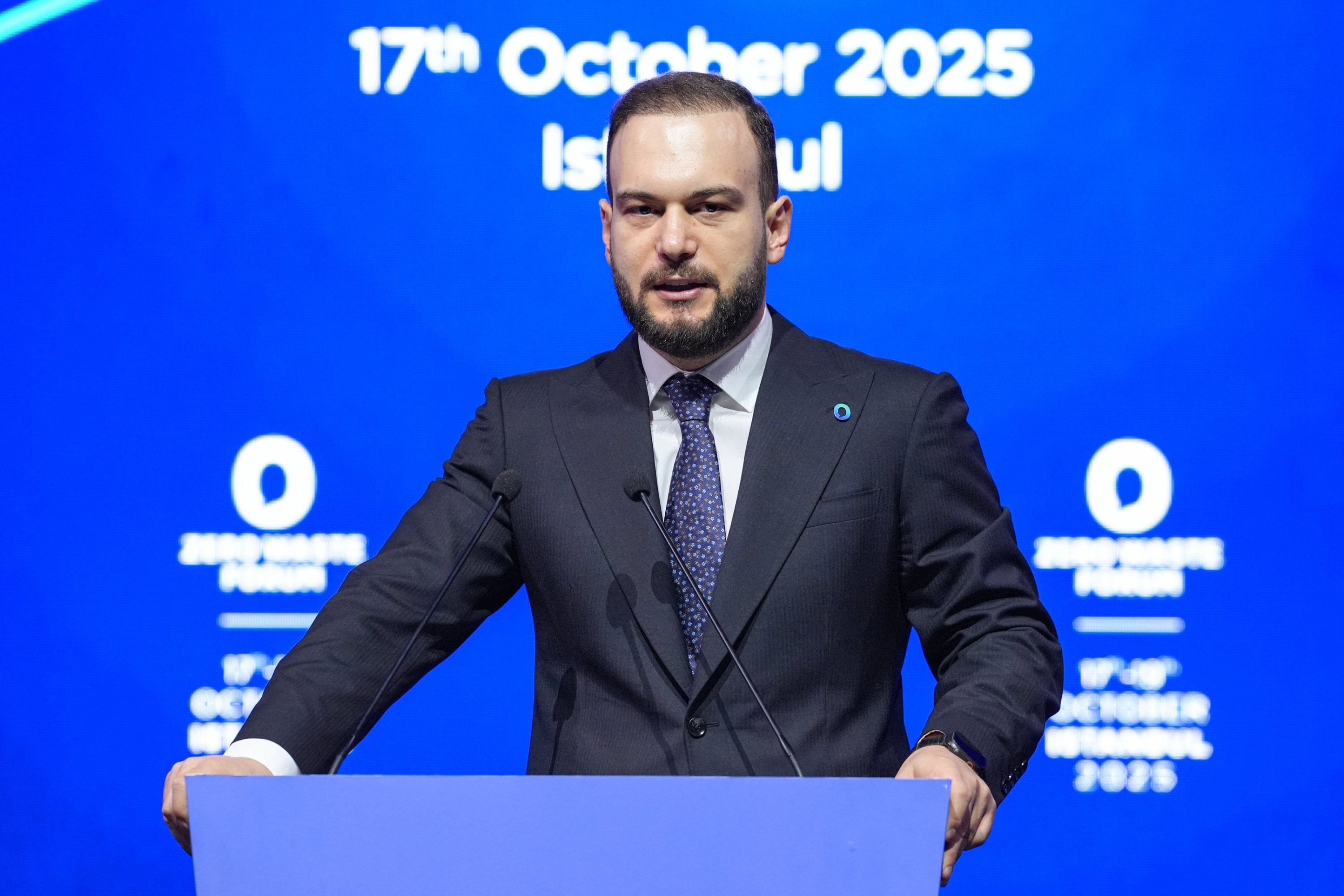
Samed Ağırbaş, president of the Zero Waste Foundation, addressed the forum under the theme “Zero Waste Movement: Human, Space, Transformation.” He highlighted the participation of 108 countries and stressed that the movement goes beyond environmental policy, representing “a philosophy about the essence of life” and the importance of changing mindsets to achieve lasting impact.
He emphasized that zero waste “is not about garbage; it is about redefining value and reconnecting with nature.” He described the forum as a platform for global collaboration, saying, “Every idea emerging from this forum will plant a seed of awareness that will shape the change of the future.”
Ağırbaş introduced the Istanbul Declaration, which will be published at the end of the event. He explained that the declaration aims to bring countries, organizations, and individuals together under a shared commitment to zero waste.
He stressed that the declaration represents not just Türkiye’s vision, but a collective pledge. “This journey is not the effort of a single country, but a shared march of all humanity, bringing together governments, civil society and private actors to turn zero waste from an idea into global practice,” he added.
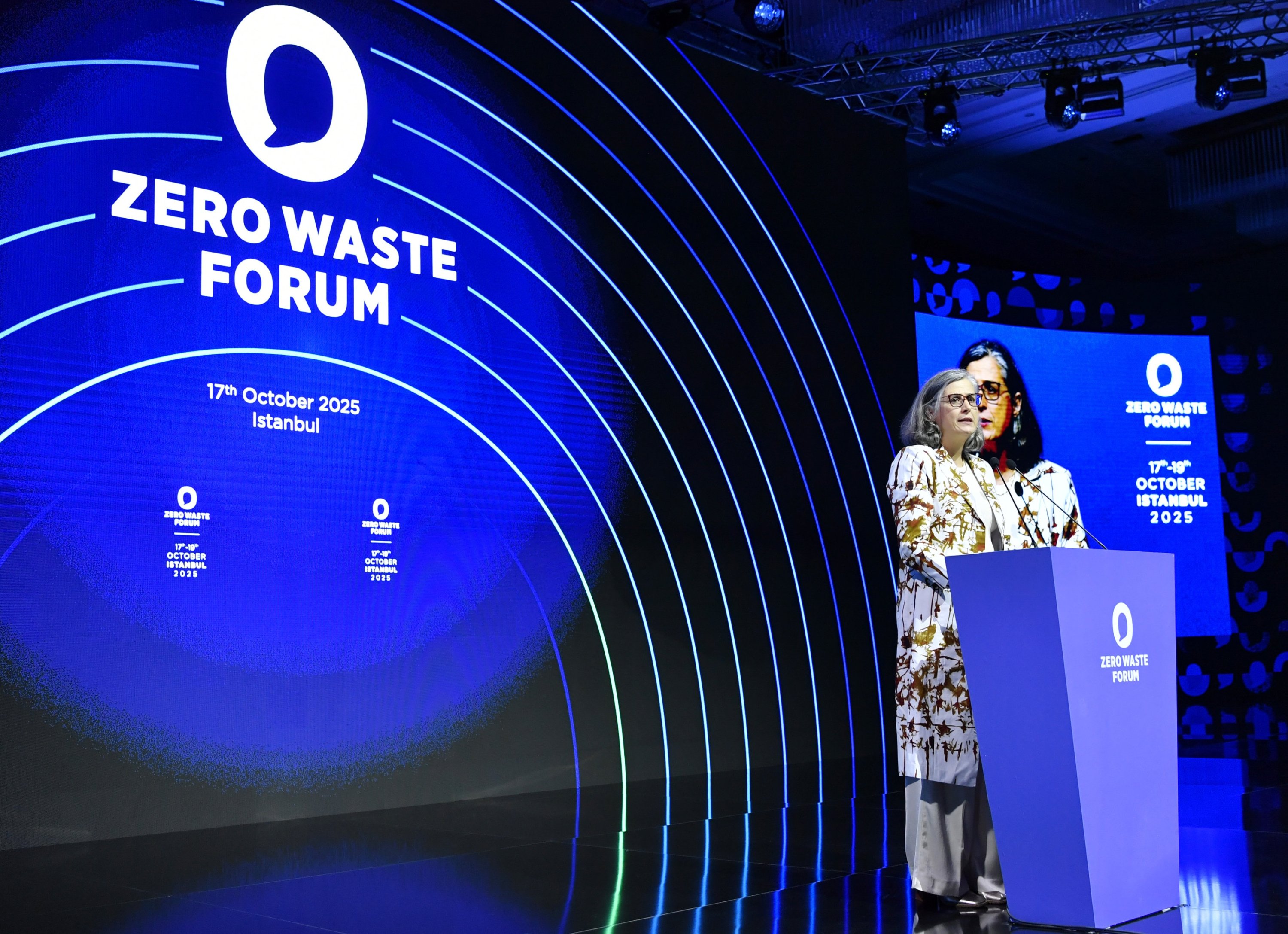
Anaclaudia Rossbach, executive director of UN-Habitat, addressed the opening of the Global Zero Waste Forum, highlighting the transformative potential of zero waste in shaping sustainable and inclusive cities.
Rossbach highlighted the urgent challenges facing cities, noting: “Cities are expanding at unprecedented speed, while resources are under increasing pressure. Municipal solid waste is rising exponentially. Textile and fashion waste, single-use products, and plastic pollution are inflicting heavy environmental, social, and economic costs.”
“Zero waste is not merely a technical concept. It is a transformative vision, one that integrates urban governance, sustainable production and inclusive economies,” she explained. She tied this vision to global agendas.
“It directly advances the New Urban Agenda and the Sustainable Development Goals, especially Goal 11 on sustainable cities and communities,” Rossbach said on the forum.
Rossbach also announced a key development: “I am delighted to share that UN-Habitat is establishing a regional office in Istanbul. This office will focus on zero waste solutions and the circular economy, strengthening collaboration across Eastern Europe and Central Asia, and accelerating partnerships with governments, cities, civil society and the private sector.”
The three-day event will continue with panels, workshops and sessions aimed at sharing best practices, fostering international collaboration and advancing circular economy initiatives.