Physical Address
Indirizzo: Via Mario Greco 60, Buttigliera Alta, 10090, Torino, Italy
Physical Address
Indirizzo: Via Mario Greco 60, Buttigliera Alta, 10090, Torino, Italy

Rare earth elements (REEs) are vital to production in sectors such as clean energy, defense and automobiles. These days, they are at the center of tensions between the world’s two largest economies, the U.S. and China.
Although the relations between Washington and Beijing evolved quite positively in the face of tariffs brought in by U.S. President Donald Trump, with several rounds of trade talks they held earlier this year, the tensions flared up again earlier this month as China expanded its export controls on rare earths. Previously, in April and May, Beijing squeezed global automakers with export curbs on a range of rare earth items and related magnets.
Subsequently, Trump has this month threatened to slap China with a 100% levy due to its latest move, and concerns over the global supply of REEs remain.
China accounts for 90% of the world’s refining capacity for rare earths and is also known to have the world’s largest reserves, thus in a way being in a position to have a monopoly in the sector.
In a note on Monday flagging risks of supply disruptions, Goldman Sachs noted China also controls 69% of global rare earth mining, and 98% of magnet manufacturing.
While rare earths are common in the Earth’s crust, China has mastered the technically difficult process comparatively cheaply.
With names like dysprosium, neodymium and cerium, rare earths are a group of 17 heavy metals that are abundant throughout the Earth’s crust, contrary to their name. Apart from China, countries like Brazil, Australia, India, Vietnam, Russia and the U.S. are on top of the list of nations with the highest reserves, according to the U.S. Geological Survey.
But because REEs are found in low concentrations with mixtures of multiple elements in the same deposit, mining and processing are considered as challenging processes, and over the years, countries like the U.S., South Africa, and other producers have ceded production to China, says a 2021 report by Milken Institute Review.
However, the decision of authorities in Beijing to harden the stance on exports of these elements, which are seen as critical to technological and economic advancement, has brought together rethinking over the Atlantic and in Europe on how to move away from being dependent on China.
Notably, this Monday, in a move aimed at stabilizing global supplies due to concerns originating from China’s curbs, Trump and Australian Prime Minister Anthony Albanese signed a major agreement on rare earths and critical minerals.
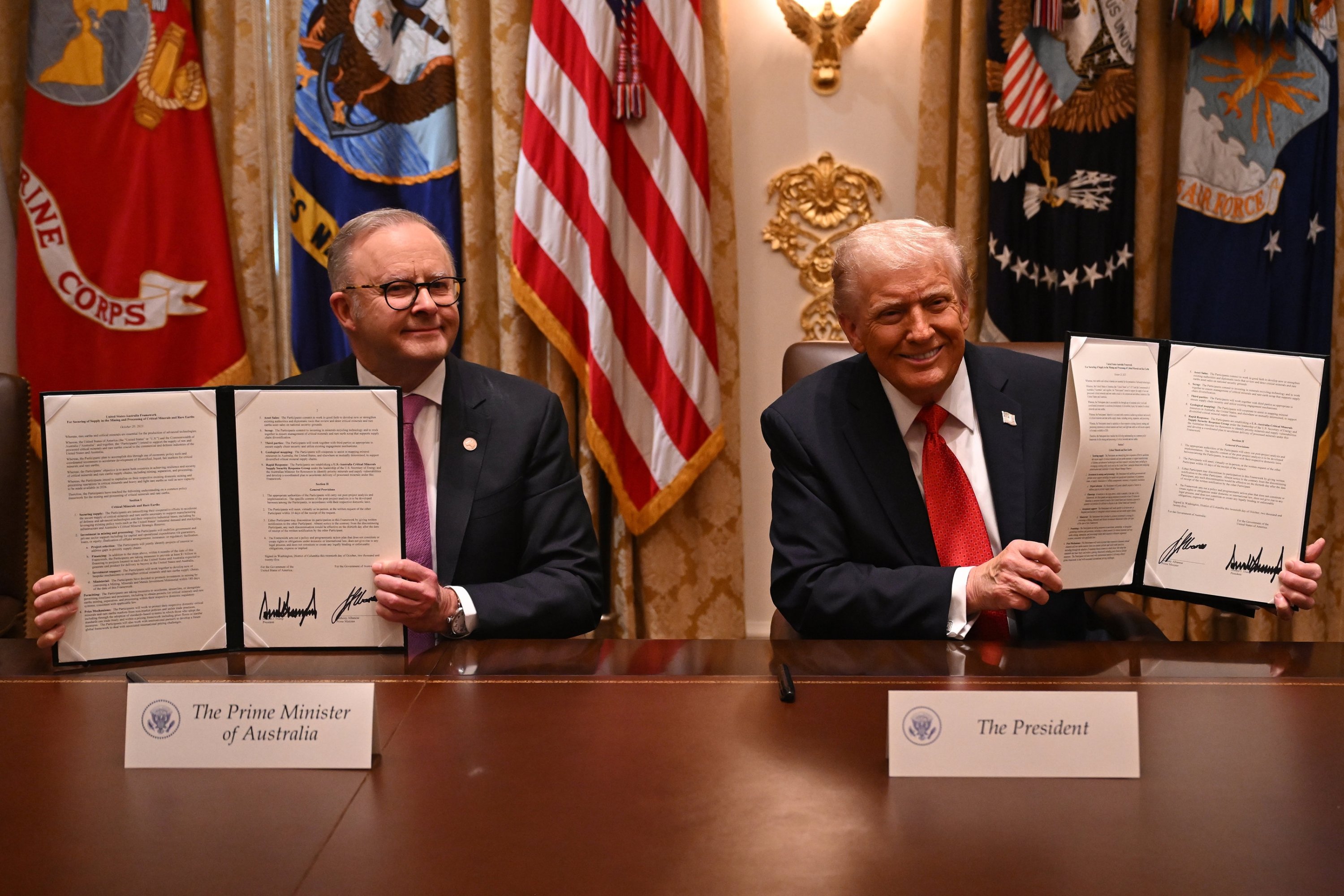
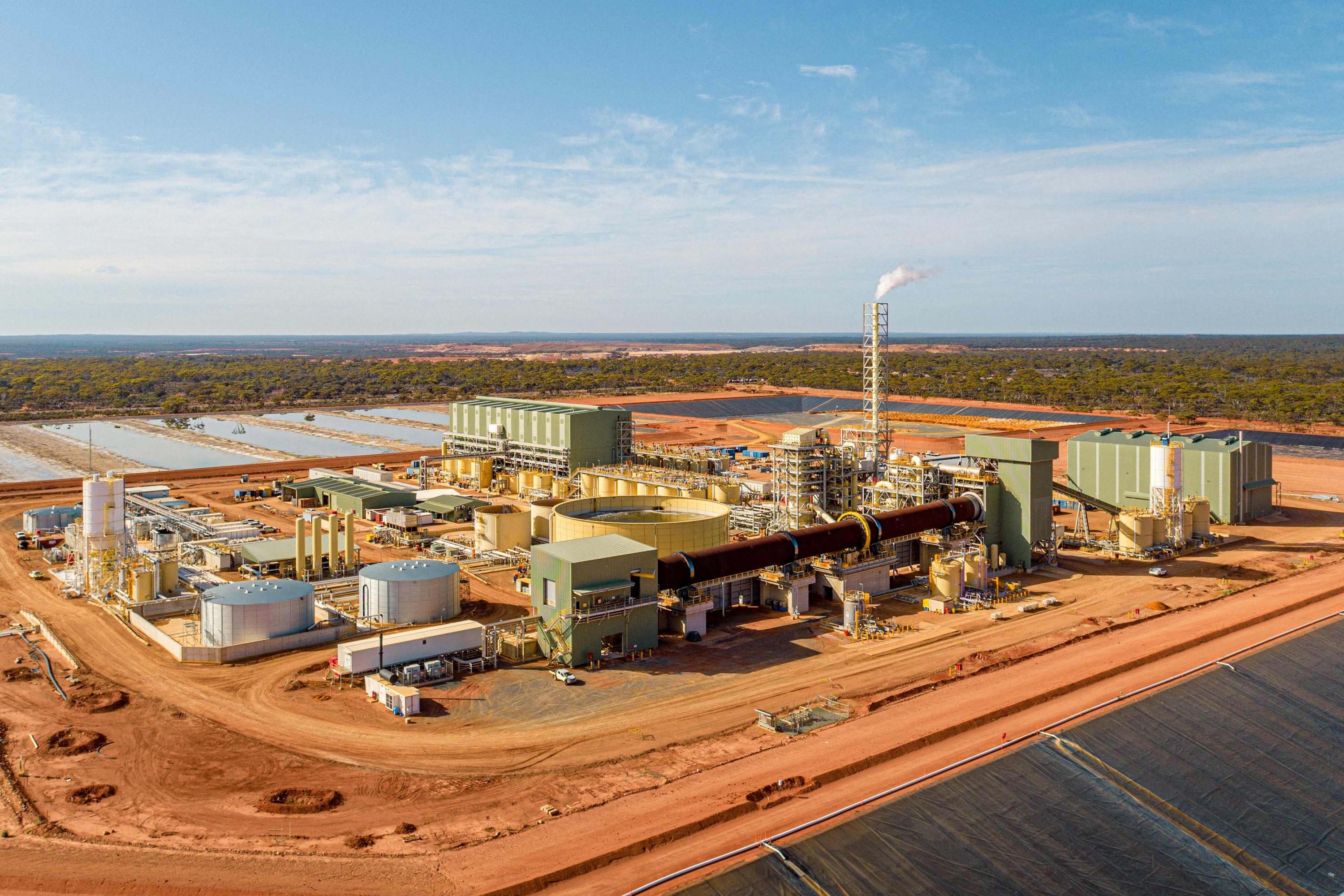
Trump and Albanese met at the White House for their first summit and Trump said the deal was negotiated over the past four or five months ahead of the announcement. Albanese said it’s an $8.5 billion pipeline “that we have ready to go.”
While Trump’s backing of Australia’s critical minerals will bring much-needed financial support to the industry, experts still say the U.S. president will have to wait longer to shift the supply chain away from China and weaken its market dominance. Moreover, some are skeptical over the prices, and some analysts consider that China has an upper hand in trade talks with the U.S. due to the fact that it holds these strategic reserves.
Benchmark prices in China for the most popular type of processed rare earths, NdPr oxide, rallied by 40% to $88 a kilogram in August, after several years of weakness. They have since tailed back to $71, but Western world developers are calling for governments to support a higher floor price that will enable them to build production.
At the same time, attention over rare elements resurfaced in Türkiye as well over the past month.
Back in 2022, the Turkish government announced it had discovered a vast reserve in the central Eskişehir province, which it said contains rare earth elements.
Last week, President Recep Tayyip Erdoğan said that at Eskişehir’s Beylikova site, a total of 694 million tons of resources, primarily rare earth elements, barite and fluorite, have been identified.
“The Beylikova field, which contains 10 of the 17 rare earth elements, contains about 12.5 million tons of rare earth oxides. We aim to become one of the world’s top five rare earth element producers,” he said following a Cabinet meeting.
The media reports, meanwhile, have earlier indicated that Ankara might cooperate with Washington in this area, which could bring two NATO allies closer together amid a positive momentum in ties.
“Ankara and Washington are exploring a potential partnership to develop a large reserve of rare-earth deposits recently discovered in Beylikova, near Eskişehir in central Anatolia,” a Bloomberg report said early in October, citing people familiar with the matter.
Türkiye reportedly plans on building a refinery in Beylikova, which contains ore with more than 1% rare-earth oxide by weight, enough to make extraction commercially viable, according to initial tests, the people who asked to remain private, said.
The country is also said to be holding talks with Canada and Switzerland on potential cooperation, including on feasibility studies needed to advance the project, they said.
Erdoğan last week affirmed that they continued their efforts related to rare earths.
“Initially, we commissioned the Eti Maden Pilot Production Facility, which will process 1,200 tons of ore annually. We are continuing our work, including purification technology, to transform the pilot plant into an industrial facility,” he added.
Countries and companies with rare earth element technology are “unfortunately” hesitant to share their experience in production processes in this area, he also said, adding that overcoming this hurdle and rapidly integrating existing fields into the economy requires international collaboration.
“Türkiye is also talking with expert organizations of countries with technological expertise to develop collaborations,” he maintained.
The reports on potential cooperation with the U.S. in this field came following Erdoğan’s visit to the U.S. and a White House meeting with Trump last month.
However, it also spurred debate, and media and opposition claims that “Beylikova field will be transferred to the United States,” which the Communications Directorate’s Center for Combating Disinformation (DMM) refuted as “completely unfounded.”
“The Beylikova Rare Earth Elements field is one of the most strategic discoveries in Türkiye’s mining history, and the work in this area is being conducted with domestic and national resources. The pilot facility established by Eti Maden is operational; preparations for industrial production are also continuing in line with our country’s full sovereignty and national interests,” the center said in a post on X earlier this month.
“Claims to the contrary are manipulative and guiding attempts targeting Türkiye’s strategic mining policies,” it added, urging the public to take into account official statements.
According to experts, Türkiye has the potential to meet its ambitions in rare earths through international cooperation, developing human capital and exploring the work in the value chain from raw materials to finished products.
Given the current geopolitical tides, any advancement in this sector would stand to benefit Türkiye not only economically but would position it among the top players as the West seeks to curb China’s dominance.