Physical Address
Indirizzo: Via Mario Greco 60, Buttigliera Alta, 10090, Torino, Italy
Physical Address
Indirizzo: Via Mario Greco 60, Buttigliera Alta, 10090, Torino, Italy

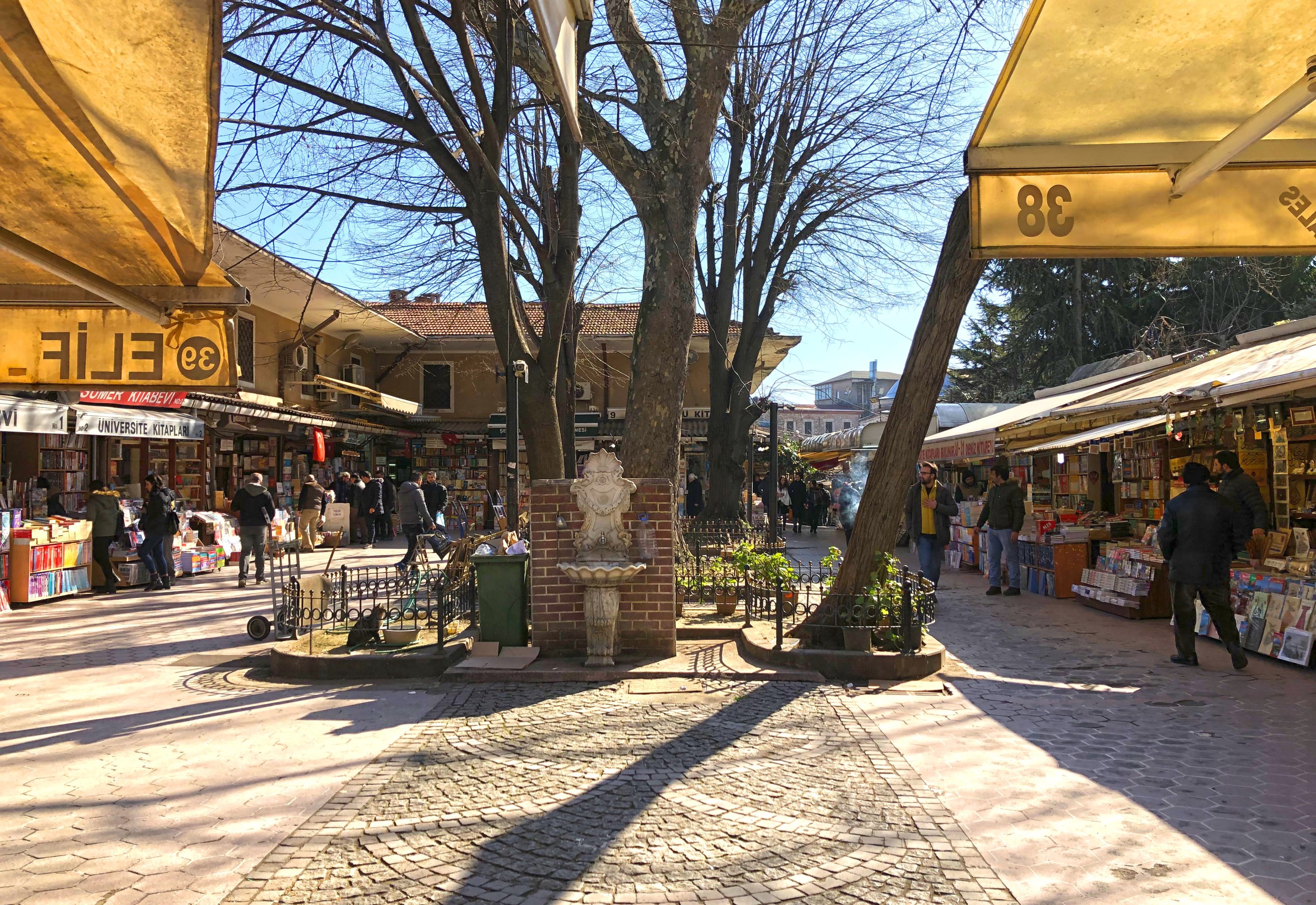
Istanbul’s Fatih Municipality has undertaken a highly significant initiative aimed at reviving Türkiye’s cultural memory. The book “Memory and Heritage: The Literary Stops of Fatih,” prepared by Turgay Anar, offers a vivid testimony to the literary and cultural dynamism of the late Ottoman and early Republican periods through the places and the intellectual figures who gathered around them.
In this work, we witness not only the bewilderment, anxiety, and concern experienced by the Ottoman Empire as it lost ground against an increasingly powerful Europe, but also the efforts of writers, politicians, statesmen and intellectuals to find a way out of this predicament. Everyone was seeking remedies, debating, writing, and publishing journals and newspapers to bring their discussions into the public sphere in the hope of restoring the empire’s former strength. It was a period of great hardship. The Ottoman Empire was unable to hold its ground against Europe. From politicians to writers, from booksellers to intellectuals, all segments of society spent their lives bearing this heavy burden and searching for a path forward – and in doing so, they bequeathed to us a legacy of immense significance.
Considering the conditions of the period, it becomes clear that the main venues for gathering and socializing were coffeehouses (kıraathane), bookstores, second-hand bookshops (sahaflar), publishing houses and mansions. While each place had its own circle of regulars, some intellectuals were known to frequent multiple venues. Thus, in a typical social network structure, all these circles were aware of one another, encountering new ideas through newly published articles, books, and works, and expanding these ideas through debates shaped by the distinct perspectives of each circle – thereby opening new horizons. In other words, the civic sphere of the era possessed a remarkably dynamic structure. Naturally, the ideas refined through long discussions in various circles gradually found opportunities for practical application, thereby reinforcing the Ottoman Empire’s resistance against Europe. In short, through this book, we bear witness to the existence of a vibrant and dynamic civic sphere during that period. Moreover, we can indirectly observe how this robust civic sphere supported and enriched the substance of political thought.
All the literary figures of the period found their place in a “mahfil” – a circle or venue that gathered around a specific place. In the book, we see that figures ranging from Ahmet Rasim to Halide Edip and Muallim Naci, from Mehmet Akif Ersoy to Süheyl Ünver and Necip Fazıl, from Ahmet Mithat Efendi to Nazım Hikmet and Neyzen Tevfik, from Fuat Köprülü to Hasan Ali Yücel and Prens Sabahattin, from Yusuf Akçura to Namık Kemal and Ziya Gökalp, from Reşat Ekrem Koçu to Abdülbaki Gölpınarlı, and from Yahya Kemal to Ahmet Hamdi Tanpınar, Erol Güngör, Sezai Karakoç, and Mehmet Genç were all regulars of one or more such places. These coffeehouses, second-hand bookshops, bookstores and publishing houses were the spaces where the cultural figures shaping the civic sphere wove their webs of ideas. They were not merely places to pass through, but rather spaces where people lingered, spent long hours, and returned repeatedly – centers of conversation and intellectual exchange. Fatih Mayor Mehmet Ergün Turan also highlights this tradition of conversation in his foreword:
“Since the Ottoman era, Istanbul’s historic peninsula – particularly the district of Fatih – has been a center of literature and the art of words. The popular venues of those times, serving as literary circles, preserved a tradition of conversation passed down from generation to generation. Thanks to these places, many esteemed poets and writers who shaped the classics of our literature have emerged.”
Throughout the book, when we look at those who frequented these venues, we see that they were not visited solely by literary figures. They also served as meeting points for a wide range of people – from university students and academics to public officials, politicians, tradesmen, merchants, and even foreigners. In fact, nearly every segment of society that constituted the social fabric of the time continued its education, in a broader sense, within these spaces. Here, people not only engaged with culture and the arts but also followed discussions about the pressing issues of the country. These venues hosted musical performances, theatrical plays, and – especially during Ramadan evenings – Karagöz and Hacivat shadow shows. At the same time, they functioned as distribution centers for the period’s journals and newspapers. For this reason, these places were more than mere gathering spots – they were living centers, informal academies and special spaces where the pulse of the civic sphere could be felt. The enduring appeal of these venues was constantly renewed, as writers frequently referred to them in their novels and often set their plots and characters within these very spaces.
In this context, the second-hand bookshops also functioned as a kind of academy. As the author emphasizes, for a long period these shops served as powerful centers of culture and literature: “Although it has lost its original function today, in the Sahaflar Çarşısı (Second-hand Booksellers’ Market in Beyazıt), while books were being bought and sold, the cultural, artistic, and literary figures who came here also engaged in conversations on various subjects within these shops – each of which was, in its own way, a unique library. … Many places like Hacı Muzaffer Özak’s shop served for years as important centers of reading, writing, and culture, providing invaluable service to their readers.” These sahaflar thus operated not merely as commercial book markets but as living institutions of knowledge – spaces where intellectual exchange, cultural transmission, and literary dialogue flourished side by side with the act of buying and selling books.
It is evident how vital these spaces were for university students and academics. Students continued their personal and intellectual development within these places, which functioned as lifelong learning centers, while academics contributed to public debates, kept abreast of emerging discussions, and continuously evolved through their connections with intellectuals active in the civic sphere. Thus, universities were not detached from social life; on the contrary, they stood at its very center. The same was true for statesmen and notable figures who opened their mansions and homes for such gatherings. For instance, Midhat Pasha’s mansion “had the character of a mahfil, an academy, where various literary and political discussions and conversations were held:” Similarly, the mansion of Ibnülemin Mahmut Kemal Inal served a comparable function: “He took over the mahfil attended by the renowned scholars, poets, musicians, and calligraphers of the period from his father, and continued this tradition until his death.” There existed such vibrant and inclusive network structures, bringing together people from diverse walks of life, that these networks constantly influenced one another – continually expanding, deepening, and enriching both the civic sphere and the cultural production it nurtured.
From the coffeehouse to the second-hand bookshop, from the publishing house to the bookstore and the mansion, what stands out in all these mahfils is the intellectual depth and quality of the people who frequented them. Indeed, even the owners of these coffeehouses were themselves highly cultured and literate individuals. Equally remarkable were the politicians and statesmen who opened their mansions and homes to these gatherings – their personal libraries, knowledge of foreign languages, and profound engagement with culture and the arts were striking. The example of Abidin Pasha Dino, cited in the book, is sufficient to illustrate this: “Well-versed in Arabic, Persian, Albanian, French, and Greek, and a great admirer of literature, the Pasha gained fame with his Translation and Commentary on the Masnavi-i Sharif, which included a translation and an extensive commentary on the first volume of Mevlana’s Masnavi.” Everyone who entered these spaces benefited from them and continued to grow. In other words, not only those who frequented these venues but also their proprietors were cultured individuals surrounded by strong social networks. Within these networks, people developed through mentor-apprentice relationships, making these mahfils powerful academies of the civic sphere.
At this point, I was reminded of my article dated Feb. 6, 2025, titled “Remembering Alev Alatlı,” published in a Turkish newspaper. In that piece, I reflected on how Turkish philosopher Alatlı, beyond her intellectual and literary production, devoted herself to engaging young people in thinking about the country’s problems, how she constantly made time for them, and how she opened her home in this spirit. I explained: “Alatlı was not only deeply committed to her own works but also made every effort to guide and reach out to as many people as she could. As was mentioned in the ‘Restorers’ session at the symposium, she devoted immense time to supporting young people, nurturing with them an unspoken master-apprentice relationship. Since the early 2000s, these young people had come to identify themselves as Restorers, embarking on a long-term effort to understand Alatlı’s works and to produce local, homegrown solutions to Türkiye’s challenges – with Alatlı always by their side throughout this process. As the Restorers themselves expressed, they had become the residents of Alatlı’s household. They would talk, debate, and write for hours. Each of them went on to generate solutions for the country within their own fields. In truth, even before Cappadocia University was founded, a vibrant and productive “Alatlı Academy” already existed. All the speakers at the symposium emphasized how deeply Alatlı believed in them and valued them. The regulars of the Alatlı Academy have made – and continue to make – profound contributions to the development of our country. Thus, Alatlı enriched our nation not only with her books but also with her human works.” Reading this book reminded me how the very qualities I had ascribed to Alatlı were, in fact, embodied by the intellectual circles and venues of the past – how they sustained and enriched the civic sphere, ensured cultural continuity, and played a crucial role in generating solutions to the social problems of their time.
In summary, the disappearance of such spaces and the people who animated them represents not merely a physical loss, but also the loss of the strong, organic ties that once connected academia, intellectuals, statesmen and politicians to society. Most crucially, it marks the weakening of the civic sphere itself. In a sense, if the venue is the honeycomb, its regulars are the bees. These places enable the bees to produce the honey of thought. The honey symbolizes the vitality and dynamism of the civic sphere – and its making involves wide participation. Ultimately, of course, the ones who benefit most from this honey are the politicians and statesmen, for honey is their substance – the intellectual and moral content upon which governance is built. Although the book evokes a certain melancholy as it traces how the closure of each venue – or the death of its key figures – led first to the fading of the place itself and then to the loss of its contributions, it also makes clear that the intense intellectual and cultural activity of that period did not vanish in vain. On the contrary, it bore fruit. It slowed the Ottoman Empire’s decline, created opportunities for repair and renewal, nurtured generations of cultural, political, and intellectual figures, and, ultimately, paved the way for a new beginning that carried this legacy forward into the republic.
The views and opinions expressed in this article are solely those of the author. They do not necessarily reflect the editorial stance, values or position of Daily Sabah. The newspaper provides space for diverse perspectives as part of its commitment to open and informed public discussion.