Physical Address
Indirizzo: Via Mario Greco 60, Buttigliera Alta, 10090, Torino, Italy
Physical Address
Indirizzo: Via Mario Greco 60, Buttigliera Alta, 10090, Torino, Italy
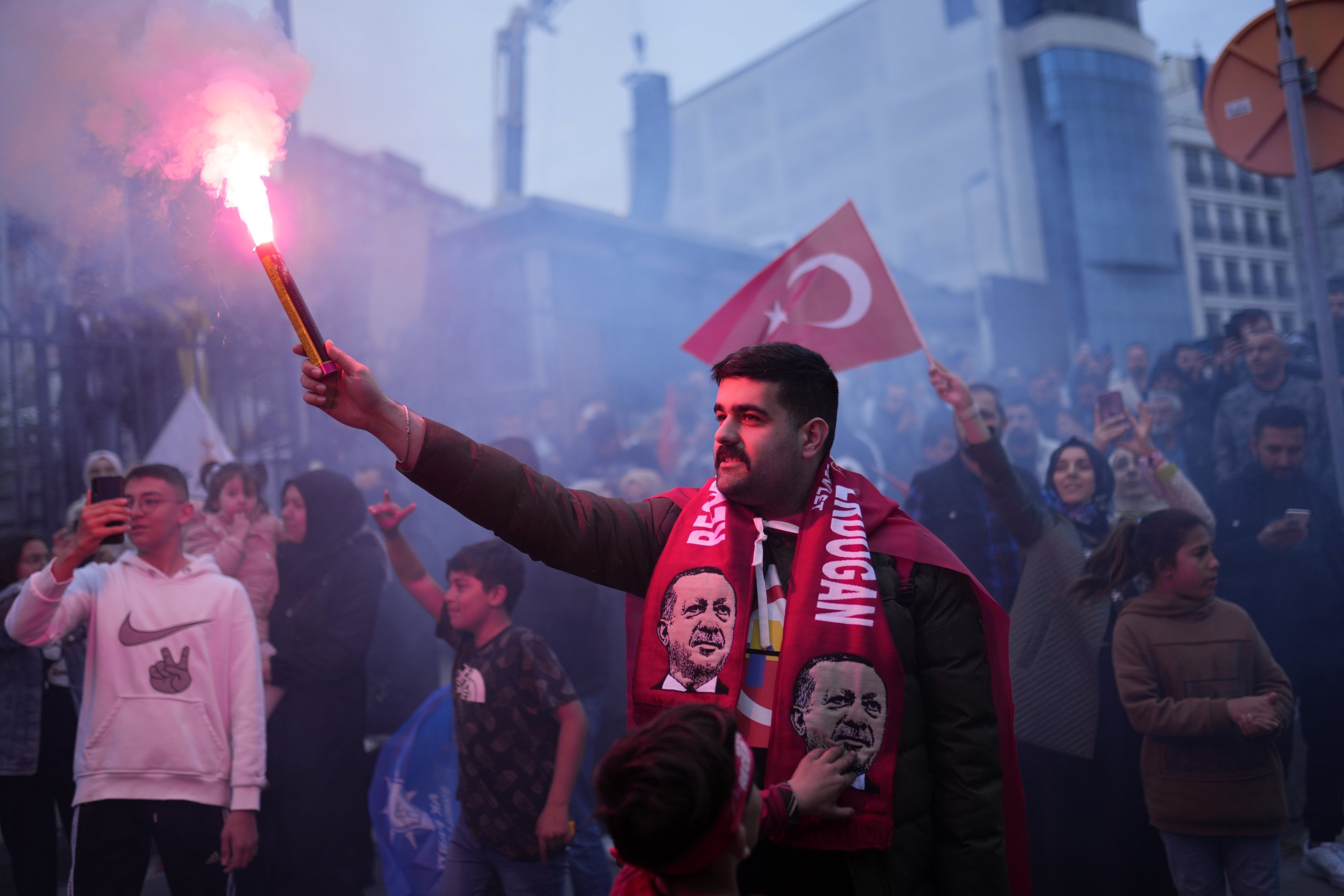
The Justice and Development Party (AK Party) made it into the annals of Türkiye’s democratic history recently as the only party since first genuinely multiparty elections in 1950 to govern uninterruptedly for the longest time.
Monday is the 23rd anniversary of party’s first election victory and a senior party official links the party’s longevity to resistance to multiple challenges with unwavering unity between the party, its leader President Recep Tayyip Erdoğan and the nation.
“He never grabbed his hat and left (in the face of challenges),” the party’s acting chair, Efkan Ala, told Anadolu Agency (AA) on Sunday, drawing a comparison with late Prime Minister and President Süleyman Demirel, who reportedly said this quote in response to imminent collapse of his government decades ago.
Founded in 2001 under the leadership of Erdoğan, the AK Party was a true underdog in Turkish politics back then, a mixture of people with different political views, mostly those who split from the defunct Welfare Party (RP), including Erdoğan.
Erdoğan himself was in a difficult period in his life. He was recently released from prison for reciting a poem during his tenure as Istanbul mayor and had a political ban continuing after his release. Undaunted, the future president started laying the groundwork for his future political party. Apparently encouraged by the massive support he received after the unfair ban, Erdoğan embarked on a tour of Türkiye with fellow-minded veteran politicians and people from all walks of life. This grouping evolved in “Movement of the Virtuous,” which sought to rally people across Anatolia for founding a new political movement. This movement turned into a party in August 2001. The AK Party, which adopted a lightbulb as its symbol, was quick to reach a bright victory in Nov. 3, 2002, general elections.
Campaigning under the slogan “On our own, into power” (“Tek başına, iş başına”), the party won 34.28% of the vote, becoming the leading party and forming the 58th government.
Erdoğan, however, still had a political ban and fellow AK Party member Abdullah Gül, a deputy of Erdoğan, was tasked with founding a government in 2002, the first for the AK Party. Months later, a constitutional amendment by Parliament paved the way for lifting of the political ban, and Erdoğan won a by-election when a fellow AK Party lawmaker dropped out of the race in favor of Erdoğan. Finally on March 14, 2003, Erdoğan took office as prime minister when Gül resigned in favor of his party’s chair.
In the 2004 local elections – its first municipal contest – the AK Party secured 41.7% of the vote, winning 1,950 municipalities, including 11 metropolitan cities. The 2007 general election further strengthened its position, with the party receiving 46.58% of the vote. In the 2009 local polls, it once again came out ahead of all competitors.
The party faced one of its most serious challenges in 2008, when the chief prosecutor filed a closure case on March 14, seeking to ban 71 party members, including President Abdullah Gül and Prime Minister Erdoğan, and dissolve the party. The Constitutional Court accepted the indictment on March 31, but on July 30, it voted against closure, as the required qualified majority was not achieved.
The 2010 constitutional referendum, held on the 30th anniversary of the 1980 coup, brought a “yes” vote of 57.88% to amend the 1982 Constitution. This reform period preceded the 2011 general elections, during which the AK Party achieved a record 49.53% of the vote. In the 2014 local elections, the party maintained its lead with 45.60%, winning 818 municipalities, including 18 metropolitan cities.
On Aug. 10, 2014, Erdoğan was elected Türkiye’s 12th president with 52% of the vote, becoming the first president to be chosen directly by the people. Konya Deputy Ahmet Davutoğlu succeeded him as chair, leading the party through the June 7, 2015, general elections and the Nov. 1 snap elections, in which the AK Party regained its parliamentary majority.
Leadership changed again on May 22, 2016, when Binali Yıldırım was elected chair at the 2nd Extraordinary Congress and formed the 65th government. That year, on July 15, Türkiye faced the deadliest coup attempt in its history, staged by the Gülenist Terrorist Group (FETÖ). President Erdoğan’s call for citizens to take to the streets and airports was decisive in stopping the attempt. The solidarity displayed between the AK Party and the Nationalist Movement Party (MHP) in its aftermath laid the groundwork for the formation of the People’s Alliance.
On April 16, 2017, Türkiye held a constitutional referendum, initiated by an AK Party proposal signed by 316 deputies and submitted to Parliament on Dec. 10, 2016. Following parliamentary approval, President Erdoğan signed the law on Feb. 10, 2017, and voters went to the polls, approving the changes with 51.41% “yes.” The reform removed the rule that presidents must sever ties with their party, opening the way for Erdoğan’s return. On May 2, 2017, after a 979-day absence, Erdoğan rejoined the AK Party and was reelected chair on May 21 with all valid votes.
The first elections under the new presidential system were held on June 24, 2018, following a call for early elections from MHP leader Devlet Bahçeli. On the same day, voters cast ballots for both the presidency and Parliament. Erdoğan was reelected with 52.38% of the vote, and the AK Party secured 42.28% of the vote in parliamentary elections, marking its 13th consecutive national victory.
At the Aug. 18, 2018, 6th Ordinary Congress, Erdoğan was reelected chairperson with all valid votes. The party amended its bylaws to include electoral alliances and to prevent members from simultaneously holding positions on the Central Executive Board (MYK) and in the Cabinet. Continuing its alliance with the MHP in the subsequent local elections, the AK Party won 44.33% of the vote, remaining the leading party.
For the 2023 elections, Erdoğan announced on March 10 that the vote would be moved from June 18 to May 14. In the first round of the presidential election, he received 49.52% of the vote, leading to a May 28 runoff, in which he prevailed with 52.18% of the vote. The AK Party won 35.62% of the parliamentary vote, taking 268 seats and retaining its status as Türkiye’s longest-serving ruling party since 1946.
On Oct. 7, 2023, at the 4th Extraordinary Congress, Erdoğan was reelected chair with all 1,399 valid votes. The Central Decision and Executive Board welcomed 49 new members, while 14 of the 18 Central Executive Board members retained their seats.
In the March 31, 2024, local elections, the AK Party won 35.49% of the vote, gaining 24 provincial and 357 district municipalities. After the results, Erdoğan stated that the party would “carefully weigh the messages from the ballot box with reason and conscience” and initiated a process of cadre renewal, replacing several provincial and district heads.
Ala, a career bureaucrat who held key posts in the AK Party and its governments, including as prime minister’s adviser and later, as interior minister, told AA that the public will in favor of the party contributed to the success story of AK Party.
“In the past 23 years, we had political achievements exemplary for the world and the region,” he said. But one of the most significant achievements, according to Ala, is ending a secret tutelage on the Turkish politics. This “tutelage” was a mix of influence of old-school political, military and bureaucratic elite which resorted to coups and other plots to topple the governments they disliked.
“Centers of tutelage used to define Türkiye’s foreign policies, national security, etc. When the AK Party came to power, the politics saw a shift,” he said.
Ala noted that the AK Party won the elections at a time of uncertainty in Türkiye, five years after a “dark” period imposed by the Feb. 28 coup, amid an economic crisis and deep divisions in Turkish politics where parties past their heyday were striving for support.
“We put Türkiye in a new democracy highway where no one can dare to steer the politics for their own interests,” he said.
“Erdoğan embarked on a democratic struggle and led Türkiye’s stability. He never stepped back. He never abandoned his struggle in the face of numerous attacks. He always relied on people and turned to the nation in times of crises,” he said.