Physical Address
Indirizzo: Via Mario Greco 60, Buttigliera Alta, 10090, Torino, Italy
Physical Address
Indirizzo: Via Mario Greco 60, Buttigliera Alta, 10090, Torino, Italy

The top global aviation body highlighted in a new report Türkiye’s strong global standing in the air transport sector and its contributions to the economy, while also describing key priorities to continue generating benefits from it.
“Türkiye is a global aviation powerhouse. International passenger departures have surged by nearly 70% over the past decade, making Türkiye the world’s seventh-largest market by passenger departures,” said the International Air Transport Association (IATA).
The association released “The Value of Air Transport for Türkiye” study at the IATA World Financial Symposium (WFS) and World Passenger Symposium (WPS) held in Istanbul this week. The event organized by IATA is hosted by Türkiye’s flag carrier, Turkish Airlines (THY).
The opening of a two-day program on Wednesday was attended by top IATA management executives and the chair of Turkish Airlines, Ahmet Bolat.
The report published by IATA quantifies the substantial benefits that aviation, including aviation-related tourism, generates in terms of jobs and economic activity in Türkiye, based on 2023 data.
Highlights from 2023 data show that aviation supports and facilitates $82.4 billion of economic activity, when total impact, including wider supply chain, employee spending and tourism activities, is included, which equals 7.4% of gross domestic product (GDP), IATA said.
It also cited that the sector provides 2 million jobs indirectly, when wider supply chain and tourism activities are included, 53,000 of which are directly employed by airlines.
The aviation sector in Türkiye enjoyed a strong boom in recent decades and strong investment in infrastructure, which is visible in the opening of new air hubs as well as the expansion of existing ones, has propelled it to new heights. The opening of Istanbul Airport, the new runway at Sabiha Gökçen International Airport, the push to boost connectivity of the capital Ankara and new terminals at Antalya Airport serve as some of the examples of the aim for boosting connectivity and the country’s position in aviation globally.
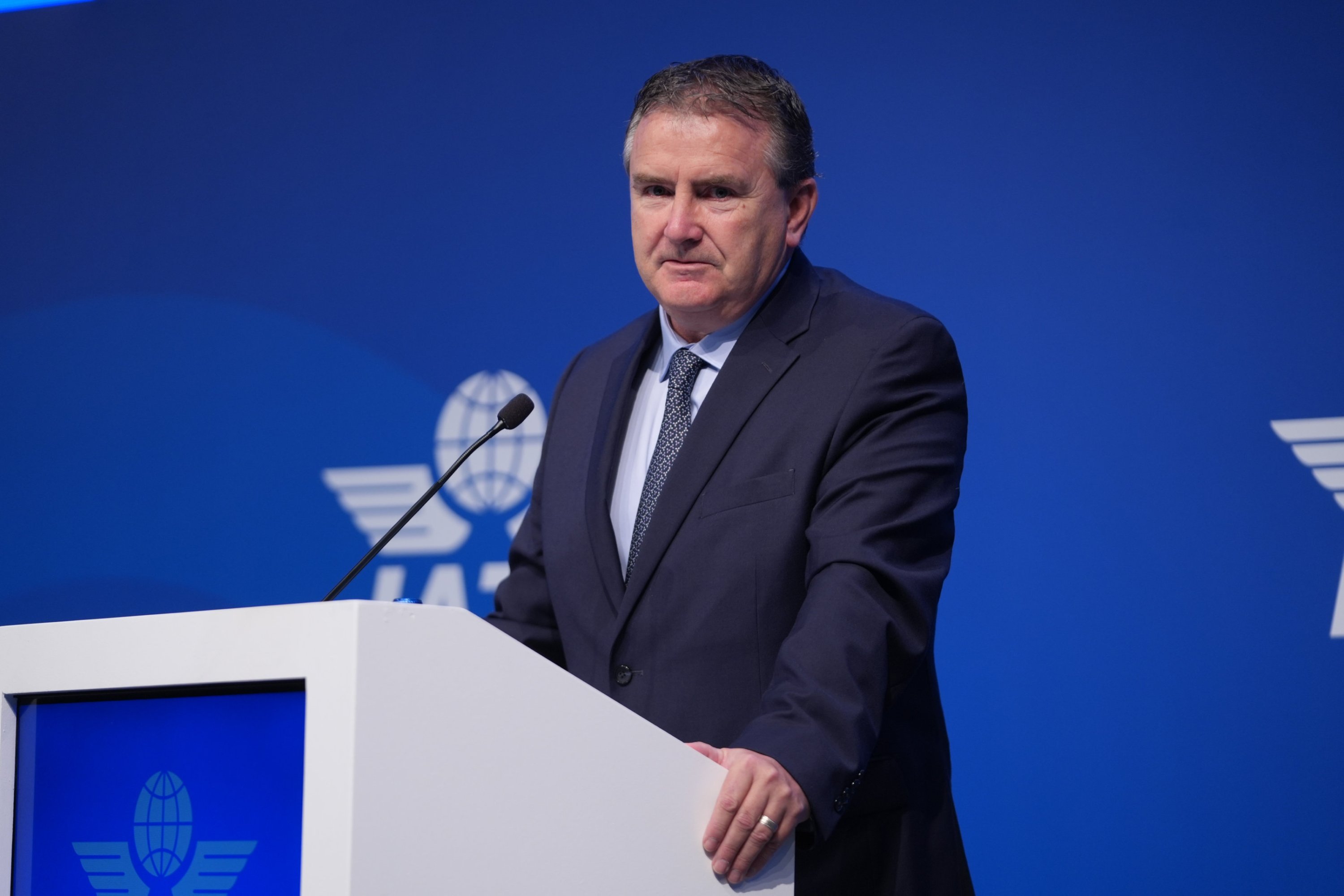
“Continued prioritization of aviation as a strategic sector anchored in competitive costs, sufficient capacity, and leveraging the opportunities that Sustainable Aviation Fuel (SAF) offers will be vital to sustaining Türkiye’s leadership in global air transport,” said Nick Careen, IATA senior vice president of operations, safety and security.
Answering a question by Daily Sabah on the feasibility of bolstering passenger volumes and if low-cost carriers could play a role in this, Careen said that “there is room for everyone.”
Citing as an example Turkish Airlines’ launch of its low-cost subsidiary AJet, he noted there “would be room for all types of models, (and) Türkiye won’t be any different than that.”
“There is competition and that’s healthy,” he added.
“Tourism supported by aviation contributes $49.6 billion to the country’s GDP and employs 1.2 million people,” the IATA survey also said.
Moreover, it also identified three key priorities for the country to continue generating benefits, including infrastructure, capacity-building and sustainability.
“As Türkiye makes significant investments in airport infrastructure and digitalization, it is critical to work with the industry to ensure cost competitiveness,” it said. It also suggested that ensuring a skilled workforce across all areas of aviation will enable Türkiye to fulfill its ambitious growth strategy.
At the same time, on the sustainability side, it pointed out that leveraging the opportunities that SAF offers “will be key to achieving Türkiye’s decarbonization goals.”
Türkiye’s civil aviation authority announced earlier this year that the country will set mandates for airlines and jet fuel suppliers to enhance uptake of SAF, with a goal of curbing aviation emissions by 5% by 2030. The move is aimed at complying with the U.N. International Civil Aviation Organization’s emission reduction scheme that will become mandatory in 2027.
In its Türkiye report, the IATA also underscored the aviation sector’s crucial role in enabling the development of dynamic and efficient supply chains and in driving the growth in e-commerce. It also noted that 1.7 million tons of air cargo were transported through airports in Türkiye in 2023, supporting the country’s total import and export volumes.
Türkiye sits at a crossroads between Europe, Asia and Africa, and its flag carrier boasts a wide network – being the airline flying to more nations than any competitor. Turkish Airlines also aims to further expand its fleet and have more than 800 planes as part of its 2033 strategy.
Global air travel and demand have largely recovered in 2024 following COVID-19-related disruptions, and the IATA considers the sector will still continue to thrive “despite noise which exists everywhere,” as noted by Careen.
In a separate report, IATA released the results of its 2025 Global Passenger Survey (GPS), highlighting two key trends that are redefining the passenger travel experience – mobile reliance is rising and biometric adoption is accelerating.
“Travelers are increasingly using their smartphones to book flights, manage payments and loyalty programs, and handle check-in, immigration, boarding and baggage processes. Enthusiasm for mobile-enabled travel is higher than ever,” it said.