Physical Address
Indirizzo: Via Mario Greco 60, Buttigliera Alta, 10090, Torino, Italy
Physical Address
Indirizzo: Via Mario Greco 60, Buttigliera Alta, 10090, Torino, Italy

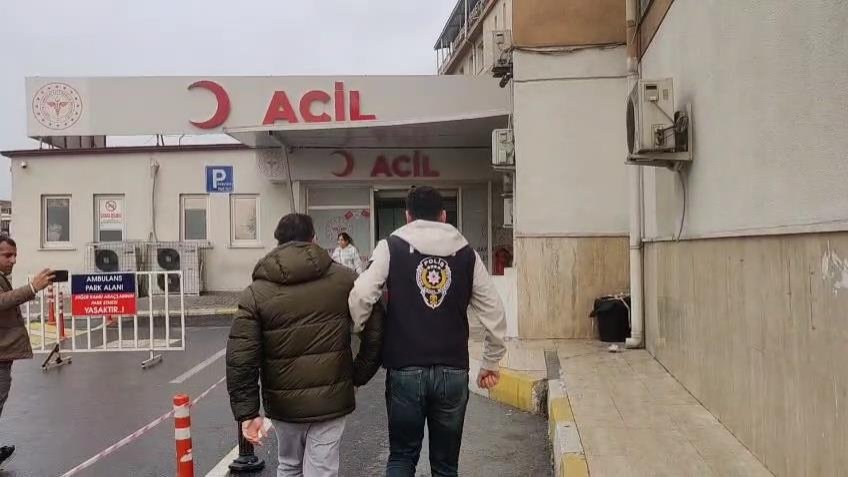
Turkish authorities widened their crackdown on corruption in football Friday, detaining 18 people – including referees and club officials – amid a sweeping investigation into illegal betting and match-fixing that has thrown the sport into crisis.
The probe, described by prosecutors as one of the most extensive in Turkish sporting history, is targeting individuals suspected of manipulating results and profiting from insider knowledge within the country’s top leagues.
The Istanbul Chief Public Prosecutor’s Office confirmed that 21 arrest warrants were issued across 12 provinces, targeting 17 referees and high-ranking club figures.
Among them is Murat Özkaya, president of Eyüpspor, who is accused of using his position to influence betting outcomes.
Though details remain classified, prosecutors said the detentions stem from suspicions of “abuse of duty” and “manipulation of match results.”
The investigation forms part of the broader “Clean Hands” operation, launched in late October after internal audits revealed widespread betting among referees.
What began as a disciplinary matter within the Turkish Football Federation (TFF) has now escalated into a criminal case implicating dozens of match officials and exposing a web of financial misconduct.
Authorities have described the network as “multi-layered,” allegedly involving intermediaries who used referees’ betting accounts to place large wagers on domestic and international matches.
Prosecutors believe some referees may have shared confidential lineup or injury information ahead of matches, giving illegal bookmakers a crucial edge.
The crisis erupted publicly on Oct. 27 when TFF President Ibrahim Hacıosmanoğlu announced that an internal audit – conducted in coordination with Türkiye’s Financial Crimes Investigation Board (MASAK) – had uncovered evidence that 371 of the country’s 571 referees held online betting accounts.
Of these, 152 were found to have placed wagers, including seven Süper Lig referees and 15 top-tier assistants.
The findings were staggering: one referee allegedly placed bets on 18,227 matches over five years, while others bet on thousands of fixtures, sometimes on competitions they officiated.
Though the TFF did not immediately name the individuals involved, the revelation sent shockwaves through the football community and prompted the federation’s Disciplinary Council to suspend 149 referees for between eight and twelve months.
Hacıosmanoğlu framed the purge as a moral and institutional necessity. “This is not about numbers – it’s about credibility,” he declared at the time. “We cannot have referees who gamble, no matter the scale.”
Attention has increasingly turned to Eyüpspor, one of the most promising stories in Turkish football this season after earning promotion to the Süper Lig.
Its president, Murat Özkaya, is accused of being part of a ring that facilitated betting through club-linked accounts.
Investigators suspect that illegal profits were laundered through sponsorship and transfer deals.
Meanwhile, Fatih Saraç, the former owner of Kasımpaşa, has also been drawn into related probes.
The Istanbul-based club was placed under judicial trusteeship earlier this year after irregularities were found in its parent company’s finances.
While Saraç has not been charged, prosecutors are examining potential overlaps between the Kasımpaşa inquiry and the referees’ betting network.
A senior justice official speaking on condition of anonymity said the case “could reveal the deepest corruption in Turkish football since 2011,” referring to the infamous match-fixing scandal that led to criminal convictions and lifetime bans for several players and club executives.
The accused referees, many of whom have yet to be formally charged, have strongly denied wrongdoing.
In a joint statement issued Wednesday, 152 officials acknowledged that some held betting accounts in the past but insisted these were “inactive” and unrelated to matches they officiated.
They called the suspensions “collective punishment” and accused the TFF of acting under political pressure amid the Clean Hands campaign.
Their statement argued that the audit inflated figures by including accounts opened during amateur careers or used for non-football wagers. “We are not criminals,” the referees wrote. “We are being sacrificed to create the illusion of reform.”
Despite these protests, public sentiment remains unforgiving.
Fan groups across Türkiye have demanded full transparency and accountability, with banners at recent Süper Lig matches reading, “No justice, no game.”
Fallout and future implications
The fallout from the scandal has been swift and far-reaching.
With dozens of referees suspended or under investigation, the TFF has been forced to fast-track new referee training programs to fill gaps in the ongoing season.
Matches have already been postponed in the lower divisions due to shortages of qualified officials.
Financially, the scandal risks scaring off sponsors and investors at a time when Turkish football is struggling with debt and declining attendance.
Analysts warn that if proven, the allegations could trigger UEFA and FIFA disciplinary action, potentially leading to the suspension of Turkish referees from international tournaments.
On Thursday, UEFA issued a statement urging the TFF to ensure “full transparency and procedural integrity,” adding that “any compromise in match integrity endangers the credibility of European football.”
Hacıosmanoğlu has vowed to rebuild public trust, pledging to expand VAR monitoring and introduce AI-driven systems capable of detecting betting anomalies in real time. “This is a wake-up call,” he said. “We will clean our house, no matter how deep we must dig.”