Physical Address
Indirizzo: Via Mario Greco 60, Buttigliera Alta, 10090, Torino, Italy
Physical Address
Indirizzo: Via Mario Greco 60, Buttigliera Alta, 10090, Torino, Italy

Sudan’s 19-month war between the Sudanese Armed Forces (SAF) and the paramilitary Rapid Support Forces (RSF) has entered its most dangerous phase yet. With el-Fasher falling to the RSF, Khartoum partially reclaimed by the army, and international actors deepening covert involvement, analysts say the conflict is no longer a contest for political power alone but a fight that could redraw Sudan’s borders altogether.
The country has now become a rapidly deteriorating landscape where military gains, international legitimacy, and geopolitical rivalries are pulling it toward the risk of a protracted and de facto partition, according to researchers Kaan Devecioğlu and Tunç Demirtaş.
Speaking with Daily Sabah, they described Sudan’s recent battlefield developments and diplomatic dynamics, painting a picture of a conflict that is intensifying and becoming harder to resolve.
The past six months have fundamentally altered the balance between the warring parties – not only because of battlefield outcomes but because each side has begun constructing rival state structures.
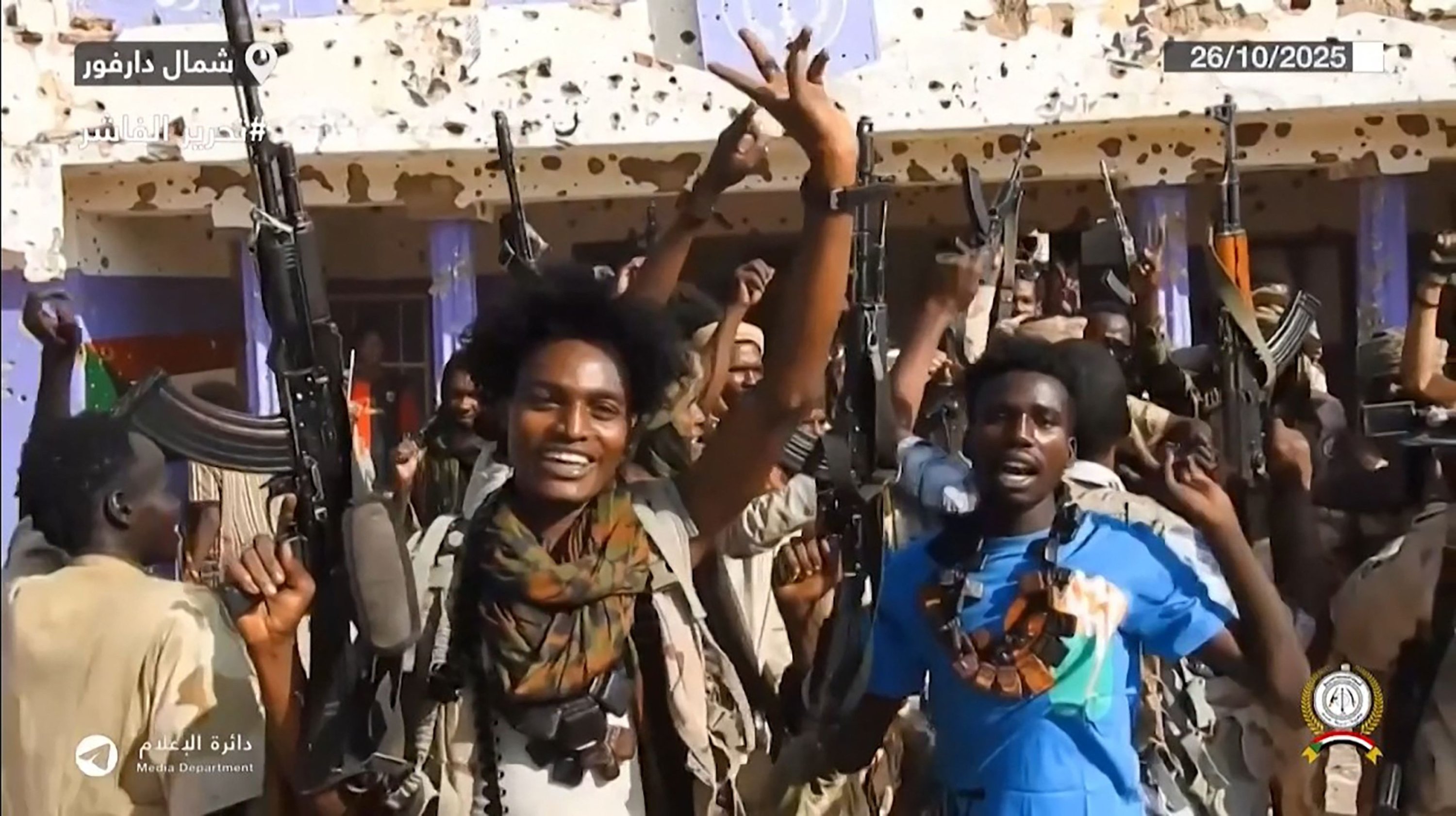
Devecioğlu argues that recent army-backed gains – particularly the recapture of most of Khartoum, as well as key cities in Kordofan – have created “a noticeable military and psychological advantage on the ground.” But he cautions that the RSF has responded by building a political alternative, “the RSF has formed a parallel government in Kenya,” while expanding a vast territorial zone stretching across Darfur and up to the Libya-Egypt-Sudan triangle.
This asymmetric reality now defines the war. “As a result,” Devecioğlu warns, “the power balance has fractured asymmetrically – with the RSF holding the advantage on the ground, and the SAF holding the advantage in terms of international legitimacy.”
Demirtaş sees the same turning point. After the army retook Khartoum in May, he says, “The war entered a new phase.” The SAF consolidated its control in Wad Madani, Gedaref, and the country’s central-eastern corridor, while the RSF tightened its long siege of el-Fasher until finally capturing it.
“Today, Darfur is mostly under RSF control,” he notes. This gives the militia not only natural resources and a major logistical hub but also a vast stretch of territory that could become the basis of a breakaway region. Meanwhile, he says, “The army still controls the heart of Sudan, including key areas like Gadaref and Port Sudan, which gives it important strategic advantage.”
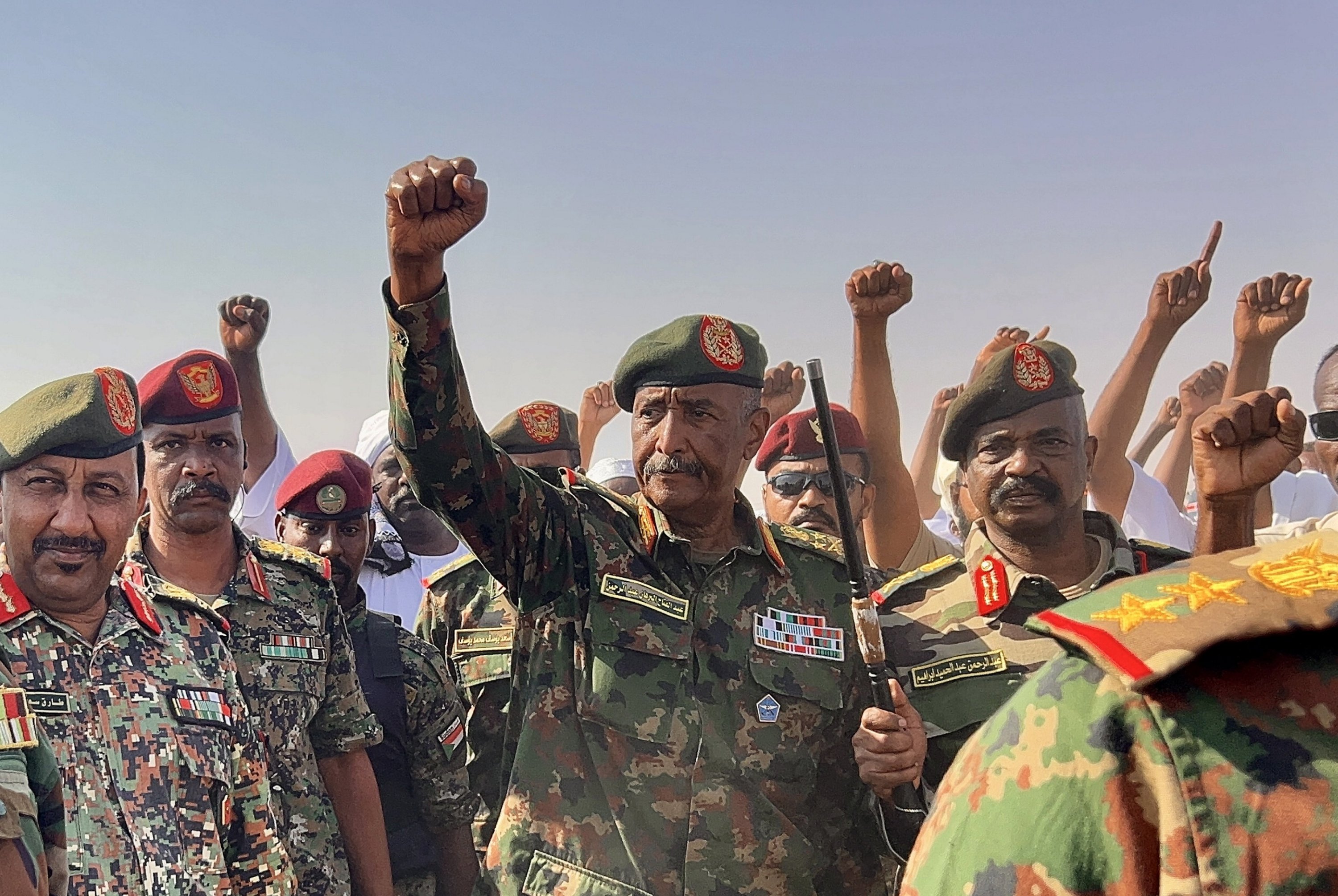
With territorial lines hardening, the central question is no longer simply which side might win militarily – but whether Sudan can stay intact at all.
For Devecioğlu, preventing fragmentation requires a dramatic change in how the army governs and negotiates.
“To prevent Sudan’s de facto or formal partition, the SAF must undertake a simultaneous strategic shift on the military, political and administrative-economic fronts,” he says. That means fortifying areas it controls, formulating a realistic plan to retake lost cities, but also bringing civilians into a credible transitional framework. Without that, he argues, the army will remain trapped in its old role: “Without shifting from the role of an ‘absolute ruling actor’ to that of a ‘security guarantor and negotiating partner,’ it is unlikely that the SAF can prevent Sudan’s fragmentation.”
Demirtaş agrees that Sudan is at a tipping point – and that specific geographic areas may decide its fate. The SAF, he argues, “needs to strengthen its control in North Kordofan, West Kordofan and especially around el-Fasher. It also cannot afford to lose el-Obeid.”
If these areas fall, he warns, “stopping a de facto partition will be extremely difficult, and this would be a disaster for the Sudanese people.”
He believes Sudan will eventually need an inclusive political process, but only after the army stabilizes key fronts: “Military success on the ground will give the army a stronger position at the negotiation table.”
Even if the battlefield stabilizes, diplomatic fragmentation is preventing meaningful pressure for a cease-fire because of a divided international landscape in which no actor is positioned nor willing to lead.
Devecioğlu says major powers and regional states are pulling Sudan in competing directions. The U.S. and EU, he notes, emphasize sanctions, while “Russia and, to some extent, China view the Sudan file as part of broader geopolitical bargaining,” blocking decisive UNSC action.
Meanwhile, Sudan’s neighbors are split in their preferences: “some lean toward the RSF, others toward the SAF, while others focus solely on their own border security.”
The result, he says, is structural paralysis: “Sudan remains far from any ‘single negotiating table,’ instead caught among multiple and competing initiatives such as the Jeddah Process, the Quad, IGAD, and the African Union.”
Still, he sees a narrow window for humanitarian convergence, especially over ethnic-based violence in Darfur and famine threats.
Demirtaş describes the same problem through a geopolitical lens: “Today’s global system is complex. Countries that cooperate in one area can compete in another. Sudan is part of this complicated picture.”
International pressure exists, he says, but it is weak and inconsistent. To be meaningful, the world must “stop the flow of weapons to the RSF, open humanitarian corridors and establish serious sanctions.” Yet he acknowledges the difficulty: “Sudan has become a place of global and regional competition, with many actors involved. This makes strong and unified pressure very difficult.”
Where many countries face credibility deficits, both experts agree that Türkiye retains unusual flexibility in Sudan’s crisis.
Devecioğlu argues Ankara is well placed to act as a facilitator because of its broad relationships: “Its improved relations in recent years with the United States, the UAE, Saudi Arabia, Qatar, and Egypt enable Türkiye to act as an effective facilitator on technical issues.”
He also highlights Türkiye’s growing engagement with African institutions and notes that on the ground, humanitarian agencies like TİKA, AFAD, and the Turkish Red Crescent can expand relief operations.
But he emphasizes that Türkiye must remain neutral: “Türkiye’s ability to influence the process ultimately depends on maintaining a neutral and credible facilitator profile.”
Demirtaş frames Türkiye’s role in a similar way – not as a savior, but as a trusted actor. “Türkiye has always tried to support peace and stability around the world,” he says. Its ties with Gulf states and the West give it diplomatic reach, while its lack of a colonial legacy in Africa boosts local trust.
He cautions against expecting too much from a single actor: “It is more realistic to see it as a bridge-builder or catalyst in a larger international effort.”
Perhaps one of the most troubling part of the conflict has been the weak global response to atrocities in western Sudan – especially in el-Fasher, where documented ethnic killings, shelling of civilian areas, and mass displacement continue.
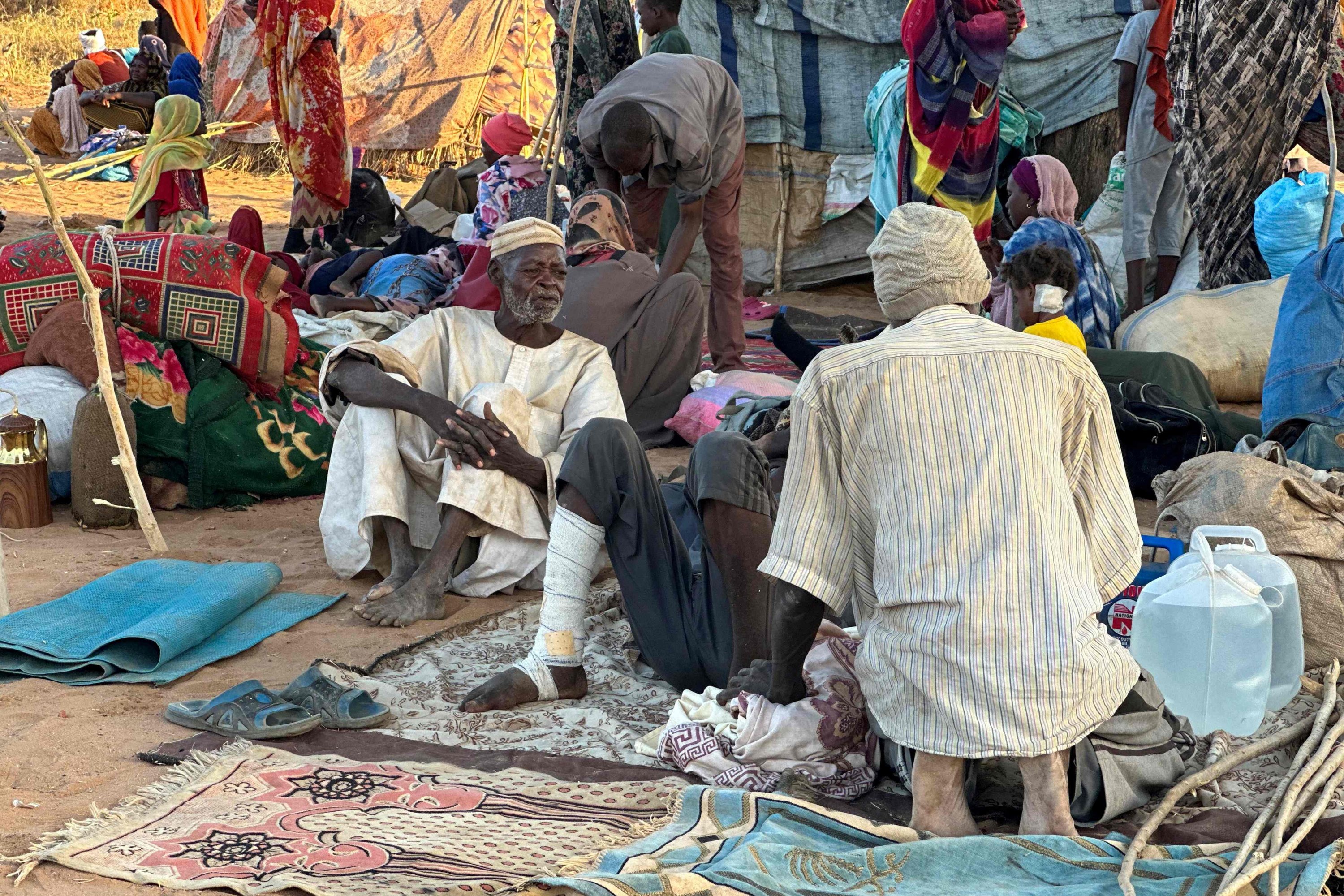
Devecioğlu argues that global attention is consumed by more prominent crises – Gaza, Ukraine, Taiwan, the Sahel – leaving Sudan to languish as a “low-visibility” conflict. But another reason, he says, is the sheer complexity of actors committing violence: RSF fighters, tribal militias, local armed groups, and SAF bombardments. This overlap “makes it difficult for external actors to identify a single, clear perpetrator–resulting in a ‘low political-cost silence.’”
He says the U.N. still has tools: independent investigative commissions, humanitarian corridors, and evidence-gathering for war-crimes prosecutions. The U.S., he adds, can increase sanctions and mobilize regional partners to elevate Sudan diplomatically.
Demirtaş offers a stark moral critique: The world, he says, has not learned from “Darfur, Bosnia, Rwanda.” Sudan has been pushed aside because of larger crises, “creating silence, but also inaction.”
He argues the U.N. must be more forceful – naming states that support the RSF, imposing sanctions and activating stronger legal mechanisms. “The images from Sudan clearly show genocide and ethnic cleansing,” he warns. The U.S., he adds, must “go beyond statements and take concrete action” – even to the extent of designating the RSF as a terrorist organization.
One final sobering point is clear: Sudan is not merely experiencing a temporary crisis. It is experiencing a structural collapse. The SAF has legitimacy but limited control. The RSF has territorial dominance but shrinking international support. Diplomacy is paralyzed. International and regional powers are pursuing their own agendas. And civilians, especially in Darfur, are enduring some of the worst violence in decades.
If current trends continue, Devecioğlu warns, Sudan may slide into “a protracted and de facto partition.” Demirtaş fears an even broader catastrophe: “If key areas fall … this would be a disaster for the Sudanese people.”