Physical Address
Indirizzo: Via Mario Greco 60, Buttigliera Alta, 10090, Torino, Italy
Physical Address
Indirizzo: Via Mario Greco 60, Buttigliera Alta, 10090, Torino, Italy

On a clear afternoon in Istanbul, three stops – Merkezefendi, Taksim and Sultanahmet – came together to form a continuous citywide conversation about war, resistance and the responsibility to remember. Spread across different corners of the city, the day unfolded at a moment when Istanbul has become an increasingly active meeting ground for global solidarity with Palestine. In recent weeks, the city has hosted a series of large public forums, cultural programs and academic gatherings focused on Gaza. Among them was the Gaza Tribunal, held in the historic main building of Istanbul University, where internationally known activists, scholars and human rights lawyers gathered to examine the war and its legal implications. For many participants, it marked perhaps the first time such a broad coalition of global voices had assembled physically in one place, planting the early seeds of a new, transnational movement. This atmosphere – an Istanbul unusually dense with testimonies, forums and cross-border solidarities – framed the day’s encounters.
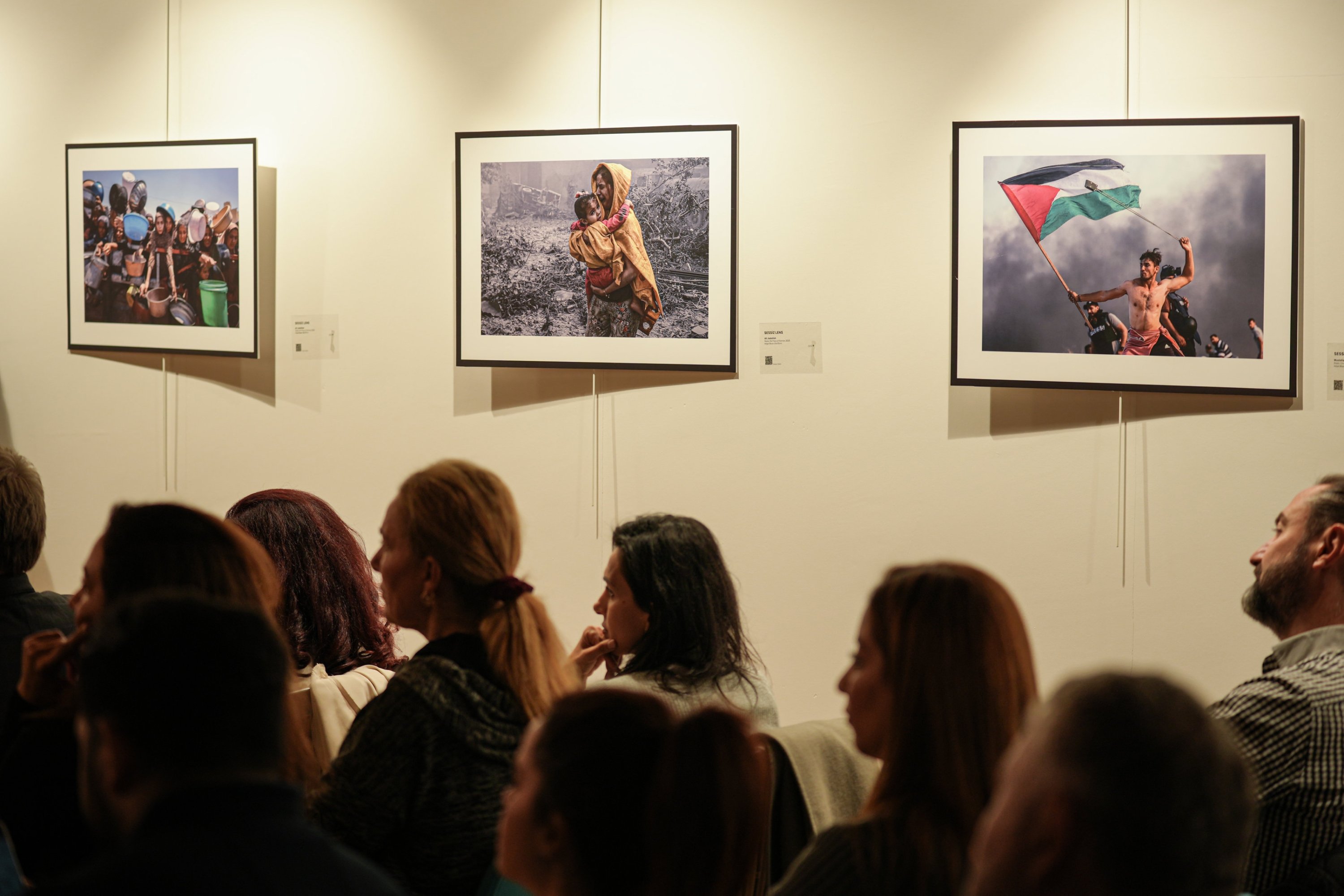
The first stop was Merkezefendi, where the Türkiye Photography Foundation is hosting “The Silent Lens,” an exhibition curated by Nevzat Yıldırım. The show brings together the work of two Gaza-born photojournalists, Mustafa Hassona and Ali Jadallah, whose photographs have become central to global documentation of the conflict. The exhibition opened as the number of Palestinian journalists killed in the war reached 254. Their names appear on a long memorial panel inside the gallery, turning the space into both an archive and a place of quiet reflection.
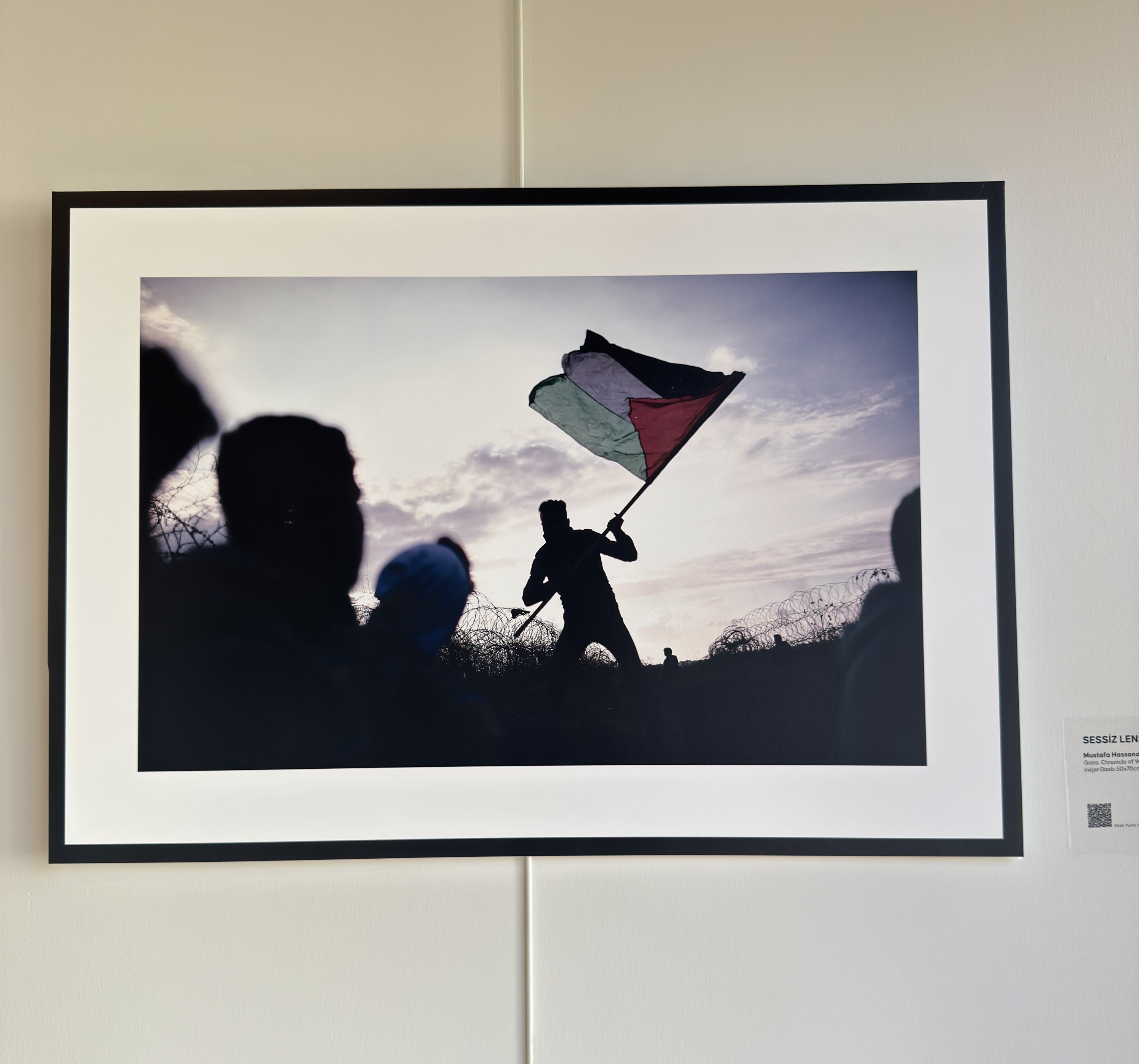
Hassona and Jadallah’s images move between the chaos of bombardment and the quieter, tender scenes from earlier years – children playing, fishermen repairing nets, families navigating interrupted routines. Taken together, they offer not only evidence of destruction but also a record of the life that existed before it. The exhibition’s location gives it additional depth. Merkezefendi, lined with Ottoman-era cemeteries and home to the grave of former Prime Minister Necmettin Erbakan, a longtime advocate of the Palestinian cause, lends historical and political resonance to the show. Visitors leave with a small postcard showing a rising sun over a crowd – an understated gesture of hope after an emotionally heavy experience.
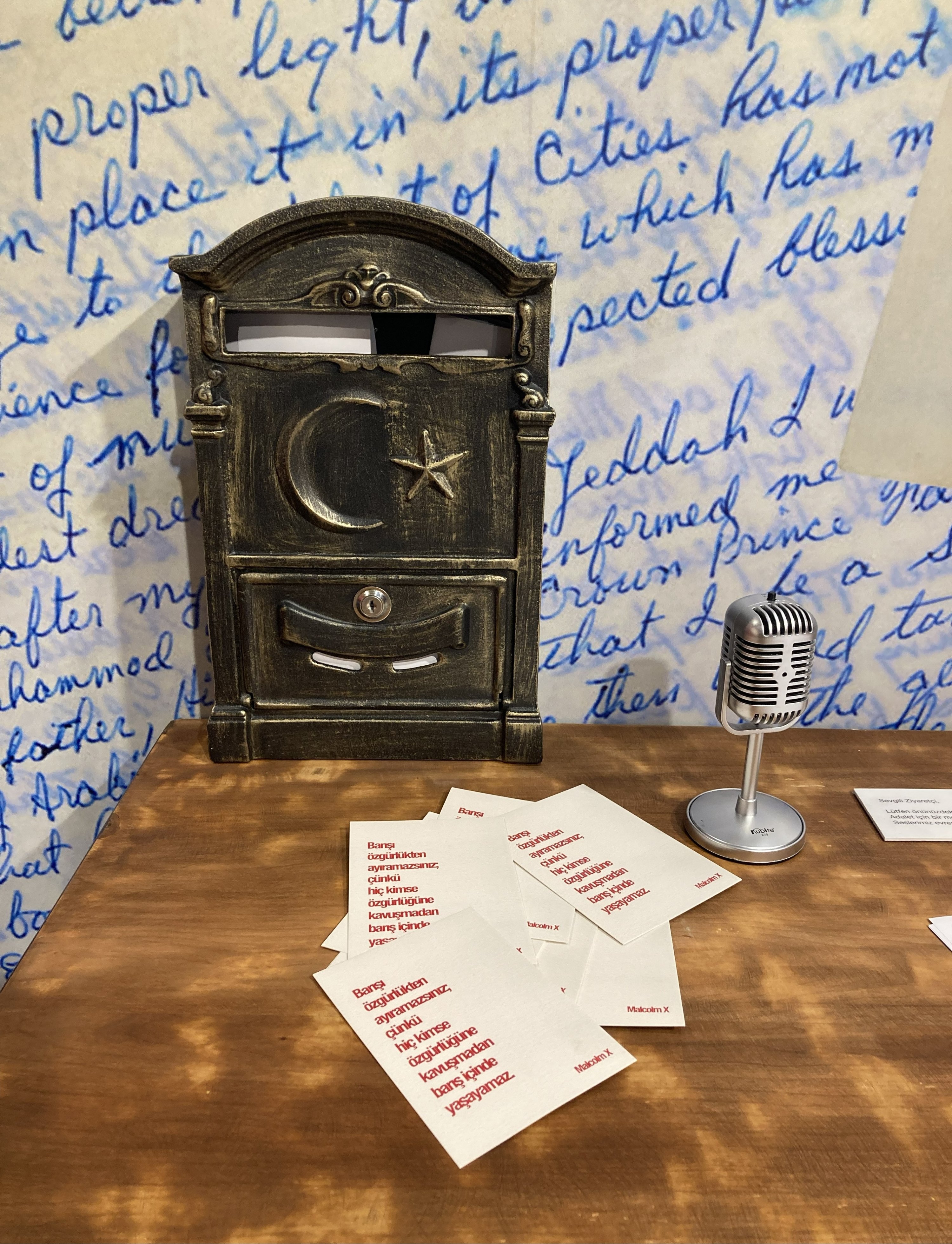
From there, the day continued at the Atatürk Cultural Center (AKM) in Taksim, where “Echoes” brings Malcolm X and Şule Yüksel Şenler into the same frame – two figures rarely placed together yet unexpectedly aligned. Malcolm X confronted racial injustice in the United States and shaped a broader global anti-colonial discourse, while Şenler challenged restrictions on women’s public visibility in Türkiye, particularly during the headscarf debates. Both became influential voices for marginalized communities and reshaped national conversations about dignity, belief and public space. Encountered immediately after the Gaza-focused exhibition, their stories highlighted recurring global patterns of silencing and resistance.
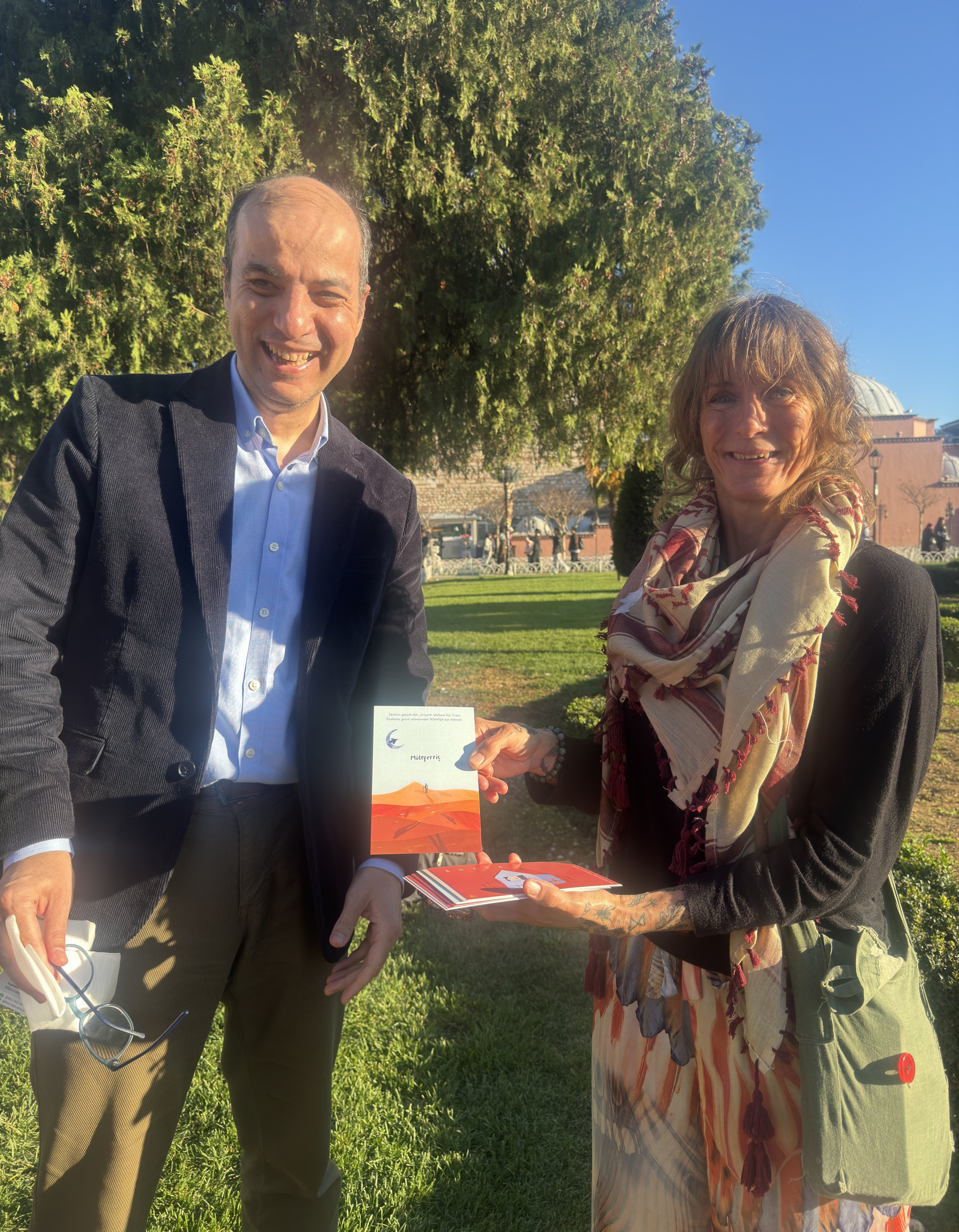
The final stop of the day unfolded in Sultanahmet, after a visit to Cağaloğlu’s newly revived Book Bazaar, where independent publishers are returning to their historical neighborhood. Near the Turkish and Islamic Arts Museum, another form of testimony appeared. Ruth Herbert, a volunteer who walked from the United Kingdom to Türkiye to raise awareness and medical aid for Palestine, had just completed her monthslong journey. She received a postcard referencing the idea of the müteferriç, a term describing someone who “releases or eases a burden through movement.” Her arrival added a human, physical dimension to a day framed largely by exhibitions and images, reminding visitors that solidarity can take shape not only through representation but through sustained action.
Across these three locations, the day formed a single narrative about witnessing. At the Türkiye Photography Foundation, Gaza’s story was carried through the lenses of its photojournalists. At AKM, Malcolm X and Şenler demonstrated how voices endure under pressure. In Sultanahmet, Herbert’s long walk showed how individual movement can embody collective memory. And throughout the city, the recent gathering of global activists at the Gaza Tribunal revealed how Istanbul is becoming a physical meeting point for a new, interconnected search for justice.
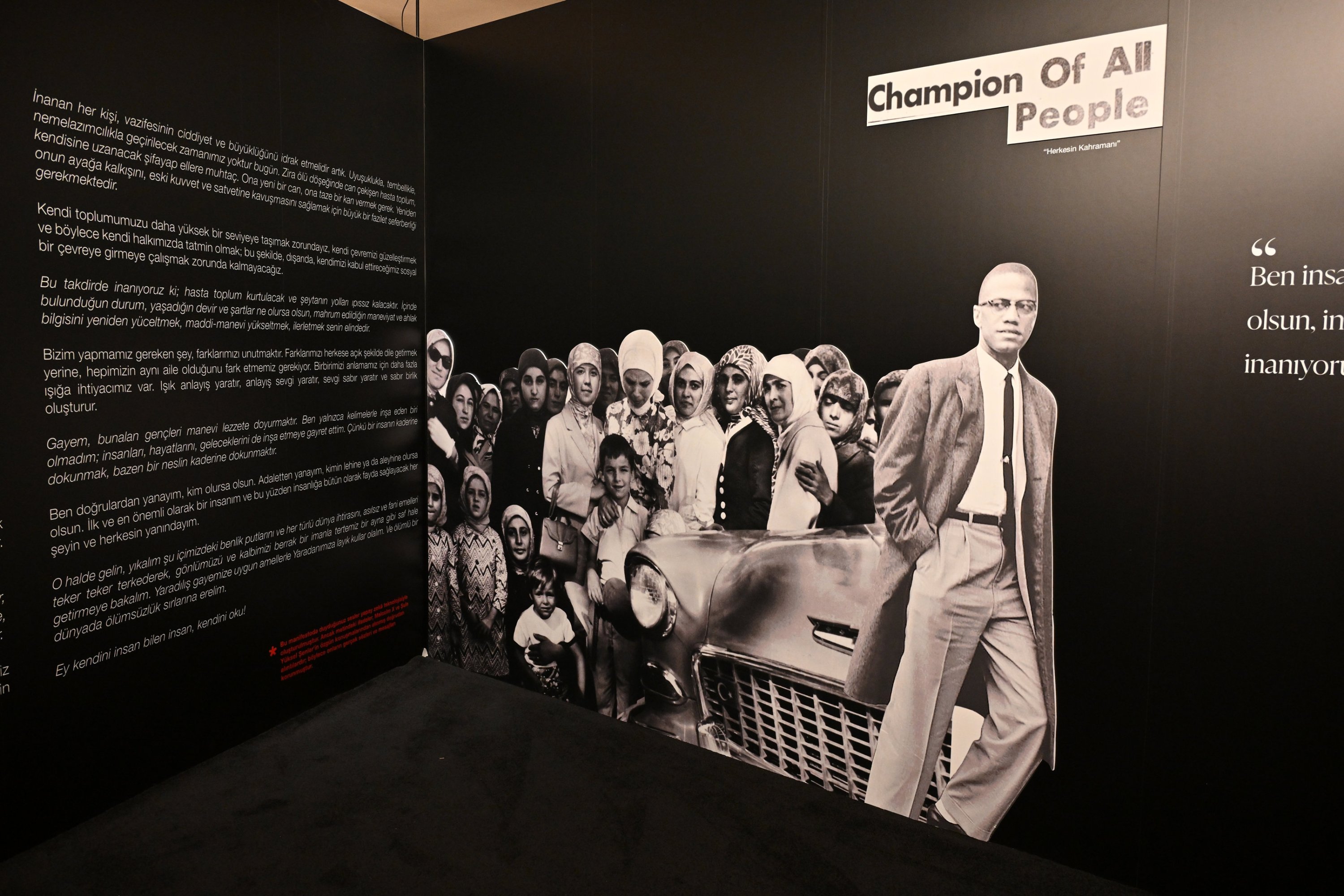
Together, these moments pointed to a broader truth: the echoes of earlier struggles never truly disappear. The resonance carried by a photograph, the testimonies of past generations and the determined gestures of people today continue to inform the effort to build a more just world. From archival images to speeches, from university halls to city streets, the call for justice moves forward through what survives in memory – and through the way those memories inspire action in the present.
For a moment in Istanbul, the echoes of Gaza, Harlem and modern Türkiye intertwined, reminding all who encountered them that the pursuit of justice is shaped not only by what is happening now but by the enduring echoes of those who came before.