Physical Address
Indirizzo: Via Mario Greco 60, Buttigliera Alta, 10090, Torino, Italy
Physical Address
Indirizzo: Via Mario Greco 60, Buttigliera Alta, 10090, Torino, Italy
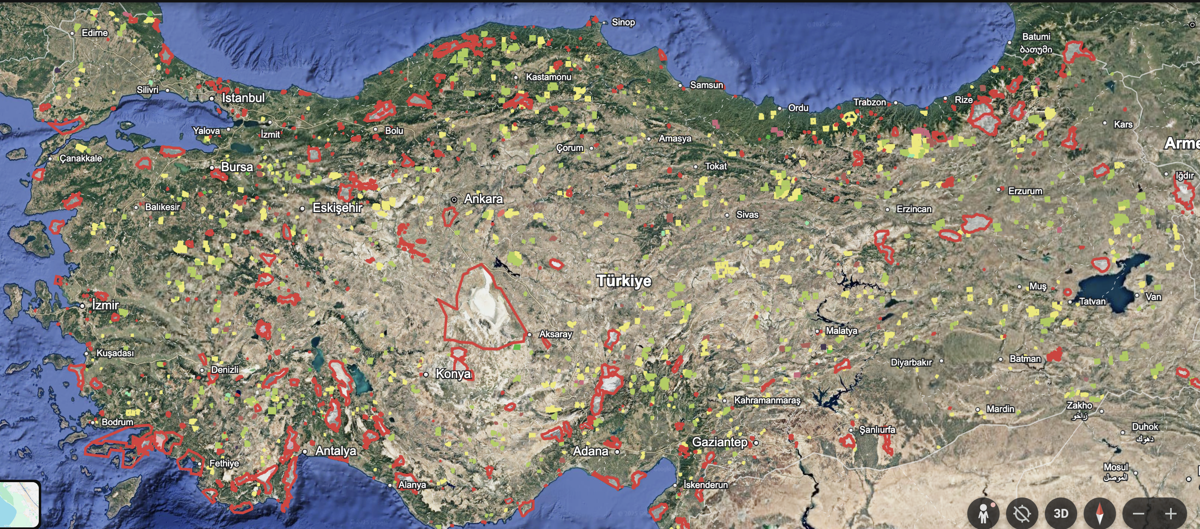
Mechanical engineer Levent Büyükbozkırlı and industrial engineer Derya Sever, both from Polen Ecology, have launched a new project using mining tender data and Environmental Impact Assessment (EIA) records to stop this ecocide.
According to the study, the total area of mining licenses granted over the past one and a half years exceeds 468,784 hectares. This area is equivalent to five and a half times the size of Yalova.
The project, in addition to being part of the struggle for nature, also represents the effort to counter the confusing and massive data presented by the government in Turkey, where access to information has recently been restricted.
The project began just before the law known as the “Super Plunder Law,” which passed in the Turkish Grand National Assembly (TBMM) in July 2025, and progressed in parallel with the campaign ‘We won’t give up our land.’
We spoke with Büyükbozkırlı and Sever, who said they wanted to raise awareness about ecocide through their work, about how the project emerged. Levent Büyükbozkırlı explained that since the auctions analyzed are still at the exploration license stage, this provides an advantage in preventing ecocide:
“We all know that once the EIA process starts, there’s no turning back. That’s why we looked at the process. It starts with auctions. As we know, the 12th Development Plan, the subsequent Climate Law, and the Super Permit Law are actually just a cover for the existing auctions from 2023 to 2025. They had already started selling long ago. But the system is so opaque that we only find out when there’s an EIA. And once they put in that legal cover, dozens of projects are put forward every single day.”
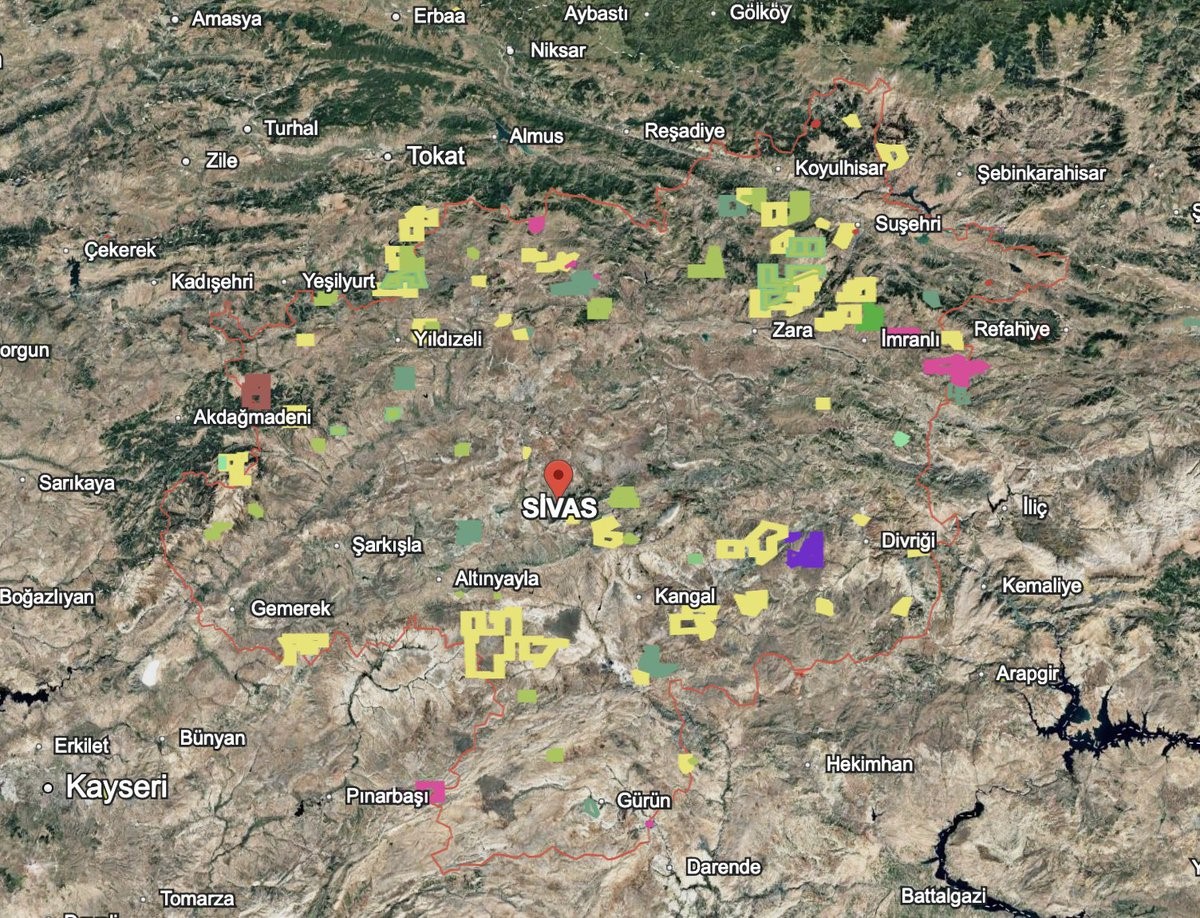
Another striking aspect of the dataset is that it shows how intense the ecocide is on a city-by-city basis:
The project carries great significance especially for disadvantaged communities in rural areas and villages. Derya Sever draws attention to the scale of the impact on disadvantaged groups by saying, “The impact on the oppressed peoples in rural areas is truly much greater”:
“For instance, in Kurdish provinces, it intersects with depopulation efforts. In Sivas and Dersim, it is an ecological destruction that also suppresses the Alevi identity… They are losing their cultures, their memories, their sacred places, their living spaces, the nature they are intertwined with. Everyone is being urbanized and isolated from each other. This is truly a multidimensional equation.”
Büyükbozkırlı states that they see this as a class struggle: “Mines are always in rural areas. In the capitalist order we live in, in the neoliberal system, and in this imperialist capitalist mining that we define as extractivism, one of the things the system plays very well is this,” he says and adds:
“The spirit of major cities like İzmir, Ankara, İstanbul doesn’t feel anything and everything is always rationalized to them: ‘We need these for development, we’re all in the same boat, etc.’ But it’s not like that at all. Therefore, our primary goal is to reach these rural areas, where the fire is burning, and organize resistance there.”
Levent Büyükbozkırlı, speaking on the Ministry of Environment, Urbanization and Climate Change’s obfuscation of data, states that one of their goals with the project was to expose the systematic assault being carried out through mining:
“What’s happening has nothing to do with mining that meets basic needs. It’s not related at all. It’s actually an extractivist assault aimed at export, one that enriches certain classes by impoverishing others. We are trying to emphasize this in a holistic way. Perhaps the maps will provide a geographical perspective on this.”
Derya Sever also emphasizes that the restriction of access to data is actually done deliberately, saying:
“The harder it is to access, the fewer people know about it. We also need to wage a struggle for access to information and democratic participation. This too is clearly a class issue. We see it in Samandağ; people find out via e-government that they no longer have ownership of their land. Suddenly, someone shows up in their living space and says, ‘We sold this place, in fact, we sold it two years ago.’ The EIA can take that long. We have the right to access this information, and we must fight for it.”
In the study, which enables the reading of all mining auctions in 2024–2025, EIAs granted since 2023, and protected areas through mapped data sets, it is possible to view all types of mines. One can also access numerous details such as the number of auctions held in each region, which mining groups are concentrated in which areas, and the points where they intersect with protected zones.
Büyükbozkırlı, who says “The data we have is truly limited,” emphasizes that even the basic data used in the project makes it very simple and clear to see how severe the threat is:
“Much better analyses can be done, and the system could actually operate much more effectively. For instance, if data on agricultural and pasture lands, wetlands, etc., were shared and we could put these on the map, which all exist in the hands of ministries, it would immediately be clear, even in the first stage of auctions published by MAPEG, how problematic they are. All state institutions hold very detailed information, they are well aware of the destruction it will cause.”
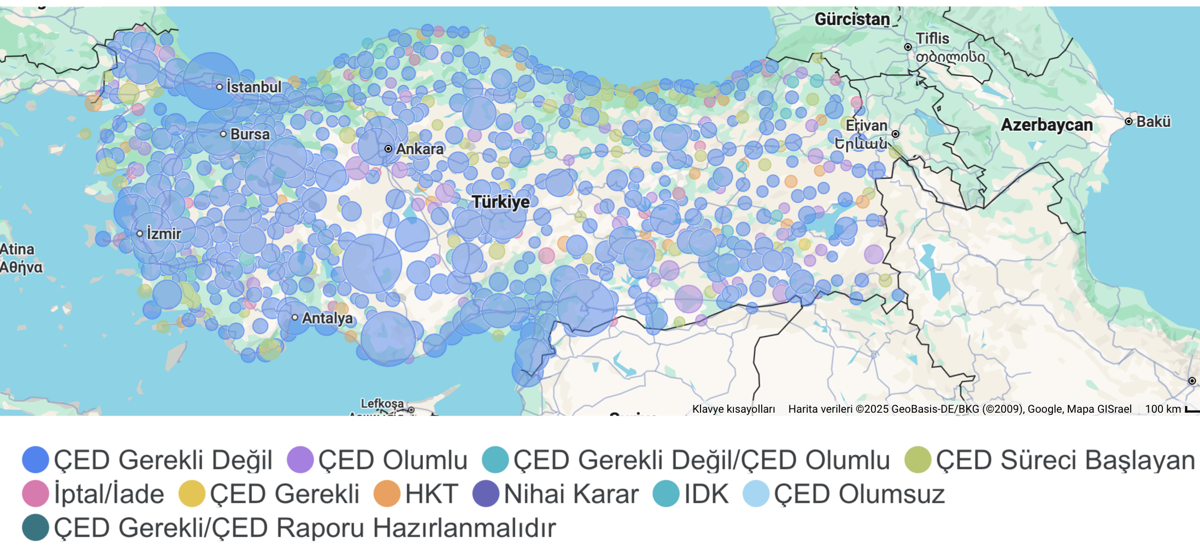
The maps produced prominently highlight mega mines larger than one thousand hectares.
Büyükbozkırlı states that there are many regions and cities that have been written off and notes that metallic mines are the most widespread, with some mining areas reaching up to ten thousand hectares. According to the data from the past one and a half years analyzed in the project, 202 out of a total of 698 auctions are for mega mines.
Metallic mines (briefly referred to as group 4 mines) are minerals such as copper, gold, silver, and iron, which, after being extracted from nature, are processed through metallurgical methods to produce metals. MAPEG has yet to publish statistical data for 2025; however, the General Directorate of Mineral Research and Exploration (MTA)’s Financial Status and Expectations Report for the January–June 2025 period reveals the mining exploration and drilling statistics recorded in the first half of 2025. It is clearly evident here, too, that the concentration is in metallic mines:
“Projects created for the exploration of metallic minerals, industrial raw materials, geothermal energy, coal, radioactive raw materials, etc., include survey, exploration, and drilling activities. Within this scope, 8,355 km² of detailed surveys and 186,439 m of drilling were carried out.”
Accordingly, 71,362 meters of the drillings were for coal, 78,021 meters for metallic mines, and 15,512 meters for nuclear raw material exploration and research.
Levent Büyükbozkırlı, pointing out that mega mines will cause permanent ecological destruction, says, “Mines over one thousand hectares must be banned. We call the areas where these are concentrated ‘written off areas.’”
Sever, pointing to the intensity of oil exploration in Kurdish provinces on the map, highlights Sivas, Malatya, and Dersim as regions where group 4 is concentrated, and then notes that the same group is also dense in the Black Sea region at the top of the map.
Sever recalls the 2023 regulation change that undermined democratic participation in EIA processes and states, “Since 2023, in all EIAs, 65 to 70 percent of project outcomes have been listed as ‘EIA unnecessary,’ ‘EIA not required,’ or ‘EIA positive’”:
“Neither the public, nor institutions, nor scientific opinions can be included in the projects. They are handed directly to the companies. Additionally, each company’s project introduction files are found in the EIA documents. We’ve also started using the coordinates from those. The map will grow significantly. In fact, if we analyzed those documents, we would see just how empty, copy-pasted they are or how dangerous the methods will be.”
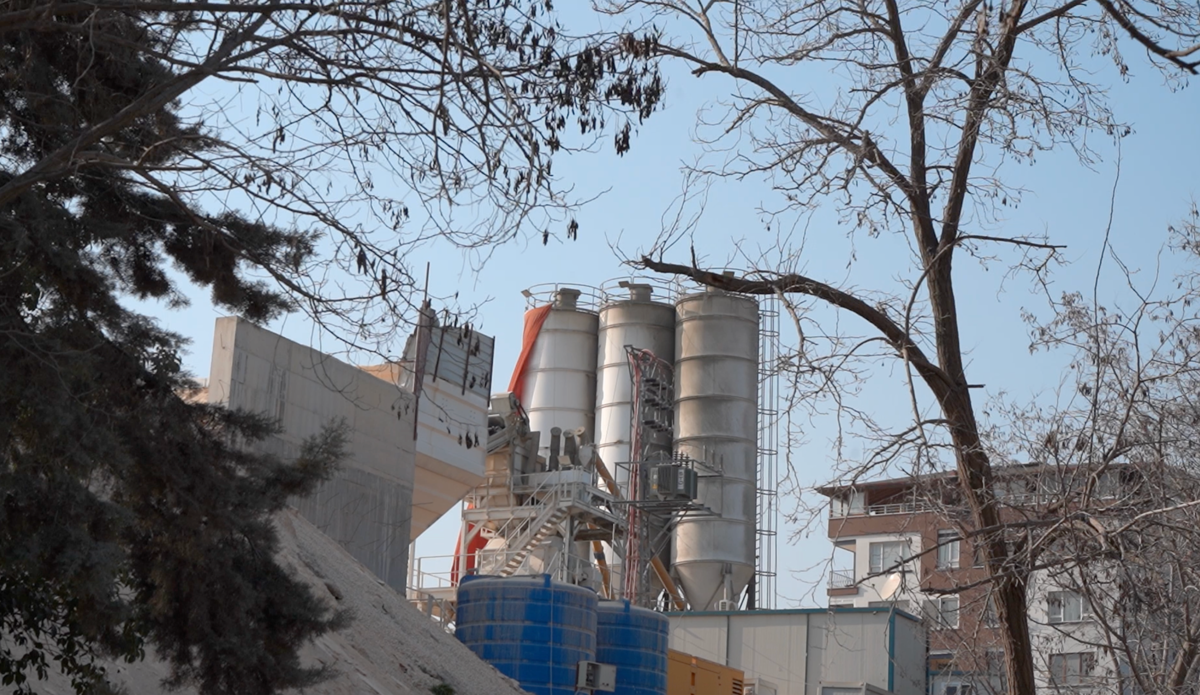
On the map, Derya Sever points to the earthquake zone and highlights the concentration of group 2 mines.
This group refers to facilities like stone quarries and concrete plants that accompany the construction sector in earthquake-stricken cities that have now turned into construction sites. Sever says, “In fact, since 2023, there’s been a mining explosion. But the auctions for these were given much earlier. The auctions we’re looking at now will be far more disastrous in 2026 and 2027.”
Büyükbozkırlı also draws attention to the oil exploration and extraction activities in Diyarbakır, pointing to the company Trans Atlantic Petroleum.
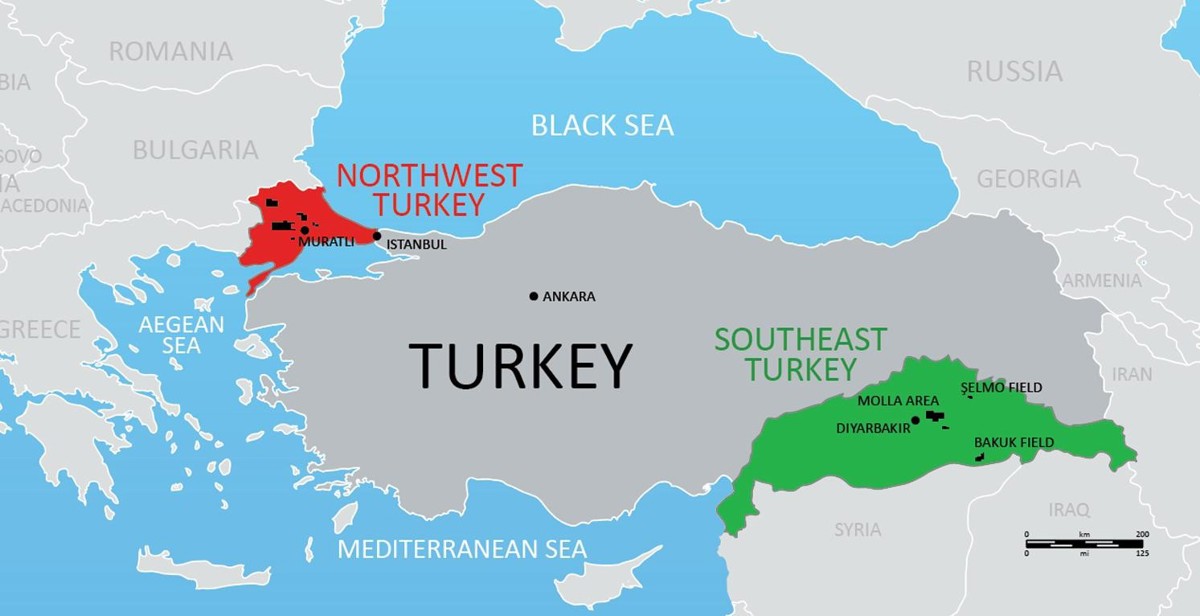
From the Turkey section of Trans Atlantic Petroleum’s portfolio, it is seen that the company is conducting drilling and exploration activities in areas shown in red and green. It also indicates the use of hydraulic fracturing as one of the methods employed in these activities. The hydraulic fracturing method poses particular danger for both human health and the environment in the region. (Trans Atlantic Petroleum)
Levent Büyükbozkırlı also notes that there are mining license areas that have started right next to protected areas, as in Harşit Nature Park in Giresun, and points to the company owned by AKP MP Cantürk Alagöz, who also signed the law that endangers olive groves and forests. The mine belonging to Alagöz Mining Industry and Trade Inc. is located right next to Harşit Nature Park, and the area also contains monumental trees.
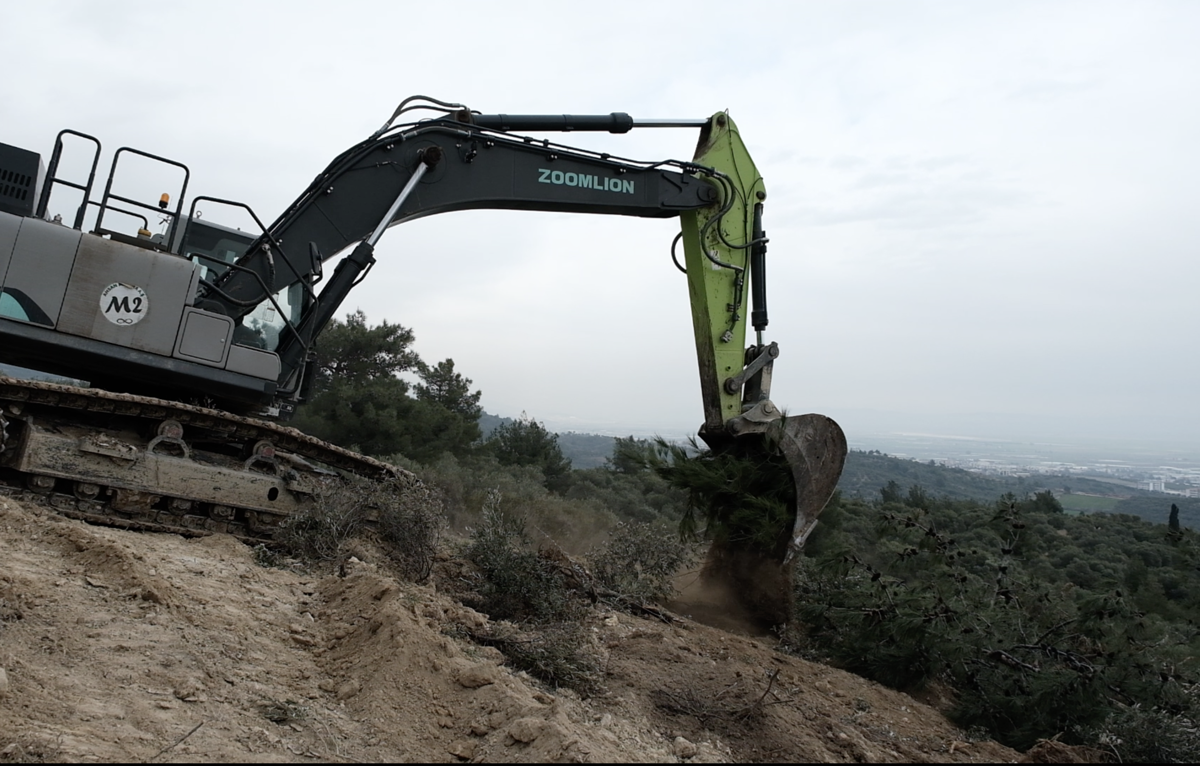
The latest images from Harşit unfortunately reveal the destruction in the region.
Finally, Derya Sever expresses the urgency of the situation in the face of increasing mining activities with the following words:
“Especially the Super Plunder Law encourages this too. It says, ‘Start as soon as possible, or I’ll take the auction from you!’ That’s why we’re racing against time. We are in a race with these mining projects, we have to do something because every day, somewhere is being written off.”
(CA/TY/VK)