Physical Address
Indirizzo: Via Mario Greco 60, Buttigliera Alta, 10090, Torino, Italy
Physical Address
Indirizzo: Via Mario Greco 60, Buttigliera Alta, 10090, Torino, Italy

As water scarcity intensifies in the Middle East, the longstanding dispute over the Euphrates-Tigris rivers between upstream Türkiye and downstream Iraq has gained renewed urgency. Iraq often accuses Türkiye of restricting the flow, whereas Türkiye maintains it has acted within its rights and in good faith.
Competition over the Euphrates-Tigris basin dates back decades, as Türkiye, Syria and Iraq pursued ambitious water projects. In 1975, severe drought and the filling of new dams in Türkiye and Syria sharply reduced Euphrates flows into Iraq, sparking a crisis that was defused only after mediation prompted Syria to release more water. Throughout the 1980s, the three riparian states formed a Joint Technical Committee, and Türkiye proposed a “Three-Stage Plan” for equitable basin management, seeking to jointly measure water supply and needs before allocating shares. No comprehensive accord was reached at the time, as downstream states preferred fixed quotas. Partial deals emerged: notably, Türkiye’s 1987 protocol with Syria guaranteed a minimum Euphrates flow of 500 cubic meters per second, though Iraq feared Syria’s usage would leave too little for Iraq. Despite periods of hostilities (even when Iraq and Syria were adversarial on other fronts), Ankara kept dialogue open on water issues.
By the 1990s, Türkiye’s massive Southeastern Anatolia Project (GAP), which was building dozens of dams and hydropower plants, was transforming the region. Iraq’s concerns grew about declining downstream flows, while Türkiye maintained that its dams would control floods and provide more reliable water during the dry season. Climate change and rapid population growth have further strained the basin, contributing to recurring droughts in Iraq. Genuine three-party cooperation remained elusive (especially amid Syria’s civil war), but Türkiye pursued bilateral engagement with Baghdad. A breakthrough came in 2024, when President Recep Tayyip Erdoğan’s visit to Iraq produced a framework accord on water cooperation, setting the stage for the historic 2025 agreement.
Türkiye has consistently asserted its rights as the upstream sovereign while advocating a fair, needs-based sharing of Euphrates-Tigris waters. Legally, Ankara emphasizes the principle of “equitable and reasonable utilization” rather than accepting downstream claims of historic rights to fixed amounts. Turkish policy treats the two rivers as a single, interconnected basin to be managed holistically, a stance at odds with Iraq’s insistence on separating the Euphrates and Tigris as different watercourses. From Türkiye’s perspective, no binding international allocation exists, and any agreement must be built on joint technical studies and mutual compromise as reflected in its Three-Stage Plan to inventory water and land resources for rational sharing. Notably, even when Iraq or Syria supported insurgencies against Türkiye in past decades, Ankara refrained from weaponizing water and kept the rivers flowing, underscoring its good-faith commitment to dialogue.
Data backs Türkiye’s contention that it has not deprived its neighbors. Türkiye contributes roughly 60% of the combined Euphrates-Tigris flow but utilizes only about 29%, reflecting substantial releases downstream. Iraq, in contrast, contributes around 36% (primarily via Tigris tributaries) yet historically demanded an outsized 81% of the rivers’ waters. On the Euphrates alone, Türkiye provides about 90% of the water, while Iraq contributes essentially 0%, yet Iraq at one point claimed up to 65% of the Euphrates’ flow. Such expectations were untenable: For years, the total volume sought by all three countries exceeded the rivers’ actual yield by over 25%. Ankara notes that its dams have also benefited the region by controlling floods and generating electricity, and that Türkiye has consistently released adequate flows downstream, even augmenting water releases in drought years when possible. By maintaining an equitable usage policy, Türkiye’s strength and positive stance have helped prevent water from sparking full-scale conflict in the basin.
Iraq, for its part, has long asserted a downstream right to ample Euphrates-Tigris water, invoking the principle that upstream actions should cause “no appreciable harm” to its established uses. Baghdad has frequently blamed Türkiye’s dams for reduced river flows and drought and has pushed for binding water-sharing quotas. However, Iraq’s water woes largely stem from domestic mismanagement. In 2011, the U.N. warned that up to 50% of Iraq’s water was being wasted through leakage and misuse, and that nearly 90% of its water withdrawals went to agriculture, much of it in open canals prone to massive losses.
These inefficiencies, compounded by years of underinvestment and conflict, severely limit the water that actually reaches Iraqi farms and households. Moreover, Iraq is geographically vulnerable: About 70% of its water resources originate outside its borders (from Türkiye’s highlands for the Euphrates and Tigris, and from Iran for key Tigris tributaries). Focusing solely on Türkiye for the blame thus overlooks these fundamental factors. Without significant improvements in irrigation efficiency, even a substantial increase in releases from Türkiye would likely fall short of Iraq’s needs. In Türkiye’s view, Iraq must shift from demanding ever more water to using water far more efficiently and cooperating on long-term solutions.
Diplomatic engagement in the mid-2020s has opened a new chapter. In April 2024, Türkiye and Iraq signed a framework agreement during President Recep Tayyip Erdoğan’s visit to Baghdad, and in November 2025, they finalized a detailed implementation accord. This deal links Iraq’s oil revenues to funding much-needed water infrastructure: Turkish firms will build dams, modern irrigation networks, and other projects in Iraq, financed by oil export revenue to Türkiye. In effect, it is an “oil-for-water” arrangement addressing Iraq’s infrastructure deficits while strengthening bilateral ties.
Foreign Minister Hakan Fidan hailed the 2025 accord as a turning point (the most significant infrastructure investment in Iraq’s history) that will help rehabilitate Iraq’s water systems. Equally important, the agreement establishes a cooperative mechanism for sharing and jointly managing the rivers, the first time the two countries have formally agreed to work together on water issues. The focus is on pragmatic steps rather than contentious quotas: enhancing efficiency, building new water storage and irrigation facilities and ensuring sustainable use. The atmosphere between Ankara and Baghdad has improved markedly, as both governments acknowledge that climate change and regional droughts require collaboration rather than zero-sum competition.
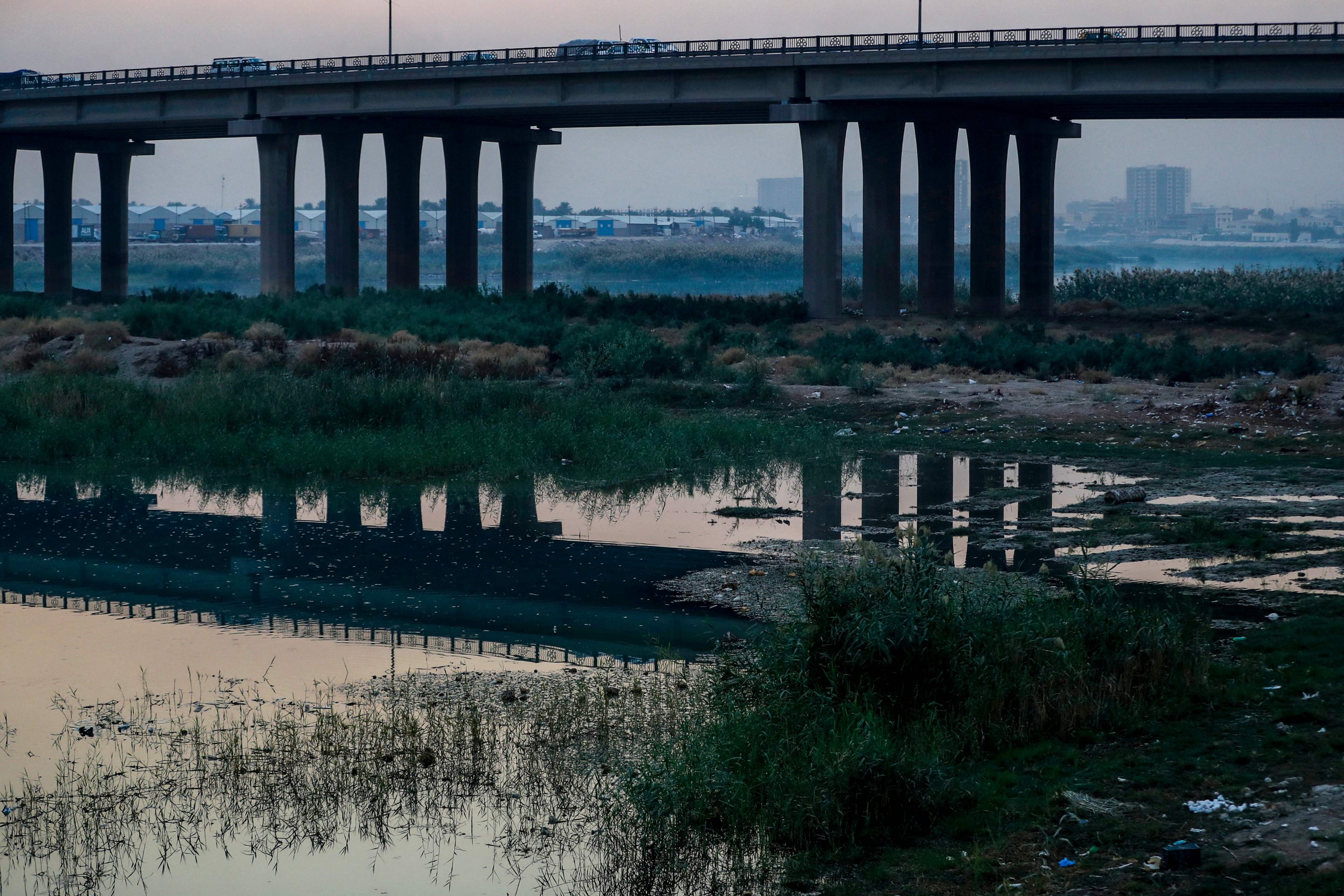
In the future, Türkiye can bolster its position and promote regional water security through several practical steps.
Sustaining cooperative diplomacy should be the first move. Building on the 2024-2025 accords by maintaining regular dialogue and ensuring that agreed infrastructure projects are completed on schedule will solidify trust between Ankara and Baghdad.
Enhancing joint monitoring and data sharing is also significant. Working with Iraq to establish joint monitoring of river flows and water use, reviving the spirit of the Three-Stage Plan, and collecting and sharing reliable data will eliminate mistrust stemming from conflicting figures and allow both sides to plan based on a common understanding.
Türkiye should also promote water-use efficiency and continue to support Iraq’s efforts to modernize irrigation and reduce water loss. For this, Türkiye should offer technical expertise and incentives (through oil-funded projects) for measures such as lining canals and introducing drip irrigation. Helping Iraq curb waste will ease pressure on the rivers, creating a more sustainable balance for all.
Another step is maintaining a fair-sharing narrative and Türkiye’s commitment to equitable sharing. Transparency about Türkiye’s water releases and cooperative initiatives can counter accusations that Ankara is “hoarding” water. Highlighting facts (such as Türkiye’s contributions to the overall flow and its restraint in usage) will strengthen Türkiye’s diplomatic position and discourage external meddling.
Planning for climate resilience and incorporating climate change projections into water planning are also essential. Türkiye should invest in additional storage, conservation and drought-response measures, and work with Iraq on flexible agreements that adjust water-sharing in dry periods. By preparing for variability, both countries can share the burdens of drought more fairly.
By pursuing these steps, Türkiye can uphold its water rights while also demonstrating leadership in cooperative water management. This balanced strategy reinforces Türkiye’s stance that equitable, efficient use (not zero-sum rivalry) is the key to resolving the Euphrates-Tigris dispute in the long run.
The views and opinions expressed in this article are solely those of the author. They do not necessarily reflect the editorial stance, values or position of Daily Sabah. The newspaper provides space for diverse perspectives as part of its commitment to open and informed public discussion.