Physical Address
Indirizzo: Via Mario Greco 60, Buttigliera Alta, 10090, Torino, Italy
Physical Address
Indirizzo: Via Mario Greco 60, Buttigliera Alta, 10090, Torino, Italy
The Turkish Maarif Foundation (TMV) has emerged as a major international education actor since its establishment by law in 2016. The foundation’s creation coincided with a critical moment in Türkiye’s history, the failed July 15 coup attempt.
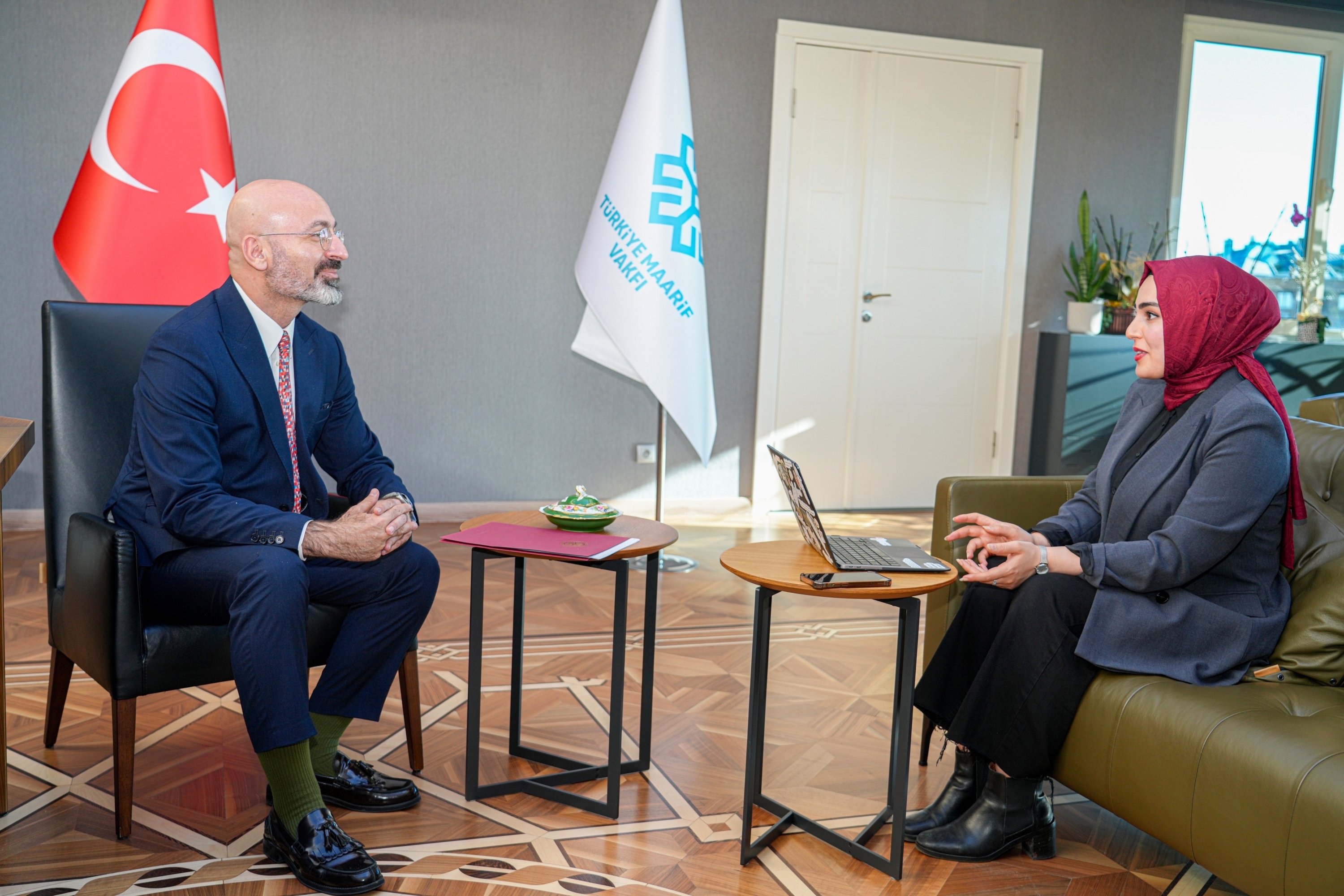
In a recent interview with Daily Sabah, Mahmut Özdil, president of TMV, outlined how the institution’s early operations unfolded against the backdrop of this national crisis. “The Turkish Maarif Foundation was established to provide formal and non-formal education services abroad,” Özdil explained.
“Law No. 6721 was published in the Official Gazette in June, and immediately afterward, on July 15, our country faced a very severe coup attempt. By September, TMV had taken the field. In other words, the short period between establishment and actual operational start coincided with a time in which Türkiye went through an extraordinary test, naturally shaping the foundation’s roadmap directly,” he said.
Following the coup attempt, the government tasked TMV with assuming control of schools abroad affiliated with the FETÖ organization, which had operated under the guise of Turkish schools. Özdil stated that rather than closing these institutions, countries demanded their removal from FETÖ influence.
TMV was mandated to take over and transform these schools into high-quality educational institutions. Currently, TMV operates in approximately 64 countries, overseeing more than 70,000 students and over 600 educational institutions.
Özdil noted that FETÖ-affiliated schools represent about one-third of TMV’s network. Following the takeover, swiftly upgrading their physical and academic standards to meet TMV’s international criteria became a priority. Unlike new schools, these institutions had no solid framework and contained deliberate deficiencies, complicating rehabilitation efforts. TMV simultaneously develops its own education model while addressing issues in acquired schools.
Throughout this process, TMV collaborated closely with the Ministry of National Education and the Ministry of Foreign Affairs. Özdil emphasized that this initiative marks Türkiye’s first extensive international education effort, lacking a ready model, curriculum, or experienced international teaching staff.
Highlighting the complexity of the work, Özdil stressed the importance of local context: “Each country has a distinct culture, social structure, pace and educational perspective.” He emphasized the necessity of “fostering a balanced partnership with the host nation” rather than imposing a fixed model. Education, he said, is “A dynamic, multifaceted process enriched by the needs and contributions of students, families and the broader community.”
He warned against uniformity, “When you attempt to apply the same curriculum, the same method and the same cultural codes everywhere, a natural tension arises with the local environment,” which ultimately “distances education from an authentic foundation.” Özdil further noted, “Our educational model must not be detached from the local framework; on the contrary, it must be nourished by local needs, social fabric and cultural climate.”
Local involvement plays a key role, with “a significant portion of our teaching staff consisting of local educators,” and programs are shaped through close consultation with the Ministries of Education in host countries, jointly analyzing their needs. Özdil summarized TMV’s approach as “not a matter of ‘adaptation’ but the core of the work. We do not see our mission as a one-way transfer; rather, as a commitment to mutual learning, sharing and coproduction.”
On quality assurance, Özdil highlighted two essential elements: “A strong pedagogical framework that supports the student and a reliable accreditation structure that sustains the institution.”
When asked about regions where TMV has a strong presence, Özdil explained, “Our largest student bodies are in countries with quite different socio-cultural structures, such as Kyrgyzstan, Pakistan, Afghanistan, Mali and Ethiopia. This clearly shows that it is not easy to group the countries where we are strong under a single categorical heading.”
Özdil also highlighted TMV’s support for immigrant-origin youth in Europe. He observed that countries like Germany and France lack inclusive educational systems that fully utilize this demographic’s potential. These youths face challenges, including low academic performance, language barriers and limited job opportunities. TMV addresses these issues through education centers offering programs designed to boost academic success, self-confidence and social engagement, creating a significant international impact.
Emphasizing the central role of educators, Özdil stated, “Without teachers who engage directly with students, the program cannot succeed.” TMV prioritizes valuing and continuously supporting educators. Recruitment focuses on candidates who build meaningful connections with students rather than mechanical interactions. Özdil added: “The relationship with a teacher doesn’t end after hiring. Throughout the year, we offer structured development programs by subject and grade to support their ongoing growth,” providing a framework for continuous professional development.
TMV aims to help students confidently embrace their own cultures while developing a broad global perspective. Through its network, students engage in international projects, competitions like Teknofest, and platforms such as the Model Organisation of Islamic Cooperation (OIC) and the Model U.N. These experiences teach youth to address global issues through their own values. TMV views local identity and global outlook as complementary, encouraging students to carry their heritage as a source of strength wherever they go.
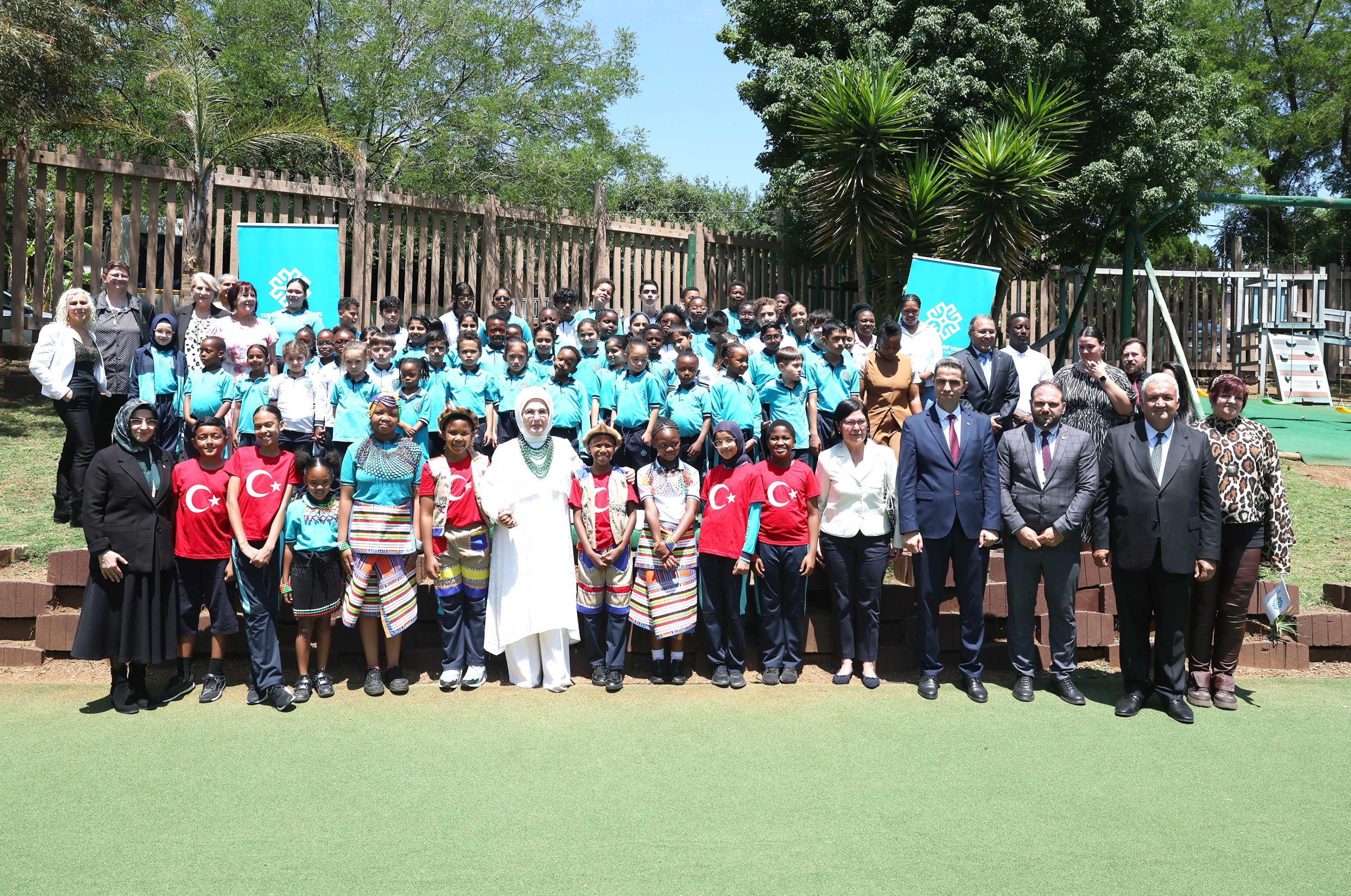
Özdil outlined TMV’s goal to develop graduates: “We have clear constants regarding the student profile we aim to cultivate: our graduates should enter life as intelligent, conscientious, strong-willed, active and virtuous individuals. We design our programs and student experiences to strengthen these values.”
He further emphasized the importance of individuality: “Every individual should have the opportunity to exist and develop with their own identity.”
Özdil highlighted the theoretical foundation behind TMV’s work, underscoring a deliberate effort to build institutional intellect beyond simply opening schools. “We continuously develop the philosophy, objectives and methods of education,” he said, noting a recent focus on artificial intelligence education, introducing a curriculum from middle school that encourages students not only to use but also to produce AI.
The upcoming Istanbul Education Summit, themed “Improving the World through Education,” will be held on Dec. 5 and 6. The event will host first lady Emine Erdoğan and feature high-level meetings, panels, youth sessions and dialogues with education ministers from TMV countries. Interested individuals can register to attend on TMV’s official website.
On scholarships, Özdil detailed two main types: need-based and merit-based. Scholarships support outstanding students, but academic excellence is not mandatory for eligibility. Criteria include entrance exam scores, grade averages and financial need. Special programs focus on international students in educational sciences and student leaders studying in Türkiye.
Additionally, TMV launched the “Maarif Excellence Scholarship” in cooperation with the Presidency for Turks Abroad and Related Communities (YTB). This initiative offers top students scholarships along with mentoring to support their development.