Physical Address
Indirizzo: Via Mario Greco 60, Buttigliera Alta, 10090, Torino, Italy
Physical Address
Indirizzo: Via Mario Greco 60, Buttigliera Alta, 10090, Torino, Italy

Türkiye and the Vatican established diplomatic relations in April 1960. Two years later, in 1962, embassies began to operate. Since then, four different popes have visited Türkiye: Paul VI in 1967, John Paul II in 1979, Benedict XVI in 2006 and finally Francis in 2014. Pope Leo XIV’s visit was the fifth papal visit to Türkiye.
Pope Leo paid an official visit to Türkiye last week, from Thursday to Sunday. The visit was the Pope’s first foreign visit since his election last May as the leader of the Catholic Church. National and international media described the trip as highly symbolic.
Many discussions were held, especially in the Turkish media. Because the Pope has two roles, one political as the head of the Vatican City State and one religious as the leader of the Catholic Church, the visit was examined from multiple perspectives. While some viewed the visit strictly through a political lens and others approached it from a theo-political angle, much of the discussion ultimately lacked proper context.
In this short piece, I will try to summarize the main political reasons and implications of the visit by listing several factors that determine close relations between Ankara and the Vatican and drawing conclusions from them.
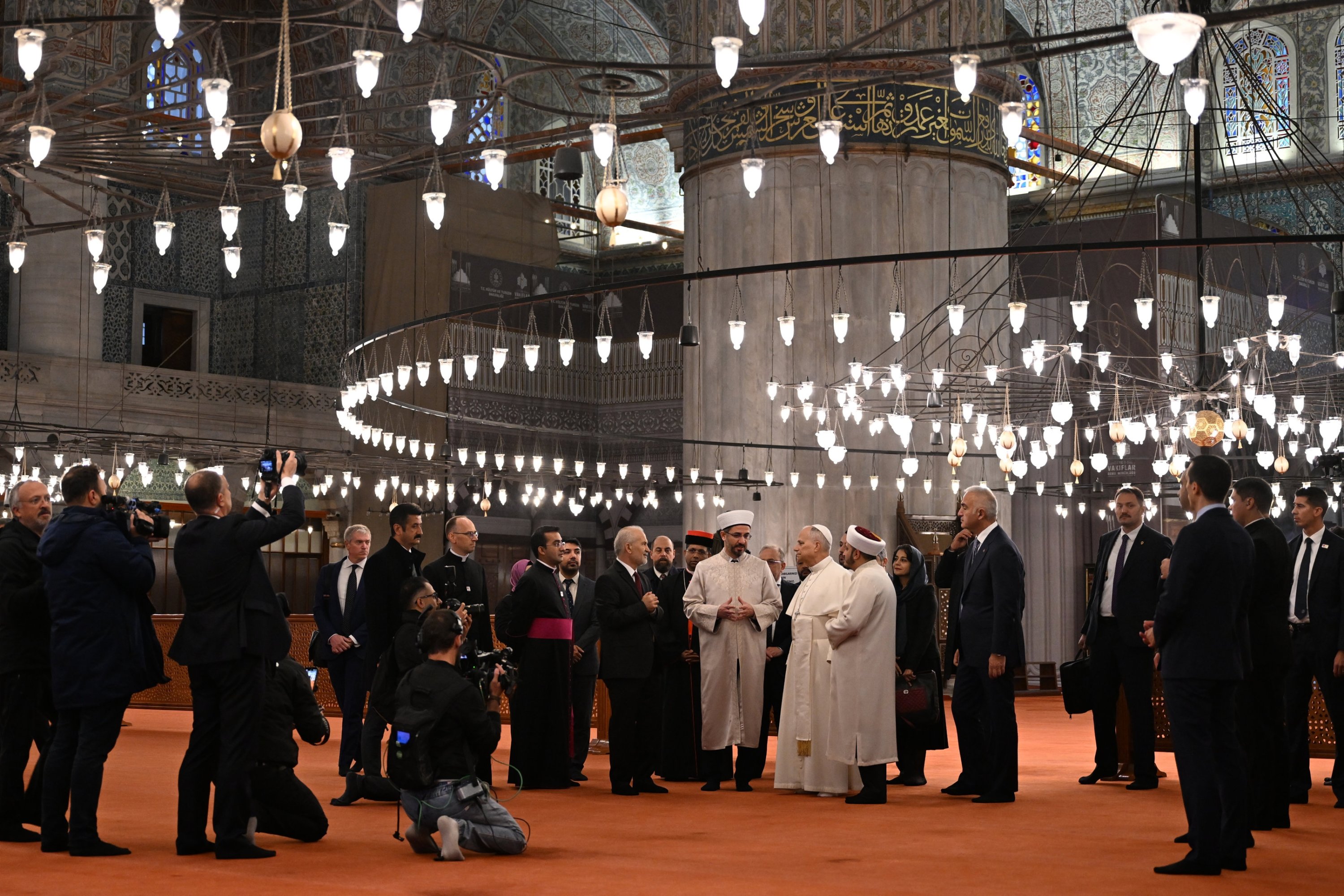
The first reason Pope Leo chose Türkiye for his inaugural visit is the country’s unique geographical position. Situated at the crossroads of three continents, Türkiye has long served as a bridge between East and West. Its territory bears the cultural and historical legacies of numerous civilizations, and it is home to many sites of significance to both Muslims and Christians. Notably, some of the world’s earliest Christian churches, several of which remain active today, are located in Türkiye.
More importantly, for the pope, Türkiye hosts the most central church representing Eastern Christianity, the Fener Greek Orthodox Patriarchate. Although the church is a Turkish national institution, the head of which is appointed by the president of Türkiye, it is considered the most important religious institution and the highest religious authority of the Orthodox Church.
Second, Türkiye and the Vatican are two states that use similar political discourses to promote global peace. They support coexistence and struggle to achieve global peace in a polarizing world. Bilateral relations are realistic and largely shaped by the current international conjuncture. Both countries have been trying to build an anti-conflict and neutral third bloc in the world against the conflicting power centers led by the United States and China. Unlike these two conflictual blocs, both states call for a peaceful and humanitarian solution to the regional and global crises.
Türkiye, as the successor of a multiethnic and multireligious empire, inherited the culture of peaceful coexistence. Those who study the Ottoman Empire recognize that it achieved establishing pax-Ottomana and formed a political system in which different belief systems were able to coexist.
Likewise, the Vatican under different popes employs a similar political discourse. Since his inauguration, Pope Leo has been using a moderate and diplomatic political discourse. He strongly criticized past actions committed in the name of religion. He clearly opposed the use of religion as an instrument of oppression, persecution and discrimination. For instance, after he left Türkiye, he said that “people of different religions can live in peace. That is one example of what I think we all would be looking for throughout the world.”
Third, both Türkiye and the Vatican have been seeking solutions to some of the recently emerged global social and political problems. They both have been trying to take a common stance for the defense of traditional social and cultural institutions such as family, society and religion against the secular disruptive ideologies such as genderlessness. They also try to defend humanity against the challenges emanating from the disruptive dimensions of artificial intelligence.

To keep it short, there are several important strategic, political and religious implications of the visit. Pope Leo visited Türkiye, a country that has been striving to represent the underrepresented, asking for a just and more peaceful world, to get support for its peaceful political discourse. The Vatican aims to benefit from Türkiye’s growing global influence and reach. As mentioned above, the two states have been using similar political discourses. For this reason, he praised Türkiye for its culture of religious coexistence and for its outspoken support of oppressed peoples around the world.
Furthermore, the Vatican took some important steps contributing to its relations with Türkiye. For example, it recently decided to open a prayer room in the Vatican Library for Muslims to worship and invited Türkiye’s first lady Emine Erdoğan to speak at the Vatican. In addition, the Vatican’s moderate view of Ankara may contribute to changing the Western misperception of Türkiye.
Religiously, the Vatican has been trying to reinitiate a religious and interfaith dialogue with the Orthodox Church. As two traditionally rival denominations, they have been competing with each other for centuries. Both sides want to reduce this rivalry and develop joint actions to address the challenges facing Christianity. Despite all the efforts of different churches, Western people are moving away from Christianity every day.
However, when we look at the most recent developments and respective visits and speeches of the leaders of Catholic and Orthodox churches, we see that they largely differ in their perspective on world politics. Particularly, the Orthodox Church’s relations with the U.S. and Israel are noteworthy. Unfortunately, during their visit to the U.S., the head of the Orthodox Church complained about Türkiye.
The visit to Türkiye and Lebanon is an indirect message to Jewish and Christian Zionism, mainly responsible for the rise of religious hatred and xenophobia, including the Gaza genocide. Catholicism has tense relations with both Christian and Jewish Zionism. Therefore, it tries to improve its relations with the other traditional Christian denomination, the Orthodox Church.
However, the Vatican has not been vocal about the ongoing Gaza genocide. Pope Leo prayed for the innocent people of Gaza and mildly criticized Israel for its atrocities not only against Muslims but also against Christians living in the Gaza Strip. Similar to other Catholic states such as Spain, Ireland and many Latin American countries, the Vatican could also take a harsher stance against the genocide. But unfortunately, for some reason, it could not take a harsher position against Israel and its accomplices.
All in all, both Türkiye and the Vatican are aware that in today’s interconnected world, members of different religions and faiths live together all over the world. No religion is isolated from the others. Therefore, a culture of peaceful coexistence is necessary for all states, religions, civilizations and peoples. The increased interdependence among different states and peoples requires the struggle for a global-scale peace and political and social cooperation.