Physical Address
Indirizzo: Via Mario Greco 60, Buttigliera Alta, 10090, Torino, Italy
Physical Address
Indirizzo: Via Mario Greco 60, Buttigliera Alta, 10090, Torino, Italy

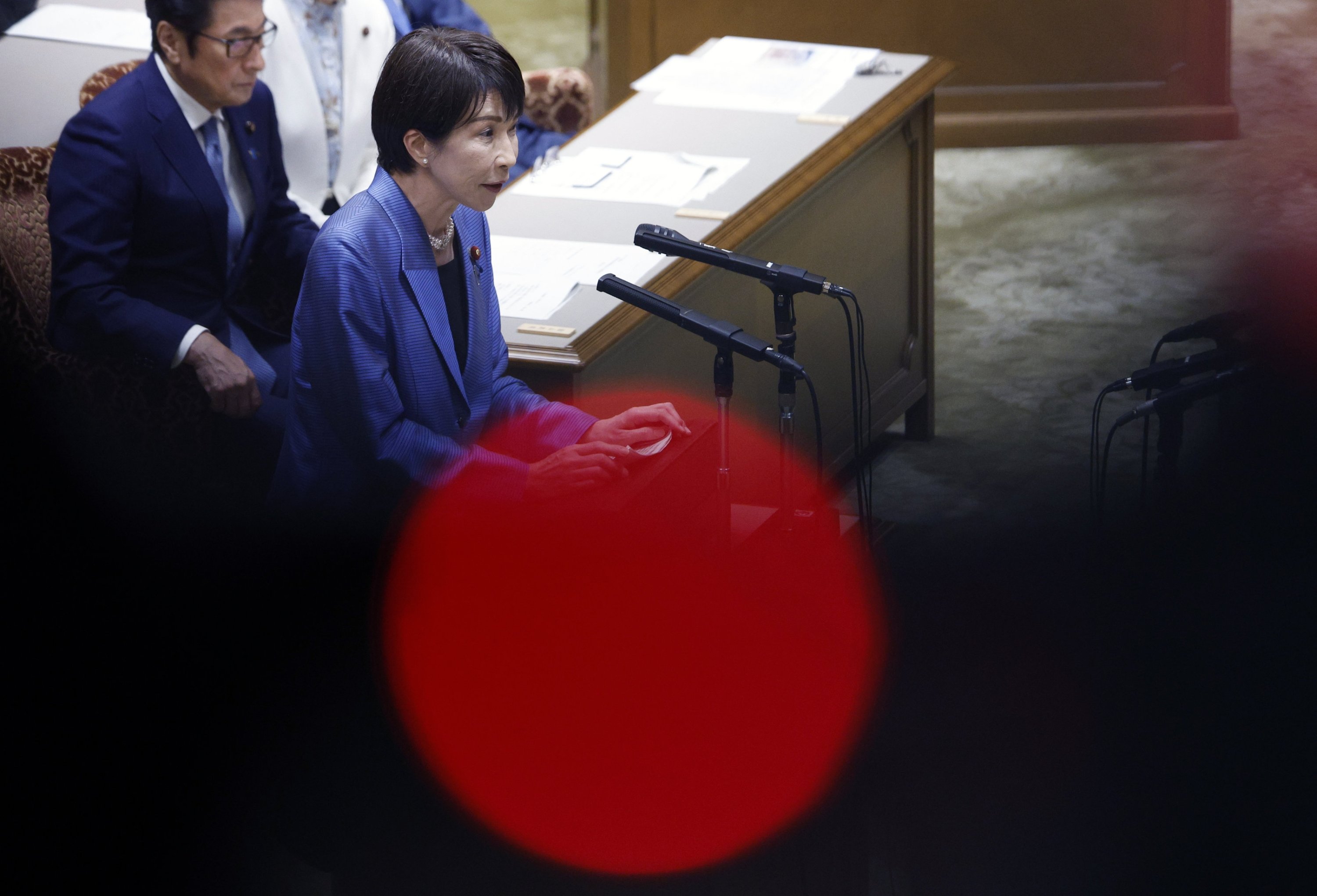
The growing diplomatic dispute between China and Japan following Japanese Prime Minister Sanae Takaichi’s recent remarks on Taiwan is more than a bilateral issue. It reflects deeper geopolitical changes across the Indo-Pacific, where shifting power balances, historical grievances and rising nationalism are pushing the region toward a new period of uncertainty.
The confrontation began after Takaichi suggested that a hypothetical Chinese attack on Taiwan could pose an existential threat to Japan, potentially allowing Tokyo to use “collective self-defense.” Her comments were immediately rejected by Beijing, which views Taiwan as an internal matter and considers foreign involvement a direct challenge to Chinese sovereignty. Three weeks later, the dispute continues to intensify rather than recede.
China’s response was sharp. Foreign Minister Wang Yi accused Japan of “crossing a red line” and warned that Tokyo’s actions could force the international community to “reexamine Japan’s historical crimes.” Such references are not accidental. Memories of Japan’s wartime occupation remain deeply sensitive in China, and political leaders often invoke them when tensions rise.
Japan’s political climate is also changing. Takaichi’s approval rating has climbed to nearly 70% and public support for a stronger defense posture is growing. Her conservative background, combined with Japan’s evolving security strategy, signals a deliberate move toward a more assertive foreign policy.
Tokyo has already confirmed plans to deploy new missile systems near Taiwan, underscoring the seriousness of its strategic reassessment.
One central issue fuelling today’s tensions is Japan’s apparent change of policy regarding Taiwan.
China has consistently emphasized one of the core pillars of its foreign policy, the “One China” principle, which asserts that Taiwan is an inseparable part of Chinese territory. Since Beijing’s admission to the United Nations in 1971, this position has been repeatedly and firmly underlined across all international platforms.
Japan, too, has long aligned itself with this policy. Following the establishment of diplomatic relations and the signing of friendship treaties between China and Japan in the 1970s, Tokyo formally acknowledged the One China principle and maintained this stance for decades.
Against this backdrop, the Japanese prime minister’s recent remarks lack diplomatic grounding and mark a noticeable departure from Japan’s long-standing commitments. Unsurprisingly, China has intensified its diplomatic efforts at the United Nations, pushing for clarity on Japan’s position and seeking to prevent any reinterpretation of a principle that both sides had previously treated as settled.
This context is essential for understanding why Beijing views Tokyo’s statements not merely as provocative but as inconsistent with Japan’s own historical pledges.
Beijing has responded with a mix of diplomatic pressure and economic tools. China issued a travel advisory warning its citizens about visiting Japan, immediately impacting Japan’s tourism and retail markets. With over 7.5 million Chinese tourists visiting Japan in the first eight months of 2025 and more than 120,000 Chinese students studying there, any disruption carries major economic consequences. A recent study suggests the Japanese economy could lose about $9.59 billion over the next year if Chinese tourists continue to avoid Japan.
China remains Japan’s second-largest export market after the United States, absorbing around $125 billion worth of Japanese goods annually. Moreover, Japan’s high-tech industries, including electric vehicles, electronics and defense components, depend heavily on Chinese-controlled rare-earth materials. While Japan has reduced its reliance from 90% in 2010 to around 60%, China’s dominance in the supply chain still provides significant leverage.
This economic dimension is crucial. In an era of interconnected markets, geopolitical friction is no longer limited to political statements – it immediately spills over into trade, investment and technology sectors.
The crisis is also unfolding amid a recalibration of U.S. strategy in Asia. Although reports claimed that U.S. President Donald Trump privately urged Takaichi to moderate her rhetoric, Tokyo denied this. Regardless of the accuracy, the episode highlights Washington’s delicate balancing act: supporting Japan as a key ally while avoiding an escalation with Beijing.
After the controversy, Takaichi held a phone call with Trump to emphasize “close cooperation” between Tokyo and Washington. This demonstrates that any crisis involving Taiwan inevitably pulls in the U.S., given its extensive military presence in Japan and its obligations under the U.S.-Japan security alliance.
For regional players, this creates a triangular dynamic where even minor missteps can carry major consequences.
While neither China nor Japan seeks a direct military confrontation, the risk of miscalculation is becoming more serious. Frequent military and coast guard operations around the Senkaku/Diaoyu Islands and Taiwan’s airspace increase the chances of unintended incidents. In the past, small clashes have been contained quickly; today, domestic nationalism and heightened strategic rivalry make de-escalation more difficult.
Both governments face internal pressures that limit their room for compromise. Chinese leaders cannot appear weak on Taiwan, while Japanese leaders increasingly view Taiwan’s security as directly linked to their own. This combination creates fertile ground for diplomatic missteps.
For Türkiye, a country that maintains strong economic partnerships and diplomatic channels with both China and Japan, stability in East Asia is essential. Any disruption in global supply chains, whether related to rare earths, semiconductors or maritime trade routes, directly affects Türkiye’s economy and its strategic interests.
Ankara’s balanced foreign policy toward Asian powers allows it to play a constructive role as a supporter of dialogue, moderation and respect for international law. As competition in the Indo-Pacific intensifies, Türkiye’s diplomatic approach, focused on cooperation rather than confrontation, becomes increasingly relevant.
The dispute that began with comments in Tokyo has now evolved into a broader test of regional stability. It highlights how intertwined history, domestic politics and strategic competition have become in today’s Asia. Without restraint, the risk of miscalculation will continue to rise.
It is worth recalling that Japan’s wartime record extends far beyond China. During World War II, Imperial Japan invaded and occupied large parts of the Asia-Pacific, including Korea, Indonesia, the Philippines, Malaysia, Singapore, Myanmar, Papua New Guinea and numerous Pacific islands. The memories of these occupations remain vivid across the region.
If Japan’s foreign and security policies continue to move in a more assertive and militarized direction, it is unlikely that only China will react with concern. Many Asia-Pacific nations, shaped by their own historical experiences with Japanese aggression, would view such a shift with deep unease. This broader regional sensitivity adds another layer of risk to Tokyo’s evolving strategic posture.
In this context, responsible diplomacy is not simply desirable; it is essential. China, Japan and the wider international community, including Türkiye, have a shared interest in ensuring that the East China Sea does not become the next major flashpoint in global politics.
The views and opinions expressed in this article are solely those of the author. They do not necessarily reflect the editorial stance, values or position of Daily Sabah. The newspaper provides space for diverse perspectives as part of its commitment to open and informed public discussion.