Physical Address
Indirizzo: Via Mario Greco 60, Buttigliera Alta, 10090, Torino, Italy
Physical Address
Indirizzo: Via Mario Greco 60, Buttigliera Alta, 10090, Torino, Italy

On the battlefield, Ukraine is fighting for its very survival. At the negotiating table, it’s attempting to resist proposals that would force it to cede its Russia-occupied territories. At home, President Volodymyr Zelenskyy is grappling with a corruption scandal that has just cost him his most trusted aide.
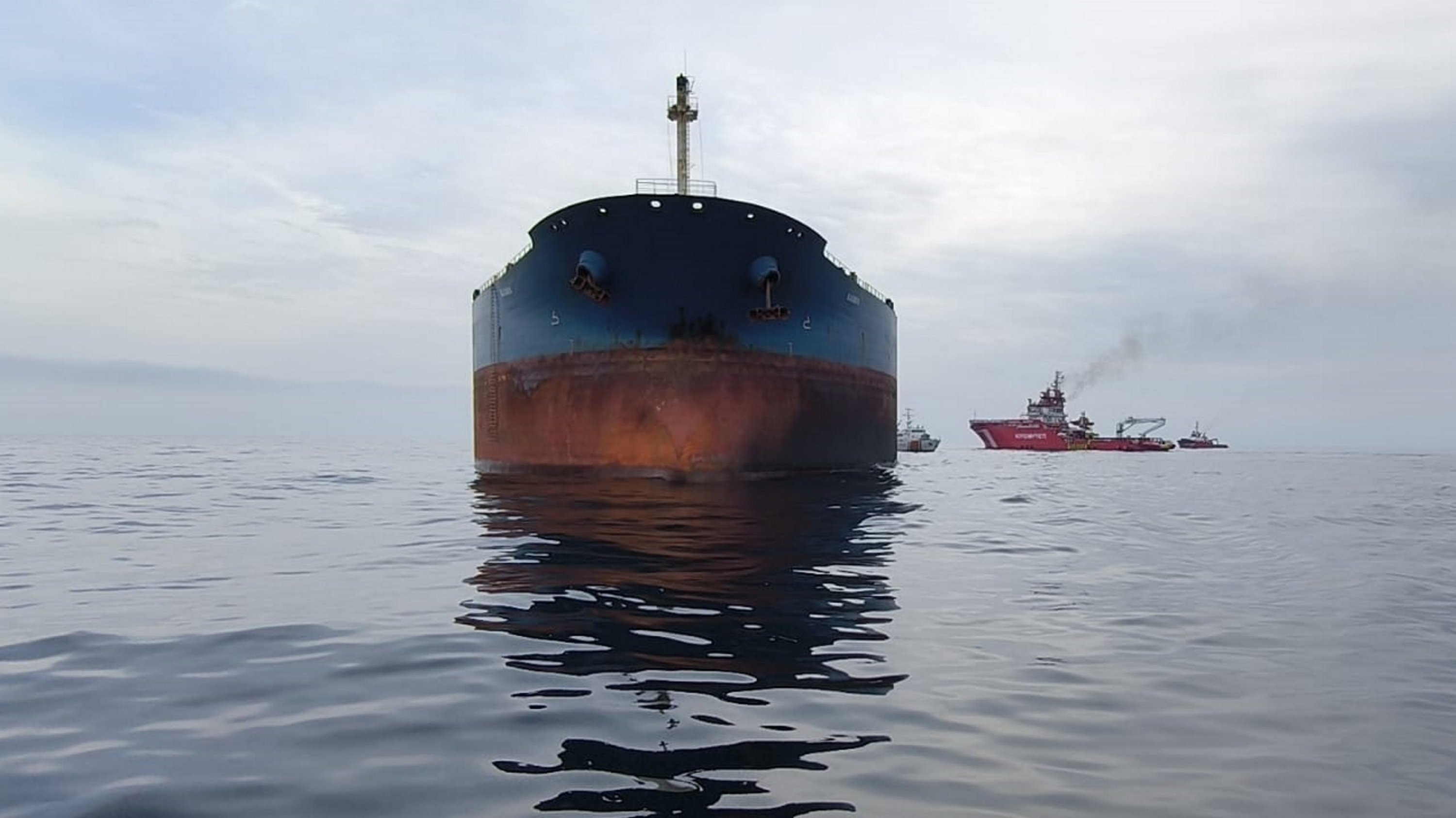
Together, these pressures appear to be driving Kyiv to pursue riskier strategies, according to experts, most visibly through last week’s attacks on Russian-linked merchant vessels in the Black Sea. The incidents have alarmed one of the key actors in efforts to end the nearly four-year war: Türkiye.
Ukraine has targeted Russian vessels before, particularly between 2022 and 2024, but those operations largely stayed in the northern Black Sea, within or near Russian territorial waters. The latest attacks, however, occurred inside Türkiye’s exclusive economic zone (EEZ), prompting Ankara to condemn them as unacceptable and to warn “all parties” to halt such actions.
Kyiv acknowledged it had used naval drones to strike two empty tankers, which were sailing off the Turkish coast and heading to the Russian port of Novorossiysk. But it denied involvement in a separate incident on Tuesday. No civilian casualties were reported in any of the attacks.
Foreign Minister Hakan Fidan on Wednesday described the attacks as “very scary,” stressing that they endangered the security of everyone in the region and demonstrated the escalating reach of the war in Ukraine.
Teoman Ertuğrul Tulun, an analyst at the Center for Eurasian Studies (AVIM), says the incidents pose a “new test” for Türkiye’s diplomatic initiatives while also underscoring the importance of Ankara’s mediating role.
Earlier efforts had positioned Ankara, a NATO member that has maintained dialogue and close relations with both sides, as a “reliable mediator” in the eyes of both Ukraine and Russia, Tulun told Daily Sabah.
Ankara’s response has been calibrated. “Türkiye’s message is not to directly blame one side, but to underline that any attack on merchant ships is unacceptable and that navigation safety in the Black Sea is a non-negotiable principle,” Tulun noted. This stance, he said, reinforces Türkiye’s image of “principled neutrality.”
Energy and Natural Resources Minister Alparslan Bayraktar told reporters on Wednesday that Türkiye was urging Russia, Ukraine, and all other parties to keep energy infrastructure out of their conflict and wants energy flows to continue uninterrupted.
The vessels struck by Ukraine are believed to be part of Russia’s “shadow fleet,” tankers Kyiv says help Moscow bypass Western sanctions by exporting oil that funds its war effort. Both ships were empty and en route to Novorossiysk, a major Russian Black Sea oil terminal.
According to Vişne Korkmaz, a professor at Nişantaşı University, the attacks represent the extension of the so-called “long-distance sanctions” strategy into the Black Sea. “Ukraine aims to disrupt the Russian oil trade, which it views as feeding Russia’s war economy, by making the use of Novorossiysk port risky,” she told Daily Sabah.
The port, she explains, is not only vital for Russia but also for Caspian oil exports to the world.
Through the attacks, Kyiv may also be trying to force Moscow into missteps, Korkmaz says.
“Kyiv is attempting to compel Russia into a move that would complicate its position not only vis-a-vis the U.S. but also Türkiye,” she explained.
She believes Ukraine is unlikely to ignore Türkiye’s warnings outright. “We know that Kyiv may need Ankara’s support for its security today and in the future,” she said. Still, she added, Ukraine may continue attacks outside Türkiye’s exclusive economic zone.
Türkiye, meanwhile, “does not want this kind of destabilization in the Black Sea,” Korkmaz stressed. That’s why Ankara has called for steps to reduce tensions and launch a cease-fire or broader agreement “as soon as possible.”
The incidents have already pushed up Black Sea shipping insurance rates. Meanwhile, Kyiv denied any link to another incident on Tuesday in which a Russian-flagged tanker loaded with sunflower oil said it had come under drone attack off the Turkish coast.
Beyond the Black Sea, a Turkish-owned tanker, which also did business with Russia, was damaged last week near Senegal by what were said to be external impacts. No one claimed responsibility. The incident has reportedly prompted the tanker’s owner, Besiktas Shipping, to halt Russia-related operations.
Tulun warns that rising insurance premiums, freight costs and the diversion of cargo to alternative routes are making the Black Sea “a more fragile basin” for grain and energy transport. The attacks, he argues, also increase pressure on the Montreux Convention, heightening the risk of the war widening into a broader Black Sea conflict.
The 1936 deal gives Türkiye the authority to regulate naval traffic through the Turkish straits during wartime.
“For this reason, Türkiye has clearly emphasized that it does not condone these attacks and considers the safety of merchant shipping in the Black Sea a red line,” Tulun said.
According to Korkmaz, targeting civilian commercial assets, and thus making commerce part of the war, creates instability that affects third parties, not just Russia and Ukraine. “It also poses serious environmental risks. The Black Sea will remain a vital route for littoral states even after the war,” the professor said.
Uğur Altın, a TRT World news producer specializing in war and security, says Ukraine is seeking to pressure Russia’s maritime revenues by disrupting operations. “Targeting an oil ship is meant to complicate resupply, while other attacks may serve as bargaining chips in peace talks, though they carry risks of regional escalation,” Altın told Daily Sabah.
One Ukrainian aim, Korkmaz adds, could be forcing Russia’s navy, less exposed since 2024, to take additional measures to protect merchant vessels, making it an open target for Ukrainian missiles and drones. Or, Moscow could respond by raising the stakes, which could lead to a rash step that potentially disrupts the current U.S.-Russia negotiation track, she added.
“These are the possibilities Kyiv is likely testing,” Korkmaz said.
Russian President Vladimir Putin on Tuesday threatened to sever Ukraine’s access to the sea, and said Moscow would increase its strikes on Ukrainian vessels and facilities, and would also take action against tankers belonging to countries that provide assistance to Ukraine.
The escalation at sea comes as Ukraine faces simultaneous diplomatic and domestic battles.
At the table, Kyiv and its European allies are resisting a U.S. peace proposal leaked last month and criticized for satisfying many of Russia’s territorial and security demands. Ukraine has repeatedly said it will not surrender territory.
Europe later advanced its own counter-proposal, and U.S. and Ukrainian negotiators announced an “updated and refined” framework after talks in Geneva.
Many European leaders fear that if Russia secures major concessions in Ukraine, it will be emboldened to threaten others, especially as several EU and NATO states have already reported Russian drone incursions, airspace violations and sabotage plots.
Zelenskyy had said everything would depend on the negotiations in Moscow late Wednesday. But five hours of talks between Russian President Vladimir Putin and U.S. envoys at the Kremlin produced no breakthrough.
According to Tulun, the Black Sea incidents serve as an additional lever to rebalance pressure on Russia during the peace talks. He says the initial draft has led Ukraine to try to offset concessions at the negotiating table with military pressure on the ground.
“By targeting the ‘shadow fleet’ carrying Russia’s oil revenues, the backbone of its war economy, Ukraine sends a signal that it will not allow Russia an ‘easy peace’ and raises the costs, thereby acting as a brake on excessive concessions in the revised plan,” Tulun said.
However, conducting this pressure strategy in areas very close to Türkiye’s coasts and exclusive economic zone challenges Ankara’s sovereignty sensitivities and its red lines on Black Sea navigation safety, he said.
“Therefore, while Türkiye acknowledges that steps increasing economic and political pressure on Russia can support a fair and lasting peace framework, it also stresses that attacks on merchant ships erode the Montreux regime and Black Sea stability, pulling peace plan discussions onto a more fragile ground, and calls on all parties not to cross this line,” he explained.
Zelenskyy’s domestic troubles compound the pressure. Andriy Yermak, his powerful chief of staff and chief negotiator, resigned last week after anti-corruption agents searched his home.
Yermak has been a close confidant of Zelenskyy since the latter’s time as a TV comedian. He helped manage Zelenskyy’s successful 2019 outsider election campaign. Since then, the 54-year-old has established himself as a primary decision maker within the administration.
His resignation came days following the announcement of a large-scale investigation into an alleged $100 million kickback operation within the state atomic energy company. This scheme reportedly involved former high-ranking officials and an ex-business associate of Zelenskyy’s.
On the battlefield, Russia is advancing its offensive across various parts of the extensive front line, though the progress has been painfully slow and achieved at a tremendous cost in human lives since it sent its troops into Ukraine in 2022.
Away from the immediate combat zones, both sides are involved in a brutal war of attrition, relying on drones and missiles to conduct strikes against targets further behind the front line.
According to TRT World’s Altın, peace talks cannot proceed independently of battlefield outcomes; therefore, both sides are trying to maximize their leverage.
Given Ukraine’s struggles on land, he says incidents like the ones in the Black Sea may become more frequent. “The attacks are creating a pressure tool for the inclusion of clauses concerning maritime security/transport security and verifiability to the articles of the revised plan,” he suggested.
For Korkmaz, the situation resembles the early years of the war, when Ukraine conducted significant strikes that pressured the Russian navy. Its biggest success was the sinking of the Russian Black Sea Fleet flagship, the Moskva missile cruiser, in April 2022.
“Targeting merchant ships today escalates the war to another level,” she warned, adding that the risk of the conflict turning into a “Black Sea War” is a tool both sides sometimes use to escalate.
“This makes prolongation of the war dangerous,” she noted.
Korkmaz says Kyiv values Türkiye’s mediation, its support for Ukraine’s sovereignty, and the fact that Russia continues to listen to Ankara. “This suggests Kyiv does not want Ankara to change its position,” she added.
Türkiye’s enforcement of the Montreux Convention has prevented the conflict from expanding regionally, she added. “The international community, including Russia, respects Türkiye’s stance because it sincerely seeks security, peace, stability and safe navigation in the Black Sea.”
Therefore, Korkmaz says, steps that would constrain Türkiye’s position are not in the interest of either side. But this doesn’t stop parties from continuing to test boundaries, she added. “Because this has turned into a long and challenging war.”
Altın said Türkiye’s high-level warnings show it can avert further incidents through “cool-headed policies.”
“This approach both preserves the image of independence and carries the promise of reducing tension on the ground,” he noted. The Montreux Convention and EEZ authorities provide Ankara with “regional maneuverability and the potential to monitor maritime traffic,” he added.
Should Ankara view the attacks as a growing danger within its maritime zone, Altın says it may prioritize security over neutrality by taking deterrent steps, including increasing naval patrols or escorting merchant vessels. This, he suggests, would facilitate compliance with NATO but could create objections from Moscow.
Where peace talks go from here may depend largely on whether the Trump administration chooses to increase pressure on Russia or on Ukraine to make concessions. According to Altın, Washington “may gravitate toward including both security guarantees that could strengthen Kyiv’s hand and mechanisms that limit regionalized risks.”