Physical Address
Indirizzo: Via Mario Greco 60, Buttigliera Alta, 10090, Torino, Italy
Physical Address
Indirizzo: Via Mario Greco 60, Buttigliera Alta, 10090, Torino, Italy

For the second time in his presidency, U.S. President Donald Trump introduced radical decisions and initiatives as he sought solutions to ongoing conflicts with regional and global implications. The conflict in Ukraine held strategic significance for Trump, who viewed its resolution as a means to strengthen his standing within the U.S.-led Western bloc and enhance his prospects for a Nobel Peace Prize. With this objective, Trump and Russian President Vladimir Putin met in Alaska on the sidelines of negotiations, though the meeting was widely deemed unsuccessful. Reaching an agreement with Putin was never expected to be easy.
On the other hand, Trump’s first meeting with Ukrainian President Volodymyr Zelenskyy was tense, and neither side made any progress. The outcome was seen as a strategic and historic misstep for the Ukrainian president during his visit to the Oval Office. After months, Zelenskyy returned to the White House, though his tone and positions differed significantly from those expressed during his first meeting. Still, there has been no concrete assurance that the international community will see a Ukraine-Russia peace agreement in 2026.
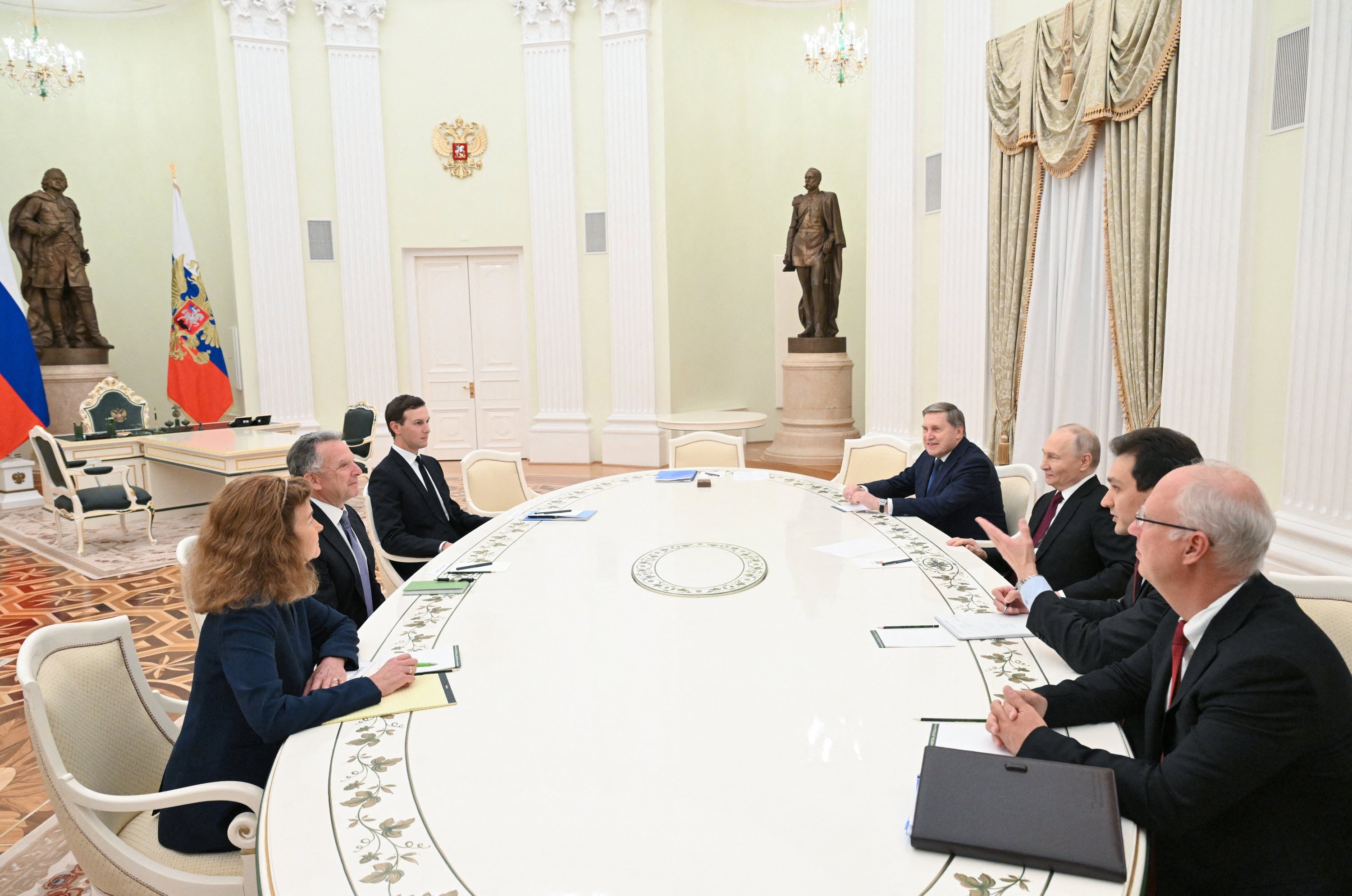
Following these developments, Trump presented a 28-point plan that he claimed would be acceptable to both Ukraine and Russia. Meanwhile, Russian and Ukrainian forces have continued striking each other’s military assets in the Black Sea. Despite this escalation, the U.S. continues to lead the negotiation efforts, and Trump’s delegation has met with Putin at the Kremlin.
Trump’s main initiative has been staying true to his promises, which were based mainly on “Make America Great Again,” the strategic motto of his campaign. Considering that, bringing the two sides to the table under his 28-point plan will give the U.S. considerable leverage and privilege vis-a-vis the EU, Ukraine and even the Russian Federation. Trump’s taking the initiative will define the limits and principles of the negotiation between Ukraine and Russia under the watch of the U.S. diplomats. However, China is the main issue on the U.S. political agenda. In that sense, pressing on Ukraine and making concessions to Russia have been calculated to change Russian policy toward China. Overall, Trump’s America appears to be the primary winner as a leading mediator, as Putin has already announced his positive reaction.
Russia has kept its historic confrontation with the West within the framework of Pan-Slavism. Therefore, Putin’s time in office focused on restoring Russia’s dominance over the post-Soviet space, and Eurasianism was the primary tool for implementing its imperial goals. In this regard, two of Putin’s remarks are essential: “Ukraine does not exist,” and “Russia’s border does not end anywhere.” His regime adopted an irredentist nationalist discourse in its foreign policy, and Eurasianism was used as a tool for its implementation. In this sense, former Soviet countries began to diversify their foreign policy, and China, Türkiye, the U.S. and the EU were the main options on the table.
As a result of the long-term war in Ukraine, the Russian side expressed an initial positive reaction to the U.S. proposal. However, Trump’s proposal not only imposes certain restrictions on Ukraine and Europe but also pressures Russia to accept a regional-power status under U.S. control. Consequently, the main aim of the U.S. proposal is to undermine the Russo-Chinese partnership in the long term.
Within this framework, Türkiye has been an exceptional actor, maintaining its balanced policy and hosting trilateral meetings in Istanbul that included Ukraine, Russia and Western representatives. Türkiye has not only kept itself out of direct involvement in the war in Ukraine, but, thanks to its well-equipped military capacity, it has also emerged as a potential security guarantor for Europe’s future. In addition, Türkiye’s predictable and pragmatic foreign policy has achieved historic successes in the Middle East, particularly in Syria, leading it to be regarded as a key ally in its neighboring regions. Moreover, Türkiye’s role in hosting immigrants from both countries provides it with an additional source of leverage in its relations with Ukraine and Russia.
Ukraine’s flag was displayed across the streets of the EU, Türkiye, the South Caucasus, the U.S. and elsewhere, signaling broad emotional support for Ukraine. However, there has never been any guarantee that Ukraine’s demands – Russia’s total withdrawal from its territory and eventual NATO membership – would be met. Nevertheless, Trump’s 28-point plan has also received positive responses from Ukraine.
The EU has historically harbored tensions toward both Russia and the U.S. due to its energy dependence on Moscow and its military dependence on Washington. For this reason, the war in Ukraine was viewed within Europe as a historic opportunity to break free from Russian energy reliance and reduce U.S. military hegemony on the continent. However, the appearance of EU leaders before Trump at the White House was perceived as an initial sign of their acceptance of renewed U.S. dominance.
Even so, the EU continues to insist on its mediating role and has announced its own 24-point counter-proposal to Trump’s 28-point – an effort aimed at preserving the EU’s political, economic and military standing vis-a-vis Russia. The Russian side, however, rejected the EU’s proposal, and Trump is expected to pressure EU leaders into accepting U.S. military primacy within the broader “Western” bloc.
Ukraine, due to its enormous losses, is not only the loser but also the primary victim of the war. In parallel with Trump’s 28-point framework, Ukraine will likely be required to limit its military capabilities and “enshrine in its constitution that it will not join NATO,” among other concessions.
At the end of the war, due to its irredentist policies, Russia will not abandon its ambitions in the “post-Soviet” space. However, the Trump administration also views the South Caucasus and Central Asia as a strategic unit. In this context, Putin’s ambitions toward the Turkic countries will likely remain on his agenda. At the same time, the Turkic world is more united than ever before and the Turkic states would likely respond collectively to any potential Russian military aggression within the framework of the Organization of the Turkic States.
In conclusion, Trump’s 28-point plan and Russia’s initial positive reaction do not guarantee lasting peace between Ukraine and Russia. However, Ukraine’s path to NATO membership has been effectively closed.
The views and opinions expressed in this article are solely those of the author. They do not necessarily reflect the editorial stance, values or position of Daily Sabah. The newspaper provides space for diverse perspectives as part of its commitment to open and informed public discussion.