Physical Address
Indirizzo: Via Mario Greco 60, Buttigliera Alta, 10090, Torino, Italy
Physical Address
Indirizzo: Via Mario Greco 60, Buttigliera Alta, 10090, Torino, Italy

Culture and Tourism Minister Mehmet Nuri Ersoy celebrated the fifth anniversary of the Taş Tepeler Project with an event in Karahantepe, located in Şanlıurfa, southeastern Türkiye, emphasizing the project’s role in shedding new light on human history and the Neolithic period.
Speaking at the event, Ersoy said the anniversary was not only a reflection on five years of research but also a celebration of a story that illuminates the origins of human civilization. He noted that since its inception, the project has surpassed expectations, offering a new perspective on early human society.
Ersoy highlighted the monumental significance of the site, recalling the 1963 surface surveys and the excavations initiated by archaeologist Klaus Schmidt in 1995. These studies revealed monumental T-shaped pillars and specialized structures, proving that Göbeklitepe was more than a settlement; it was the center of ritual life and a complex social system that reshaped our understanding of world history.
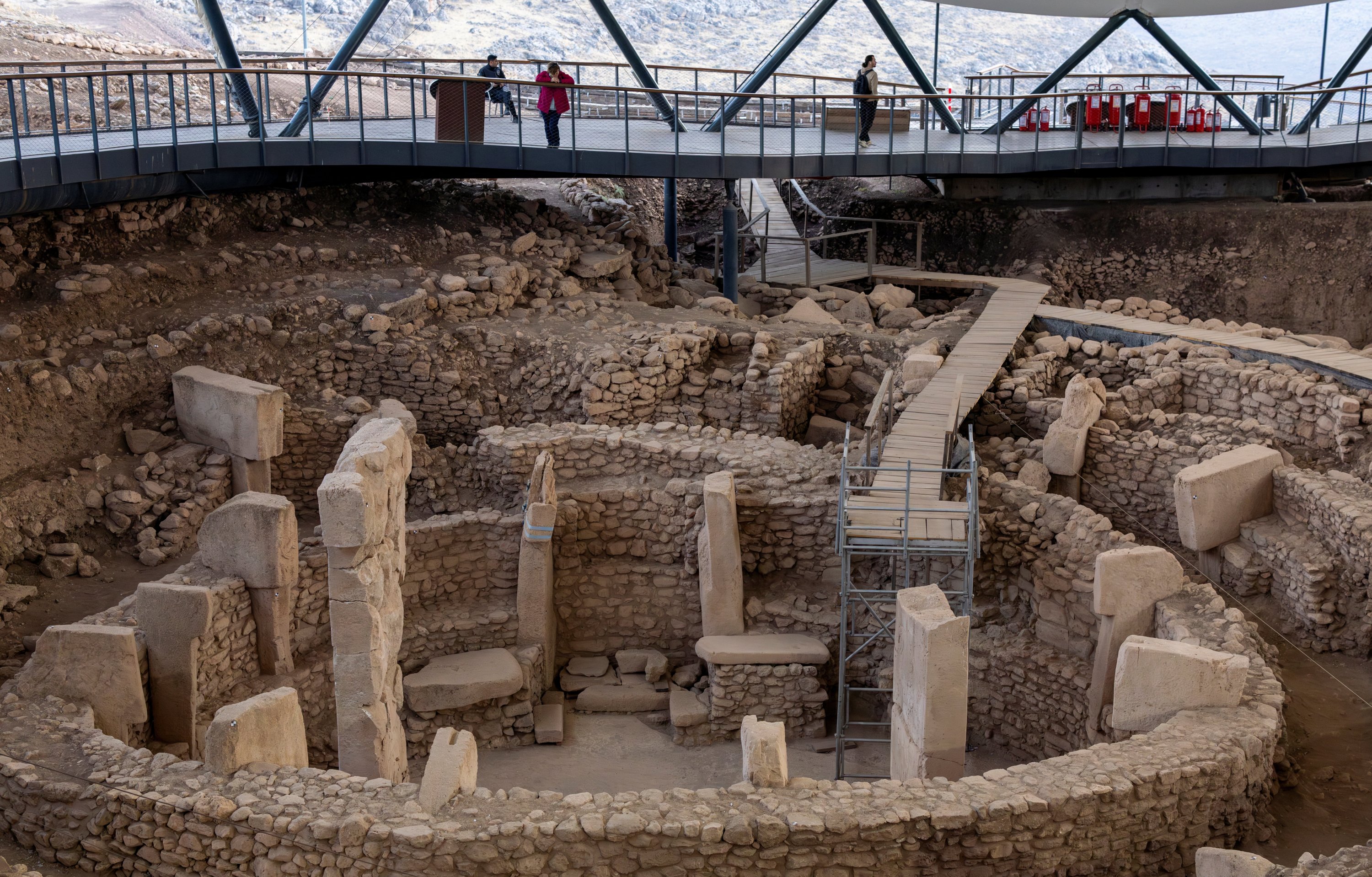
Since 2020, the Taş Tepeler Project has unified archaeological and scientific data under a single research vision. Covering sites from Göbeklitepe and Karahantepe to Sayburç and Sefertepe, the project demonstrates that early societies in this region exhibited an advanced level of consciousness in belief, ritual, social organization and cultural production.
“The Neolithic era marked major transformations in human history,” Ersoy said, noting that northern areas of the Euphrates and Tigris, particularly around Şanlıurfa, provide the clearest evidence of these cultural shifts. Archaeological and archaeometric studies have detailed the daily life, survival strategies, domestication processes, architectural achievements and production technologies of Neolithic communities, highlighting the earliest traces of civilization with unprecedented depth.
Over five years of excavations and analyses, Ersoy emphasized, the project has confirmed that its initial objectives were grounded and realistic, establishing the Taş Tepeler Project as one of the most comprehensive archaeological initiatives in Anatolia.

Ersoy also mentioned the inclusion of the Ayanlar Höyük excavation, launched with the participation of Japanese Princess Akiko Mikasa, expanding the project to 12 interconnected sites and enhancing Türkiye’s international archaeological collaboration and scientific diplomacy. As of 2025, the project involves 219 scientists and students across 36 academic institutions, including 21 international partners.
Preservation efforts continue alongside excavations. Last year, restoration of the Lion Pillar Building at Göbeklitepe was completed, followed by the restoration of Structure C this year. At Karahantepe, work continues on Structures A and D.
The project has also promoted international awareness. The exhibition “Göbeklitepe: The Mystery of a Sacred Place,” held at the Colosseum in Rome from Oct. 24, 2024, to March 2, 2025, drew 6 million visitors. Upcoming exhibitions include a show at Berlin’s James‑Simon Gallery exploring life at Göbeklitepe and the Taş Tepeler sites 12,000 years ago, with additional exhibitions planned for the U.K. in 2026 and the Tokyo National Museum in 2027.
Ersoy highlighted significant findings from 2025 excavations, including human figurines likely placed as votive offerings in Göbeklitepe’s Structure D and a Sayburç sculpture depicting a deceased individual with a sealed mouth, shedding light on prehistoric death rituals. Sefertepe excavations revealed two human face reliefs on modified blocks and a double-faced bead, crafted from black serpentine, indicating unique regional artistic styles.

In terms of infrastructure, a new visitor center at Göbeklitepe and a research center with excavation housing at Karahantepe are near completion. The research center will support ongoing archaeometric studies under the Taş Tepeler Project.
Current findings indicate dense Neolithic populations in the region, with continuous occupation spanning 1,500 years. Excavations have uncovered both domestic and communal structures, including burial sites, ovens and food preparation areas, revealing how daily life and spiritual values were intertwined and demonstrating the early development of household and social organization.
Ersoy stressed that ongoing micro-analyses, archaeometric studies, technological assessments and symbolic artifact research, alongside ethnoarchaeology and preservation efforts, aim to further solidify Taş Tepeler’s status as the “Neolithic capital of the world.”
Since opening to visitors, Göbeklitepe has welcomed 4 million tourists, including approximately 750,000 this year, reflecting the site’s growing global appeal and boosting Şanlıurfa’s and Türkiye’s tourism potential.

The minister acknowledged the substantial resources and efforts required for such a project and thanked all contributors to its success.
The anniversary event also included speeches by Şanlıurfa Governor Hasan Şıldak, Justice and Development Party (AK Party) Şanlıurfa Deputy Cevahir Asuman Yazmacı, Şanlıurfa Metropolitan Mayor Mehmet Kasım Gülpınar and Karahantepe excavation director Necmi Karul. Attendees viewed 29 artifacts unearthed in 2025 and toured the Karahantepe excavation site, receiving updates on ongoing work from Karul.