Physical Address
Indirizzo: Via Mario Greco 60, Buttigliera Alta, 10090, Torino, Italy
Physical Address
Indirizzo: Via Mario Greco 60, Buttigliera Alta, 10090, Torino, Italy

Launched by the paramilitary Rapid Support Forces (RSF) in Sudan in April 2023, the conflict has persisted for over two and a half years, evolving into the world’s largest humanitarian crisis. The escalating violence in Sudan reached its highest point in terms of humanitarian and war crimes with the seizure of the capital of North Darfur, el-Fasher, by RSF militias in October 2025. The fall of the city after an 18-month siege heralded a new era of extreme violence, including ethnically motivated murders, extrajudicial executions and widespread sexual violence.
El-Fasher is significant, both strategically and humanitarianly, as it was the last major stronghold of the Sudanese Armed Forces (SAF) in the Darfur region in the fight against RSF militias. Its fall in late October 2025 was a critical military victory for the RSF, cementing its control over much of Darfur.
It was certain that the humanitarian consequences of the city’s collapse would be catastrophic, as it served as a sanctuary. El-Fasher was home to more than a million civilians, many of whom had already been displaced by RSF militias elsewhere. The RSF’s takeover of the city triggered a mass escape. The International Organization for Migration (IOM) has documented at least 62,000 people fleeing the region between Oct. 26 and 29. The captured communities faced incredible dangers from the militias; their way out turned into scenes of inconceivable brutality and high casualties. The displacements have either led to the arrival of new waves of people in the already overwhelmed host communities in Tawila, near the Sudan-Chad border, and in al-Dabbah district in the northern Sudanese province of al-Shehmaiya.
In addition, following the entry of RSF militias into el-Fasher, widespread human rights violations were documented to the world with militia members’ own mobile telephones. The U.N. Office for Human Rights has documented credible reports of mass killings and executions in various locations, during house-to-house searches, and as civilians attempted to flee.
In addition, widespread sexual violence, including gang rape, was openly used as a weapon of war by RSF militias. Reports of the suffering of women and girls fleeing to Tawila and al-Dabba reveal the appalling humanitarian dimensions of this military strategy.
Numerous videos showing the civilian mass executions of RSF militias appeared on online platforms and were shot by the RSF. The attacks of the RSF militias on El-Fasher were confirmed by documents, with over 2,000 deaths in one day.
The indiscriminate violence took place on a day of mass executions of 460 people, including patients, health workers and civilians seeking asylum, at the Saudi Maternity Hospital in el-Fasher. The hospital was the only partially functioning medical facility that survived repeated shelling.
In addition, the deliberate destruction of vital resources and irrigation systems by militias has collapsed agricultural production and exacerbated the current conditions of hunger and drought. Failure to deliver aid was indicative of a campaign of persecution designed to subjugate and contain civilians.
For the first time in a war in the world, the Yale University Human Rights Research Laboratory in the U.S. has detected, through satellite imagery, that dead bodies are clustered in el-Fasher and that there are dense red blood spots on the ground. In addition, satellite images revealed that the RSF excavated mass graves to bury corpses and that these graves were set on fire to blacken the madmen.
The violence took on an overtly ethnic character, and the RSF targeted non-Arab communities, particularly the Zaghawa and Masalit ethnic groups. Yale researchers concluded that ” El-Fasher has undergone a systematic and deliberate process of ethnic cleansing against non-Arab communities through displacement and executions.” This reflects the genocide perpetrated by Cancavid, the vanguard militia from which the RSF emerged, during the Darfur crisis in the early 2000s.
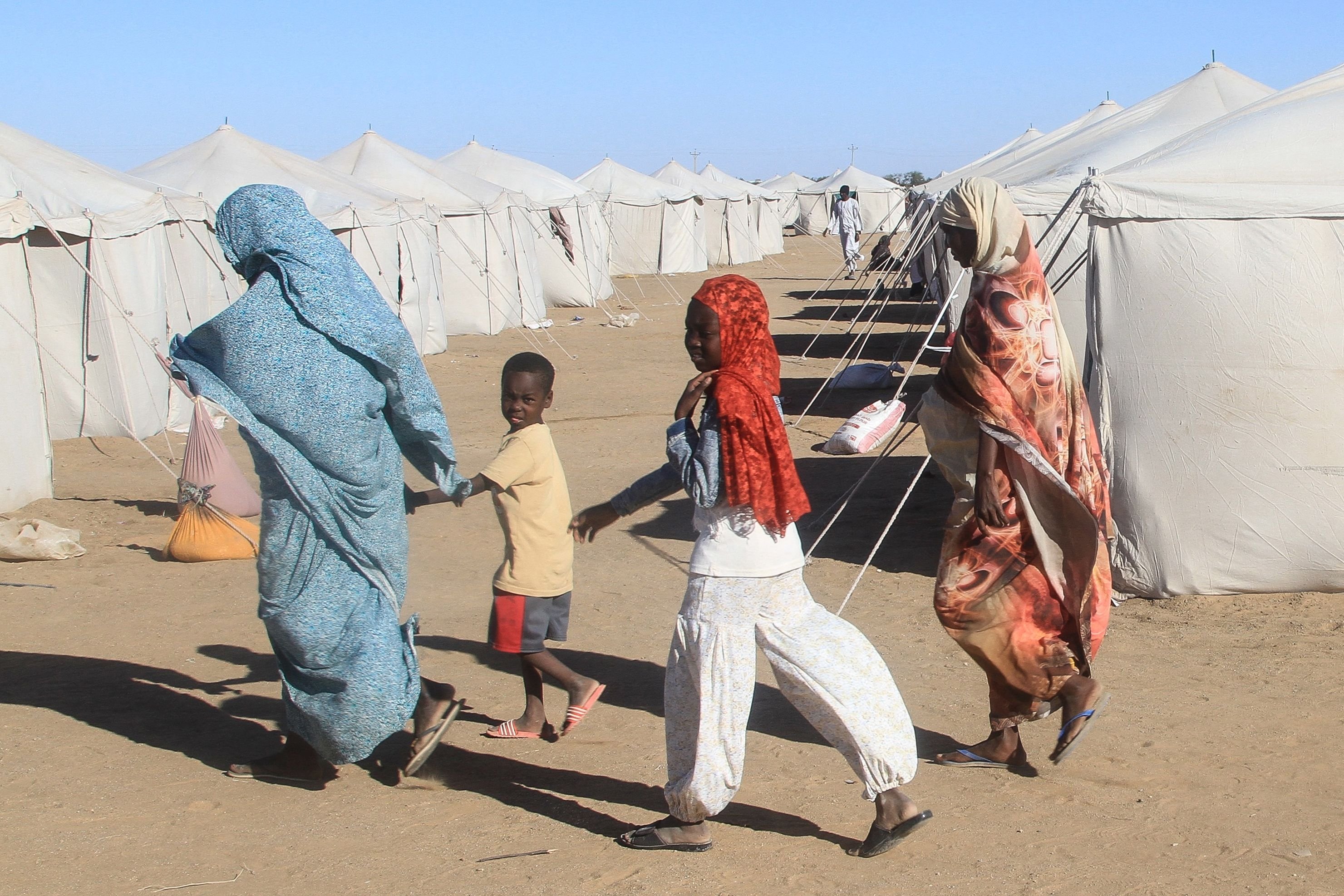
In this complex scene, Türkiye did not remain silent in the face of the atrocities and war crimes in el-Fasher. President Recep Tayyip Erdoğan strongly condemned the massacres, saying, “No one without a stone in his chest and a heart can accept the massacres against civilians in the city of el-Fasher in Sudan in recent days. We cannot keep quiet about this,” and reacted harshly. In addition, the Turkish Ministry of Foreign Affairs strongly condemned the RSF’s brutality and called for an end to the conflicts.
Türkiye has been providing political and military support to the SAF, trying to stop the RSF’s progress in the region. In 2025, Türkiye intensified its defense activities in Sudan’s ongoing conflict, providing military equipment, including uncrewed aerial vehicles, command and control systems and missile technologies.
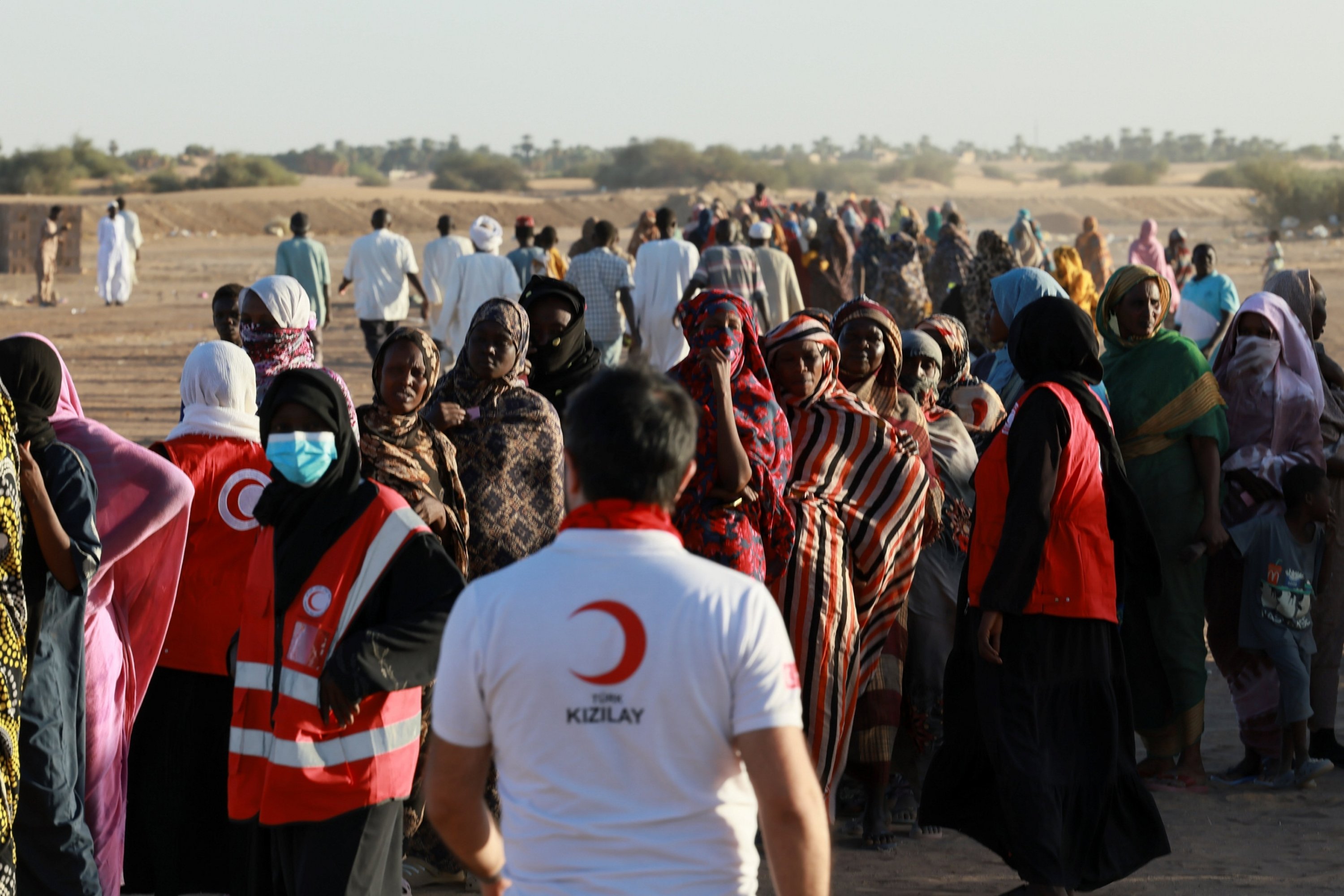
Regarding humanitarian efforts, Türkiye has been carrying out extensive and continuous aid operations since the onset of the current war, just as it did prior to the conflict. The Turkish Cooperation and Coordination Agency (TIKA), the Disaster and Emergency Management Presidency (AFAD), the Turkish Red Crescent, and nongovernmental organizations have been delivering aid materials to Sudan. In 2024, more than 5,000 tons of aid have been delivered.
Following the RSF militias’ capture of el-Fasher, Türkiye accelerated its humanitarian relief operations. In November 2025, through the AFAD, Türkiye provided food aid to 1,500 families living in camps in Port Sudan and sent 1,000 tents and food parcels to Sudanese refugees who had taken refuge in Chad due to the conflict. The humanitarian aid team of four, headed by AFAD Vice President Hamza Taşdelen, distributed aid in different parts of Sudan.
Turkish aid efforts are carried out effectively in the field by determining needs with the support of the Khartoum Embassy. The Sudanese people closely follow these humanitarian aid efforts and share profound sympathy with Türkiye.
In addition to Türkiye’s significant humanitarian role in Sudan, it must be accompanied by a greater political engagement in negotiations to end the war. It is known that all previous peace talks have failed, starting with the Jeddah negotiations, the Geneva talks and the Cairo negotiations. At present, efforts by the so-called “Quartet,” which includes the United States, Egypt, Saudi Arabia and the United Arab Emirates (UAE), are being presented as the sole option and attempt at achieving peace in Sudan, despite the group’s loosely defined role.
In my opinion, the Quartet must include Türkiye, which is the only country that has the real capabilities to play the role of a reliable mediator. Türkiye did not support the Rapid Support Forces in any way. It does not have any direct economic relations with the RSF militia that would make it a beneficiary of the war’s continuation.
Türkiye has had a positive history and deep relations with Sudan, dating back to the Ottoman period. This history lays the foundation for trust and mutual respect between the two peoples. Additionally, Türkiye, especially President Erdoğan, enjoys a positive reputation among the Sudanese people, including the political and military elite.
Moreover, Türkiye has a proven track record of diplomatic and mediation successes, especially in mediation in Africa and the region.
In 2024, Türkiye, under the leadership of Erdoğan, was able to end a long-term dispute between Ethiopia and Somalia over the issue of Ethiopia’s access to a seaport. This conflict has threatened the stability of the Horn of Africa for decades. Türkiye succeeded where other international efforts failed. Previously, Türkiye hosted negotiating rounds between Somalia and Somaliland (2013-2014), resulting in the “Ankara Agreement.”
Türkiye played a crucial role in facilitating the Safe Grain Corridor Initiative (Grain Agreement) between Russia and Ukraine in 2022, saving millions of people in the world from hunger. Türkiye was able to influence other complex conflicts in Libya and Syria positively.
Türkiye has real and documented experience in dealing with complex, multidimensional conflicts. It has a strong diplomatic team led by Foreign Minister Hakan Fidan, who is, in my opinion, one of the most accomplished diplomats in the world.
Lastly, Türkiye has strong relations with numerous regional and international players, including the United States, Saudi Arabia, Egypt, Russia, China and the African Union. This network of relations gives Türkiye greater diplomatic flexibility.
On Dec. 12, 2024, Erdoğan had previously made an official offer as he contacted President Burhan directly via phone and extended an offer to mediate a peace agreement. Sudan immediately welcomed the initiative, and Deputy Foreign Minister Burhanettin Duran traveled to Port Sudan in January 2025, meeting with Sudanese officials. The UAE also agreed to the Turkish role, which means that all parties involved accept the Turkish mediator.
In light of all these, Türkiye can lead direct negotiations between the SAF and the RSF militia, providing neutral ground in Ankara or Istanbul. It can put pressure on the militia using its regional influence, provide diplomatic and political support, ensure international support for agreements, and provide resources for reconstruction after the war.
All these initiatives are seen as part of Türkiye’s strategy to position itself as an alternative defense and diplomatic partner in Africa, alongside the West, China and Russia. At the same time, they form an important component of Türkiye’s broader effort to maintain its geopolitical presence on the continent and to help limit regional conflicts. This multidimensional role continues to have a positive impact on the people of Sudan, Türkiye, and the wider region.
The views and opinions expressed in this article are solely those of the author. They do not necessarily reflect the editorial stance, values or position of Daily Sabah. The newspaper provides space for diverse perspectives as part of its commitment to open and informed public discussion.