Physical Address
Indirizzo: Via Mario Greco 60, Buttigliera Alta, 10090, Torino, Italy
Physical Address
Indirizzo: Via Mario Greco 60, Buttigliera Alta, 10090, Torino, Italy

Türkiye’s marine ecosystem once supported up to 550 fish species, making it one of the most biodiverse in the region. However, overfishing, pollution, climate change, and invasive species have drastically reduced fish populations and stock levels. On World Fisheries Day, experts emphasize the urgent need for a science-driven, coordinated strategy to restore marine biodiversity and secure sustainable fisheries.
The Istanbul Fish Museum, part of the Fatih Fisheries Cooperative in Istanbul’s Fatih district, holds one of the country’s most extensive collections of marine species. Since 1991, it has displayed specimens representing the 550 species historically caught in the Mediterranean, Marmara, Black Sea and Aegean.
This collection reflects a richness that has significantly diminished in Türkiye’s seas. Professor Firdes Saadet Karakulak, head of Fisheries Technology at Istanbul University, highlights Türkiye’s natural marine biodiversity but notes a sharp decline in fish stocks over recent decades.
“The expansion of the fishing fleet and the use of advanced technology have accelerated overfishing. Illegal fishing persists. Pollution, especially in the Black Sea and Marmara Sea, is degrading fish populations,” Karakulak said.
She identified mucilage outbreaks in the Marmara Sea as a severe environmental threat. Excess nitrogen and phosphorus fuel phytoplankton blooms that reduce oxygen levels and water quality.
“Oxygen-dependent fish are forced to leave,” she said, noting the rarity of tuna, swordfish and mackerel sightings in these waters.
Since the early 2000s, declining fish stocks have prompted regulatory reforms influenced by the United Nations Convention on the Law of the Sea. Despite this, Karakulak stressed that enforcement remains insufficient.
“Technologies like the Vessel Monitoring System (BAGIS) and Automatic Identification System (AIS) track vessels but don’t verify catches or ensure quota compliance. Inspection capabilities must improve,” she said.
She remained cautiously optimistic: “Fish stocks regenerate quickly when protected. Recovery is achievable with the right conditions.”
Karakulak said about 550 species still inhabit Türkiye’s seas. The Black Sea is the most productive region, responsible for 60% of fisheries output. The Mediterranean has greater species diversity but lower productivity, while the Marmara Sea serves as a vital migratory corridor.
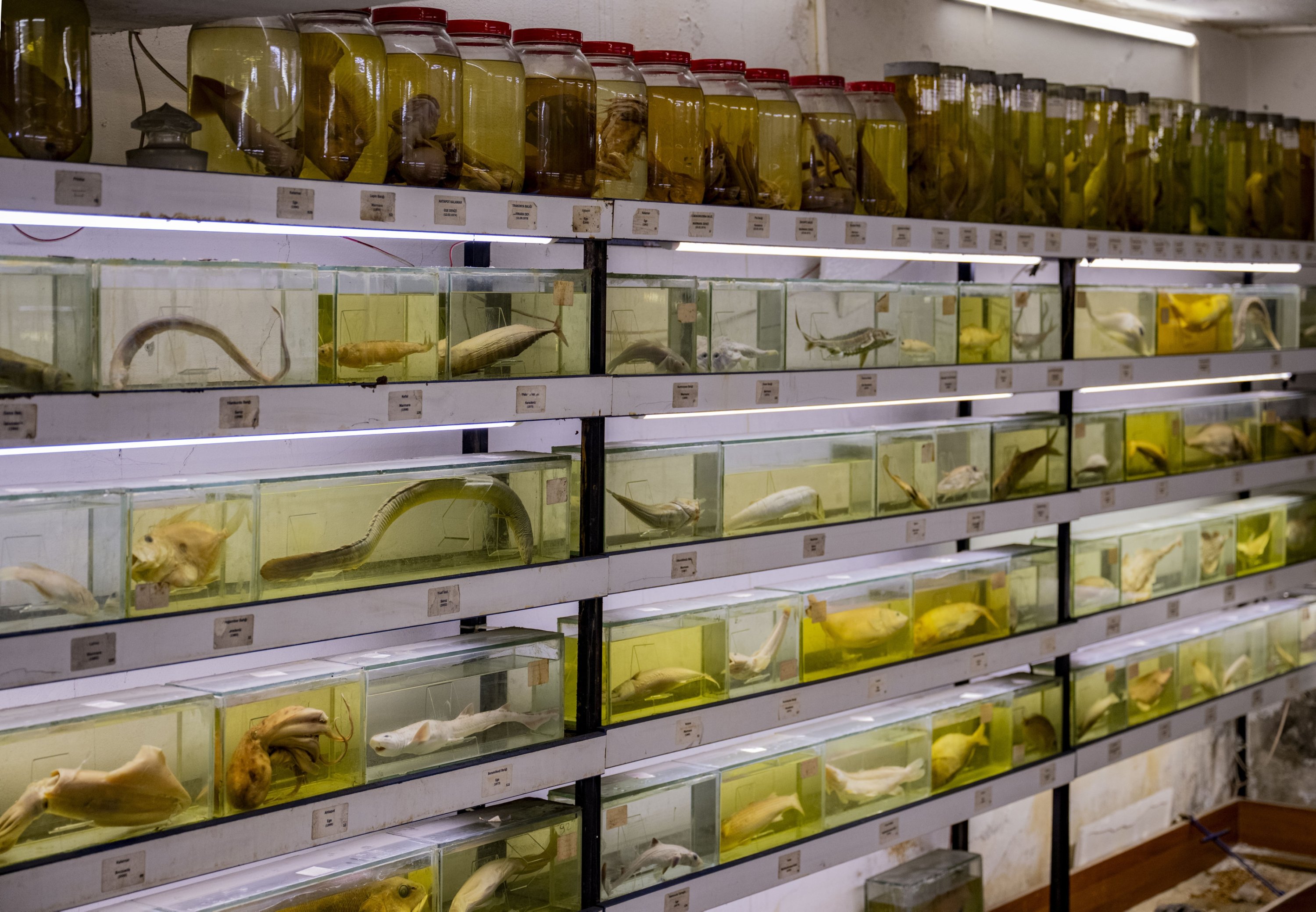
“These seas support migratory species like bonito, bluefish and anchovy. Protecting them is urgent,” she said. Though no species has vanished completely, tuna, swordfish and mackerel have largely left the Black Sea and Marmara due to environmental stresses.
Overfishing, pollution, invasive species transported via ballast water and rising sea temperatures are driving shifts in species distribution, all human-induced.
“If these pressures ease, recovery is possible,” Karakulak said. She urged advanced biological treatment systems in the Marmara Sea to prevent mucilage outbreaks and safeguard habitats.
She also warned that 5.5 million cubic meters of untreated wastewater enter the Marmara daily. “Without improved treatment and restrictions on land reclamation, future generations may only see fish in museums,” she said.
Erdoğan Kartal, president of the Istanbul Regional Fisheries Cooperatives Union (ISTBIRLIK), said the museum’s 550 species represent historical abundance, but only a fraction is now caught.
Many species once common are no longer economically viable. Bluefish and Black Sea horse mackerel, abundant 10 to 15 years ago, have largely disappeared, leaving consumers with anchovy, sardine, whiting and bonito.
“Thirty years ago, turbot was common. Red mullet, mackerel and shad were easy to find. Now, fewer than five commercially viable species remain,” Kartal said.
He noted international fisheries meetings share similar concerns but stressed that overfishing is Türkiye’s greatest threat.
“Fish sizes shrink, spawning declines and juvenile fish are caught. This trend is alarming,” he warned. Kartal called for fisheries policies developed with scientific input to ensure sustainability.
He urged urgent steps: “Close the straits to industrial fishing. Preserve the Marmara Sea as a production zone. Designate marine protected areas where fish can shelter and regenerate.” Kartal also emphasized stricter quotas and enforcement to prevent juvenile catch.