Physical Address
Indirizzo: Via Mario Greco 60, Buttigliera Alta, 10090, Torino, Italy
Physical Address
Indirizzo: Via Mario Greco 60, Buttigliera Alta, 10090, Torino, Italy

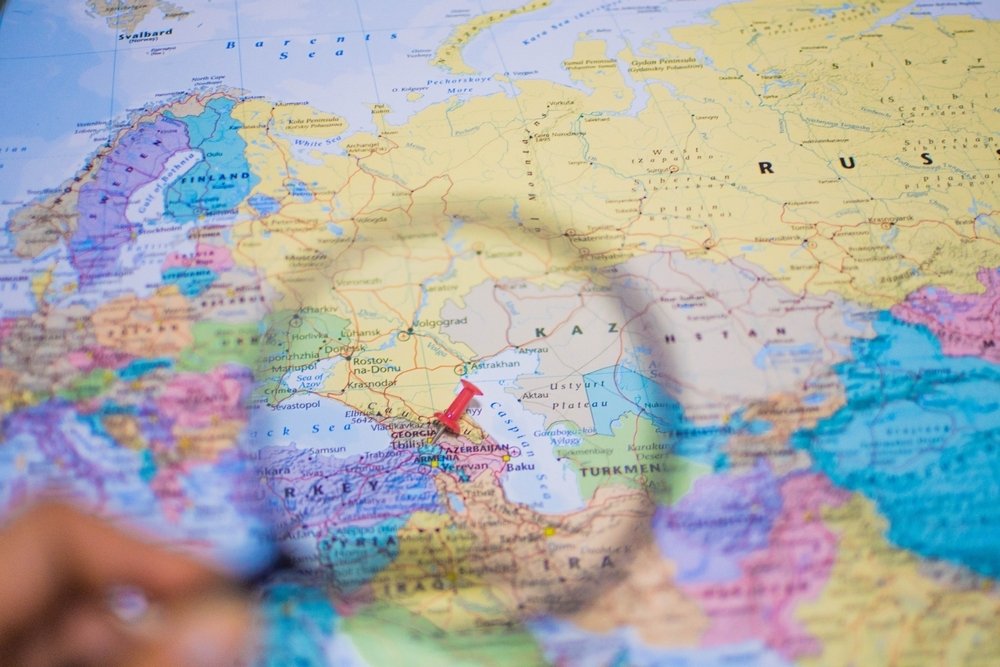
When Russia launched its full-scale military operation in Ukraine in 2022, global attention turned to Eastern Europe. Yet beyond the headlines, another transformation was unfolding in the Caucasus. The region has long been regarded as Moscow’s southern frontier and a bridge between the Black and Caspian Seas.
For decades, the Kremlin managed this space through a delicate balance of coercion and cooperation. The war in Ukraine disrupted that balance. As Moscow concentrated on its western front, it sought above all to prevent instability in the south. This shift produced tighter domestic control in the North Caucasus and a more structured, negotiated partnership with Abkhazia and South Ossetia.
Russia’s influence has not vanished; it has simply changed in nature. Rather than asserting dominance, Moscow now aims to preserve order and predictability through negotiation and pragmatic coordination.
For Moscow, the Northeast Caucasus remains central to its internal security and political identity. After 2022, the Kremlin pursued a policy built on continuity and control rather than expansion. The region’s complex ethnic and religious composition makes stability both a necessity and a challenge.
Beyond Chechnya, Moscow has sought to strengthen control through economic programs. Yet, Chechnya continues to symbolize Moscow’s post-conflict reconstruction. Ramzan Kadyrov’s government maintains close coordination with the federal center, ensuring political loyalty while implementing extensive infrastructure and religious projects. Although this model provides stability, it depends heavily on centralized funding and leaves limited room for political competition. The appointment of Kadyrov’s 17-year-old son to a senior post in 2025 reinforced this sense of dynastic continuity within Chechnya’s leadership. That same year, reports emerged that Kadyrov had requested permission from Moscow to step down. Whether genuine or tactical, the move revealed the sensitivities surrounding Chechnya’s political leadership and the Kremlin’s careful balancing act in the region.
Meanwhile, Dagestan and Kabardino-Balkaria have become focal points for economic integration and youth initiatives. Programs such as My Dagestan and The Youth of the Caucasus aim to reduce unemployment and promote cultural dialogue. Federal support for Islamic education and moderate religious leaders also seeks to limit radicalization. Joint conferences between local clerics and Moscow-based institutions emphasize tolerance and social cohesion.
These policies have largely contained unrest, though occasional frictions still expose the fragility of control. Protests in Dagestan during the 2022 mobilization showed the limits of centralized governance. In 2025, Russia’s security services arrested about 280 individuals in the Northeast Caucasus on terrorism-related charges, many of them minors recruited online. Still, by improving communication with community elders and religious figures, Moscow managed to preserve relative calm. The sustainability of this system will depend on whether economic growth can translate into genuine social participation.
In the western Caucasus, Russia’s relations with Abkhazia and South Ossetia have become more institutional. Facing reduced capacity for projection abroad, Moscow strengthened coordination with these republics not for expansion but to maintain stability along the Black Sea.
Abkhazia demonstrates the balance between sovereignty and partnership. Since the early 2000s, Sukhumi has pursued limited recognition abroad and strategic cooperation with Moscow at home. The 2025 presidential election, won by Badra Gunba with about 55% of the vote, reflected internal pluralism and debates over the level of Russian influence. In March 2025, President Gunba announced new infrastructure and tourism priorities for 2026–2030, including reconnecting Abkhazia with the Russian and Black Sea tourism circuit, underscoring Sukhumi’s pragmatic focus on economic recovery.
Economic integration remains both stabilizing and controversial. Russia accounts for more than half of Abkhazia’s trade, provides direct budgetary support, and funds infrastructure projects such as roads and electricity networks. In July 2025, Moscow and Sukhumi extended their socio-economic cooperation agreement until 2030, signaling Russia’s continued financial commitment despite domestic strain. The 2024 proposal to liberalize property sales to foreigners, known as the apartment law, triggered protests in Sukhumi amid fears of losing national ownership. The government suspended the law, acknowledging public concerns about sovereignty. In July 2025, Abkhaz authorities reported critically high electricity-grid losses, several times the Russian average, and a joint Russian-Abkhaz task force was formed to prevent winter blackouts.
At the same time, Moscow simplified administrative procedures by allowing dual citizens to renew Russian passports within Abkhazia. While this eased daily life, it revived discussions about the boundaries of independence. Abkhazia’s leadership continues to maintain constructive relations with Russia while expanding cooperation with the Turkish Abkhaz diaspora, which provides investment and cultural support. This dual path of economic dependence on Moscow and cultural linkage with the diaspora defines Abkhazia’s delicate external posture. Tensions briefly rose in April 2025 when a Russian military drone was downed near Abkhazia’s border, prompting calls in Sukhumi for more precise airspace coordination.
For Moscow, stability in Abkhazia and South Ossetia is both a security priority and a matter of prestige. Its policy focuses on strengthening institutions, managing borders, and preventing outside interference. Although some observers describe this as overprotective, the main aim remains to maintain predictability and avoid escalation.
Beyond Abkhazia, Moscow increasingly views the Northwest Caucasus and the Black Sea coastline as parts of a single security space. The ports of Sochi and Tuapse, along with transport routes through Adygea and Krasnodar, are vital for trade, tourism and access to the wider region.
The Kremlin has sought to integrate these areas into national development programs and connect them with projects in Abkhazia and the South Caucasus. Cooperation in logistics, customs, and tourism highlights a new focus on practical connectivity rather than military expansion.
Still, the concentration of power in local administrations limits initiative. Many communities remain dependent on federal subsidies, and the gap between economic modernization and political participation persists. Yet the absence of significant security crises since 2017 suggests that Moscow’s preventive approach, based on coordination and selective devolution, has maintained overall stability.
Since the war in Ukraine began, the South Caucasus has experienced a clear shift in power relations. Russia’s focus on its western front created space for others to act, though its influence has not disappeared, but has changed form. It now operates through more flexible and network-based engagement.
The Azerbaijan–Armenia relationship best illustrates this trend. After 2022, Russia’s limited mediation enabled Türkiye and Azerbaijan to strengthen their coordination. The 2023 Karabakh developments reflected Baku’s confidence and Moscow’s decision to avoid confrontation. Iran has expanded its focus on transit routes and border security, while the Middle Corridor initiative has redirected regional economics toward the east–west axis. Moscow, aware of these trends, has moved from dominance to pragmatic coordination.
In parallel, the U.S.-backed “Trump Corridor” plan, linking Azerbaijan to Nakhchivan through southern Armenia, underlined Washington’s intent to establish a new connectivity route and reduce Russian leverage. The Zangezur Corridor concept, associated with the Trump Route for International Peace and Prosperity (TRIPP), promises a new transit link between Azerbaijan and its Nakhchivan exclave and marks Washington’s entry into the region’s infrastructure diplomacy. Baku deliberately worsened ties with Moscow in late 2024 and 2025 as part of a strategy to realize these Washington-brokered agreements and further limit Russian influence. In August 2025, the United States brokered a peace declaration between Armenia and Azerbaijan, marking a clear break from Russia’s long-dominant role in mediation and consolidating Washington’s emerging influence in the South Caucasus.
The 2025 Azerbaijan-Russia diplomatic crisis, triggered by Baku’s expulsion of several Russian diplomats and Moscow’s subsequent trade restrictions, further demonstrated the increasing diplomatic friction and Russia’s more limited leverage in the region.
Georgia remains politically uncertain and rhetorically polarized. The debate surrounding the 2025 foreign-agents law reignited domestic protests and deepened Georgia’s estrangement from both Brussels and Moscow. Despite its Western-leaning aspirations, rhetoric has failed to translate into coherent regional policy, leaving the country increasingly marginal in key diplomatic and economic processes. Western powers have increased symbolic engagement through envoys and energy partnerships, yet their impact remains limited by distance and inconsistent commitment.
Amid these shifts, Russia still plays a stabilizing, though increasingly cautious, role. Its approach relies on communication rather than coercion. The transition from hierarchical control to negotiated coexistence appears to be a loss of power, but in practice shows Moscow’s adaptability to a multipolar order. This pragmatic adjustment has so far prevented uncontrolled instability.
Within this new regional context, Türkiye has become a central stabilizing actor. Its foreign policy combines strategic pragmatism with active diplomacy. The Shusha Declaration with Azerbaijan formalized cooperation in energy, transport, and defense. Ankara’s normalization process with Armenia and ongoing dialogue with Moscow highlight its capacity to mediate between rivals.
Türkiye’s multi-vector diplomacy allows it to engage both Western allies and non-Western partners, maintaining flexibility and credibility. Through connectivity projects and dialogue mechanisms, Ankara has contributed to gradual normalization across the region. In this sense, Türkiye’s pragmatism mirrors Moscow’s own recalibrated approach.
For Russia, cooperation with Türkiye serves both necessity and balance. Despite disagreements in Syria and the Black Sea, both countries share an interest in preventing instability in the Caucasus. Their coordination, sometimes competitive yet functional, has helped contain escalation and keep communication channels open.
Western powers continue to emphasize democracy promotion and conflict resolution, but remain distant from realities on the ground. This leaves Türkiye and Russia as the main engines of pragmatic engagement in the post-Ukraine Caucasus. Another dimension of Türkiye’s influence stems from its own North Caucasian diaspora, particularly the Circassian and Abkhaz communities. Acting as informal cultural and economic bridges, these networks contribute to Ankara’s people-centered diplomacy and help sustain the North Caucasus’s and Abkhazia’s connection with the wider region.
Three years after the war in Ukraine began, the Caucasus is shaped more by pragmatism than confrontation. Russia’s influence has not disappeared but has adapted through coordination, negotiation and selective partnership. Its careful management of the North Caucasus and Abkhazia reflects a preference for stability over expansion.
Türkiye’s diplomacy complements this approach. By promoting dialogue and integration, Ankara has become a trusted intermediary able to balance diverse interests. Meanwhile, Western engagement remains fragmented, and Georgia’s ambitions often exceed its practical capacity.
The post-Ukraine Caucasus is neither entirely peaceful nor deeply divided. It is a region of managed competition and cautious coexistence, where restraint and dialogue have replaced open confrontation. The durability of this balance will depend on whether regional actors can continue to cooperate even when disagreements persist.
The views and opinions expressed in this article are solely those of the author. They do not necessarily reflect the editorial stance, values or position of Daily Sabah. The newspaper provides space for diverse perspectives as part of its commitment to open and informed public discussion.