Physical Address
Indirizzo: Via Mario Greco 60, Buttigliera Alta, 10090, Torino, Italy
Physical Address
Indirizzo: Via Mario Greco 60, Buttigliera Alta, 10090, Torino, Italy

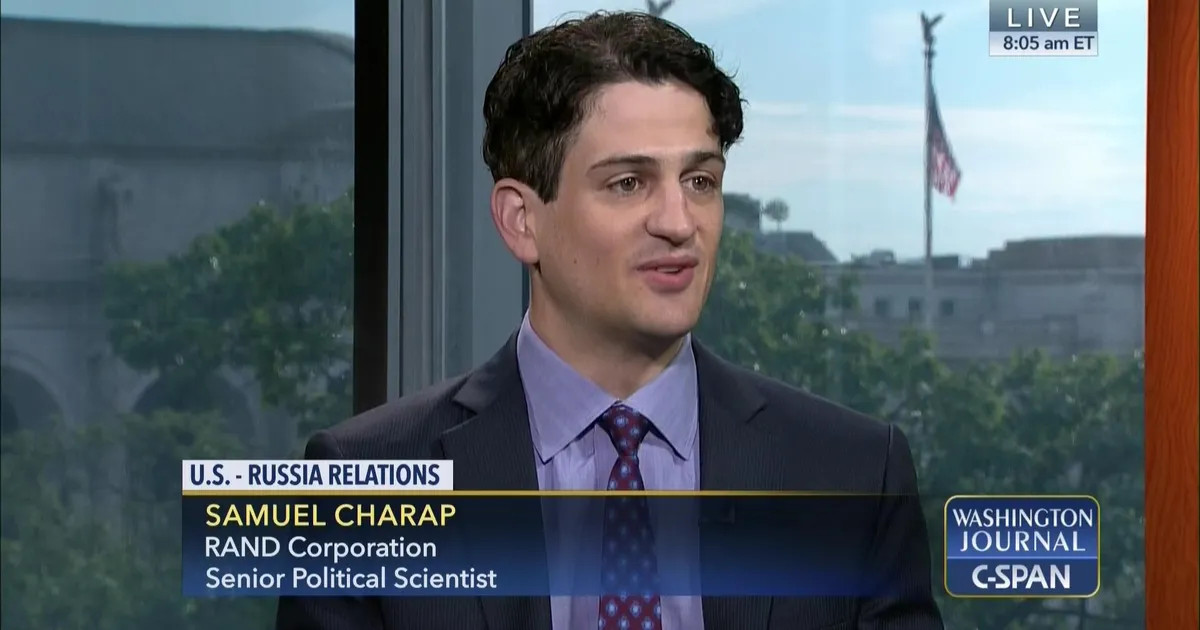
Kyiv Post has discovered that Samuel Charap, one of the most prominent Ukraine skeptics among American foreign policy analysts, has been a regular visitor to the White House’s National Security Council (NSC) during the past three years of the Biden Administration. Charap has been a stalwart advocate of Kyiv negotiating with Moscow since the early days of Russia’s invasion in 2014 and a frequent voice in media and international political circles questioning the logic of arming Ukraine.
The NSC, which operates from the West Wing of the White House, is headed by Jake Sullivan, who is Biden’s point man on Ukraine, under whom Charap earlier worked at the US State Department’s Policy Planning Staff before becoming a political scientist at the largely US government-financed Rand Corporation.
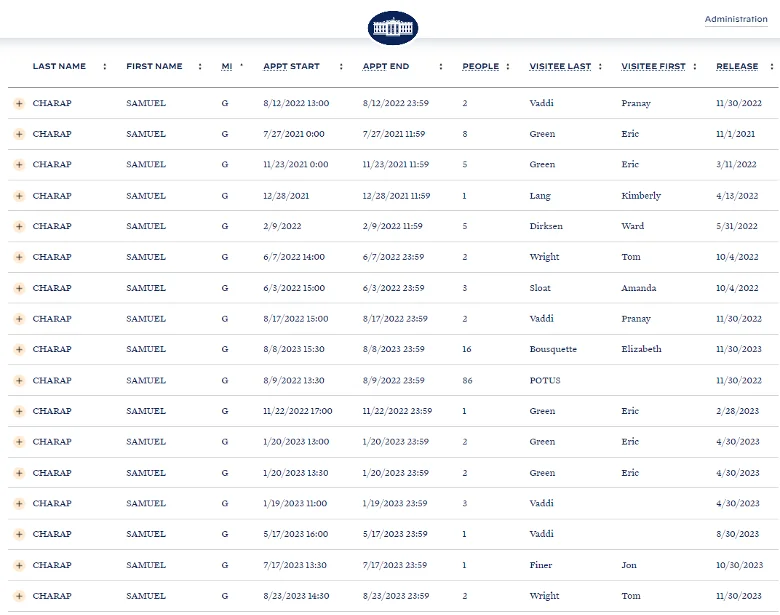
In the publicly available White House visitor log, one of Charap’s most recent visits, on July 17, 2023, was listed as an appointment with Jonathan Finer, Deputy National Security Advisor under Sullivan.
White House visitor log indicates that Charap has been a frequent visitor to the Biden Administration.
Here are some examples of his most recent writings, especially since Feb. 24, 2022. They clearly demonstrate an ongoing opposition to arming Ukraine and call instead for negotiations with Russia:
Given the controversial nature of Charap’s commentary over the years, there is plenty of reason for concern, as it becomes known that the White House visitor log shows him as visiting staff a total of three times in 2021, and nine in 2022. In 2023, he visited the White House at least eight times, however, not all 2023 records have yet been published by the Federal Government.

Other Topics of Interest
The visa-free entry for British citizens has been extended for another year until Jan. 30, 2025, so they can enter Ukraine without a visa for up to 90 days within a 180-day period.
Most meetings were small. However, one meeting in August 2022 had 86 attendees recorded on the government roster, including President Biden.
What changes in US foreign policy Charap influenced is not fully known. However, as murmurs abound that the US has abandoned the “for as long as it takes” promise, potentially in an attempt to coerce Kyiv into a negotiating posture, the role that staunchly pro-negotiation Charap has played will come further under the microscope.
When Kyiv Post contacted Samuel Charap’s office with a set of questions, he largely brushed us off with the exception of a few responses like these:
Kyiv Post: Given past successes and failures for Putin with international agreements, why do you think an agreement with Ukraine now would be effective? And what would you see as an effective mechanism for punishing breach of contract?
Charap: It is not possible to assess the effectiveness of a hypothetical agreement before negotiations have even begun. There are a range of mechanisms that have been used to address non-compliance with international agreements. The snapback clauses in the JCPOA are one example.
Kyiv Post: For the US today, do you prioritize encouraging and supporting negotiations over supplying arms to Ukraine? How have your thoughts on this question changed since Feb 2022? Since 2014?
Charap: Please see [reference to a piece in Foreign Affairs], which says, in part:
“Starting talks does not require stopping the fight. Conducting negotiations is not the opposite of applying coercive pressure. In fact, negotiations are the means by which states can turn that pressure into leverage to accomplish their goals. As Thomas Schelling wrote in his classic ‘Arms and Influence’: ‘The power to hurt is bargaining power. To exploit it is diplomacy – vicious diplomacy, but diplomacy.’ Talks are an instrument for a warring state to further the same objectives it seeks on the battlefield. Historically, they have often taken place during periods of intense fighting. Nowhere in my article do I suggest that Ukraine would have to stop fighting – or that the West would have to cease supporting that fight – in order to start talks.”
Kyiv Post asked Tomasz Nadrowski, host of the “Tyranny Today” podcast to comment on Charap’s responses.
“The problem with both of Charap’s responses here is that they make too many general assumptions about geopolitical negotiations in general, and certainly too many assumptions when it comes to the triangle of relationships between the US, Ukraine and Russia,” he said.
The Polish-born US foreign affairs specialist elaborated:“First of all, Charap assumes that Putin is willing to negotiate in good faith. Second, he assumes that Ukrainians want to negotiate. He also makes assumptions about Russia’s willingness to commit to a set of achievable goals for negotiations; this is a problem given that Russia’s publicly stated goals for the conflict have changed over and over again from the removal of neo-nazism to fighting Western domination to expansionist plans to roll farther into Eastern Europe. Ukraine, on the other hand, had been steadfast in stating its goals with President Zelensky’s well-documented 10-point peace plan.”
Nadrowski, concludes: “Finally, I will say that it’s naive, given all I said above, to think that Ukraine and Russia should or even could participate in serious formal negotiations today. But there are certainly back-channel means for the two nations to hold discussions that could set the stage for future negotiations. In fact, I would be stunned if those back-channel conversations aren’t going on as I write this. On the other hand, if those back-channel conversations are happening, these views expressed by Mr. Charap on Ukraine/Russia negotiations, particularly when also stated in prestigious publications like Foreign Affairs and the New Yorker, might actually do a lot more harm than good.”
The White House could not be reached for comment.
Additional reporting by Gregg Stebben.