Physical Address
Indirizzo: Via Mario Greco 60, Buttigliera Alta, 10090, Torino, Italy
Physical Address
Indirizzo: Via Mario Greco 60, Buttigliera Alta, 10090, Torino, Italy

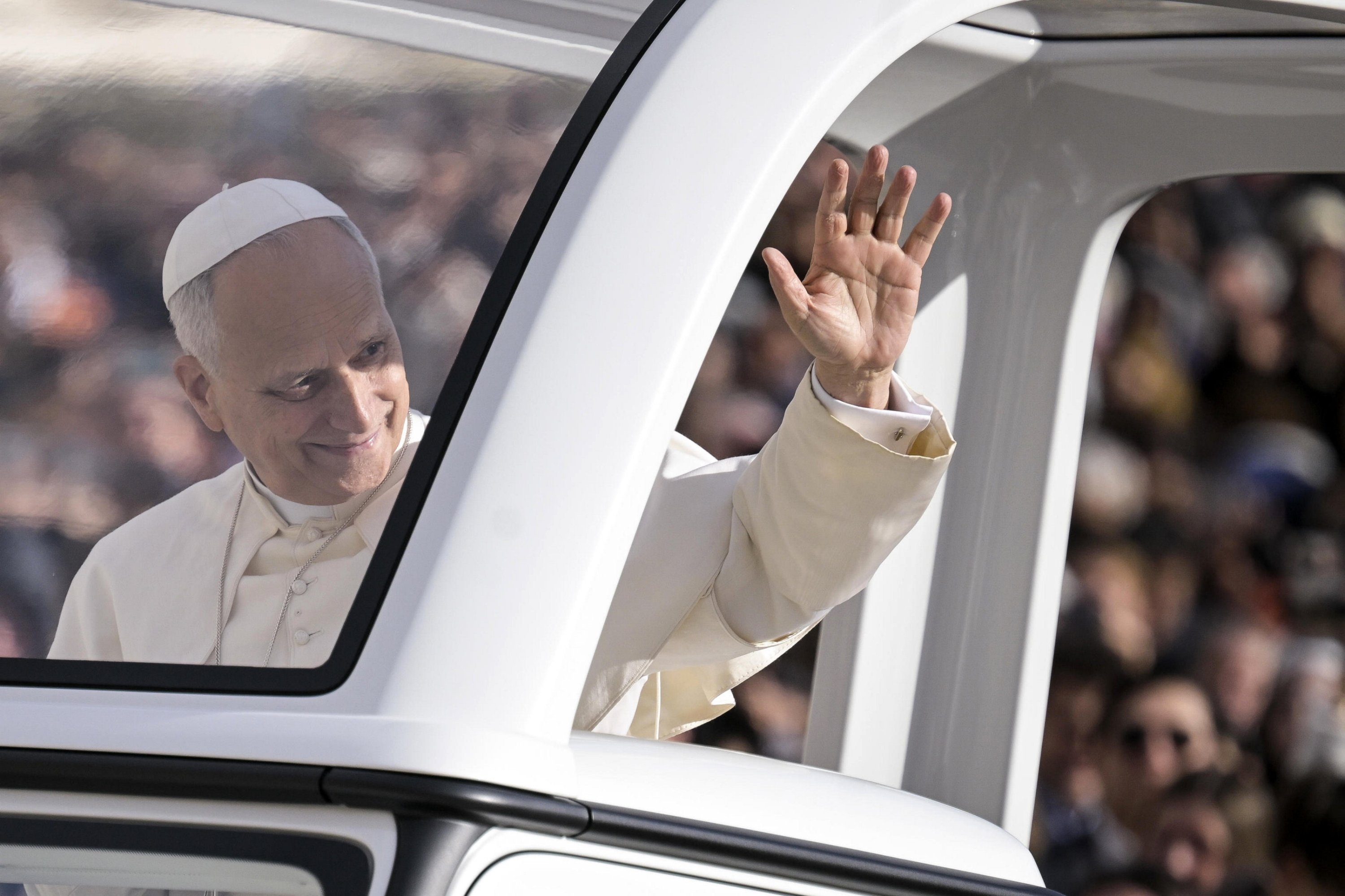
Pope Leo XIV is scheduled to arrive in Türkiye on Thursday for his inaugural visit to a country known as the home of historic events and sites for Christianity. The pontiff’s first apostolic journey abroad will later take him to Lebanon.
His visit will start in the capital Ankara, with a visit to Anıtkabir, the mausoleum of modern Türkiye’s founder, Mustafa Kemal Atatürk, a tradition upheld by heads of state on official visits to Türkiye. It will be wrapped up in Istanbul, reportedly with a visit to the Fener Greek Orthodox Patriarchate.
The highlight of the visit, however, will be Iznik, a small town in the province of Bursa of northwestern Türkiye, which is more familiar to the Christian community with its ancient name: Nicaea. There, the pontiff will attend events for the 1,700th anniversary of the council that shaped modern-day Christianity to a large extent. The council, which took place in A.D. 325 at the request of Emperor Constantine, was a pivotal gathering in Christian history where crucial theological issues were debated and resolved. The Nicene Creed, still used in Christian churches today, was established at the First Council of Nicaea. Additionally, the dates for Easter were also determined at the First Council of Nicaea.
Leo XIV’s predecessor, Pope Francis, was also planning to attend the anniversary event scheduled to be held near an ancient basilica, before his death last April. The basilica is where the council was held, according to some historians, though archaeologists say it was probably held in a palace of Constantine, which graced the town in ancient times.
Some media outlets reported that U.S. Vice President JD Vance may also attend the ceremony, though it has not been confirmed yet. Vance only converted to Catholicism in 2019. A senior U.S. diplomat, however, confirmed his travel plans to Türkiye to take part in the anniversary event.
Deputy Secretary of State for Management and Resources Michael Rigas will travel to Türkiye, Iraq and Israel from Nov. 27 to Dec. 5, with stops in Istanbul, Baghdad, Irbil and Jerusalem, the State Department said Tuesday. In Türkiye, Rigas will lead the U.S. delegation for the celebration of the Council of Nicaea and hold talks with Turkish counterparts “to advance the U.S.-Türkiye bilateral relationship.”
The townspeople are excited to welcome the pontiff, while Mesude Künen, a local artist nationally recognized for her tilemaking artwork, will present a gift of a miniature model of the historic town made of tiles to the pontiff. The town will also be flooded with visitors eager to catch a glimpse of the pope and the Catholic pilgrims. Authorities set up new mobile base stations to accommodate the crowd, while travel agencies have already began offering exclusive tours to the town. Law enforcement authorities also stepped up security measures in the town of around 45,000 people, including setting up mobile checkpoints. Buses carrying tourists have already descended on the area, boosting revenues for local businesses.
The pope is expected to meet President Recep Tayyip Erdoğan on the first day of his visit. Before leaving for Istanbul on Friday, he will first meet the Catholic community at the Cathedral of the Holy Spirit. He will then travel to Iznik, before returning to Istanbul on Saturday for a religious service at the Church of Saint George. Also on Saturday, he will attend Holy Mass at Volkswagen Arena, a massive sports and concert hall in the city. On Sunday, he will visit the Armenian Apostolic Cathedral. He is also expected to meet Fener Greek Orthodox Patriarch Bartholomew.
Bartholomew is also expected to join the pope in Iznik and sign a joint declaration in a visible sign of Christian unity. Eastern and Western churches were united until the Great Schism of 1054, a divide precipitated largely by disagreements over the primacy of the pope.
The trip is being covered closely by U.S. media, with all major U.S. networks – ABC, CBS, NBC and Fox as well as CNN and the BBC – inside Leo’s traveling pool, following his speeches, homilies and prayers at a crucial moment in negotiations to end Russia’s war in Ukraine and maintain a cease-fire in Gaza.
Vatican correspondents plus Lebanese and Turkish media round out the papal press corps of about 80 journalists, with an ample waitlist of reporters who applied to be on the papal plane but were denied a seat because of limited space. Leo plans to deliver all his remarks in Türkiye in English, and in English and French in Lebanon, casting aside the Italian lingua franca of the Vatican in favor of languages that are more widely understood.
Giorgio Del Zanna, an associate professor at Milan’s Sacro Cuore Catholic University who specializes in contemporary and Turkish history, said the decision to start the papacy’s foreign travels in Türkiye reflects both symbolic and strategic priorities.
“Relations with Türkiye are very important for Pope Leo XIV because they have many meanings,” he told Anadolu Agency (AA) last week, noting the country’s central place in Muslim-Christian engagement and its influence across multiple regional crises.
Del Zanna said the trip aligns with the broader outreach initiated under Pope Leo XIV’s predecessor, Pope Francis, who signed the “Universal Human Fraternity Document” with Muslim authorities in 2019.
He argued that Pope Leo XIV’s stop in Türkiye continues that approach by encouraging partnership between the Catholic Church and the Islamic world on issues of peace and coexistence. “Türkiye is a Muslim country, and relations with Muslims and Islam are very important for building peace,” he said.
Beyond symbolism, analysts point to Türkiye’s diplomatic initiatives, from the Russia-Ukraine grain deal efforts to dialogue channels in Syria, as key reasons the pontiff is giving Ankara three full days on his schedule.
Del Zanna stressed that Türkiye’s posture against military escalation and its attempts to prevent regional crises from widening make it a valuable interlocutor for the Vatican.
“Above all, Türkiye is playing a very important mediator role today,” he said. “This demonstrates the importance he places on Türkiye.”
Italian journalist Cristiana Caricato, a veteran Vatican correspondent who has covered papal trips for decades, said the pairing of Türkiye and Lebanon in one journey reflects the pope’s desire to approach the Middle East with heightened sensitivity. She recalled that Pope Leo XIV emphasized disarmament and peace in his first public message after his election in May.
According to Caricato, the visit allows the pontiff to address issues tied to the Holy Land and the Israeli-Palestinian conflict with diplomatic balance while advancing his broader message.
“He will carry the message of disarmament and peace he delivered on his first day of election,” she said. The trip, she added, demonstrates a commitment to dialogue, friendship and mutual respect at a time when the region is grappling with overlapping crises.