Physical Address
Indirizzo: Via Mario Greco 60, Buttigliera Alta, 10090, Torino, Italy
Physical Address
Indirizzo: Via Mario Greco 60, Buttigliera Alta, 10090, Torino, Italy

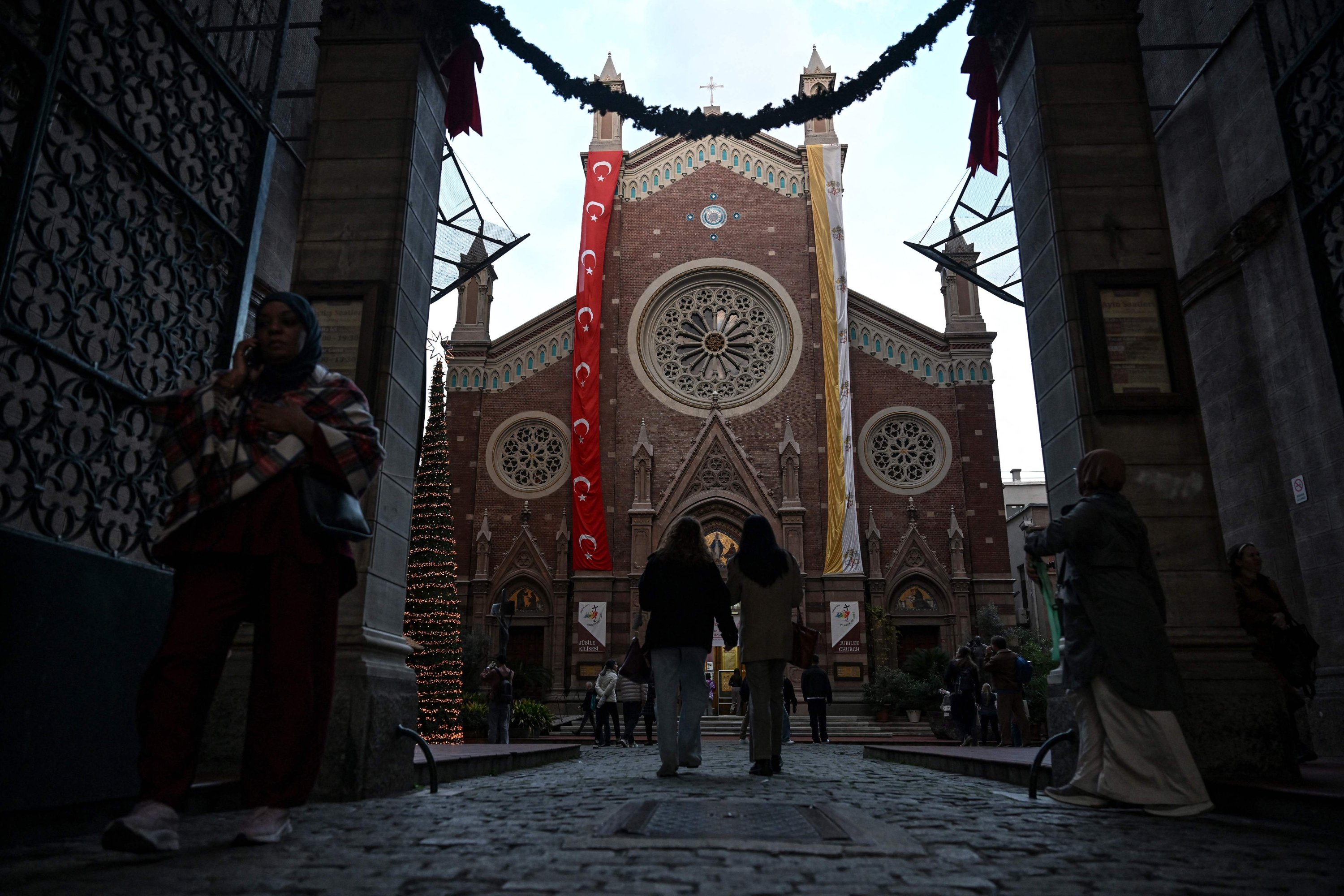
The year 2025 marks the convergence of two major events: the Jubilee Year (a universal Catholic pilgrimage held every 25 years where all sins are forgiven) and the 1,700th anniversary of the Council of Nicaea. This timing sets the stage for a high-profile visit by Pope Leo XIV to Türkiye, expected to draw 15,000 tourists to Bursa this year.
Before his visit to Türkiye, Pope Leo issued a declaration calling on Christians to engage in an examination of conscience. In the declaration, Pope Leo stated that when Christians recite the Creed, it should prompt them to reflect deeply on what they truly believe and what kind of example of faith in God they offer to others.
He also included a strong criticism of past actions committed in the name of religion, writing: “Wars have been fought, and people have been killed, persecuted and discriminated against in the name of God … Instead of proclaiming a merciful God, a vengeful God has been presented who instills terror and punishes.”
Since his inauguration, Pope has demonstrated that he holds a modern, moderate ideology through his stance on migrants, Gaza, and Nigeria. Especially in an era where religious wars continue, being the leader of the Catholic faith, which has 1.5 billion members worldwide, also means influencing international policies and mobilizing public opinion. For this reason, the Vatican’s political stand is effective in determining individual and collective positions. Consequently, papal elections are a matter of close concern to governments. This is because the Pope’s ideology – whether a “rigid radical traditional Catholic or the exact opposite, a moderate modernist Catholic” – is at the heart of Vatican politics. In this respect, the Vatican is both a religious and a political center.
For example, it is a probable scenario that a power like the United States, which wishes to dominate the Catholic Latin American geography, would plan to gain legitimacy in the local and international community by aligning itself with the Pope during a potential intervention in the region. Therefore, Pope’s political attitude is critical.
The Vatican’s potential to gain “soft power” in Türkiye through this visit is perceived by the Orthodox as a form of cultural competition. Catholicism and Orthodoxy have historically been in a state of rivalry and war, primarily due to both denominations claiming universality. Türkiye, with its unique geography between East and West and its ancient religious heritage, hosts and maintains close relations with diverse faiths, including Catholics, Orthodox and Syriacs. The fact that this heritage, which bears the traces of all Abrahamic religions, is in Türkiye has prevented Christian sectarian wars, created a significant balance and ensured a peaceful environment.
The Vatican’s direct engagement with Türkiye can cause discomfort among the Turkish Orthodox community, as it might weaken their international visibility and intermediary role. For this reason, Turkish Orthodox groups have issued statements opposing the permission for the Vatican’s visit.
Türkiye maintains friendly relations with both the Orthodox and Catholic worlds. While Orthodox brother countries, Ukraine and Russia, are at war, only Türkiye has been able to facilitate the peace talks and the grain corridor. This situation demonstrates Türkiye’s reliability in the eyes of Orthodox countries.
Historically, the Ottoman Empire had peaceful relations with Orthodox communities that lived within its borders and supported the Protestants in Europe. Furthermore, it played a crucial role in the growth of the Lutheran movement. It did this both for religious freedom and to weaken its rival, the Catholic world. That is, the tradition of pursuing a policy compatible with different religious authorities, given the international conjuncture, is inherent in our tradition, and communication with the Vatican is reasonable.
In the current international strategic system, there are two poles: the U.S.-Israel-EU axis and the China-Russia-Iran-North Korea line, and proxy wars are taking place along these two poles.
The Vatican and Türkiye are countries striving to build a neutral, anti-war and diplomatically balanced zone. At global flashpoints such as the Middle East, Ukraine and Africa, Türkiye is positioned as the sole credible mediator, standing out with its soft power, diplomatic flexibility and historical reputation. As both a NATO member and the strongest, most democratic, and most institutionalized country in the Islamic world, Türkiye is at the center of regional stability. It has become a global strategic address for trust, particularly with its role in establishing the Grain Corridor and facilitating peace talks during the Russia-Ukraine War. In this respect, Türkiye is one of the rare countries that can turn the Vatican’s rhetorical calls for peace into practical diplomatic initiatives.
The Vatican has not supported the genocide in Gaza, the conflict policies in Venezuela, or the religiously triggered war against Islam in Nigeria. On the contrary, it has called for peace and humanitarian solutions in all these areas. Therefore, the Pope’s visit to Türkiye, a global actor, is not just a religious ritual; it is also a diplomatic visit that serves as a preemptive move against conflict and polarization, and a shared stance aimed at preventing the formation of a basis for major religious wars in the future.
During the United Nations General Assembly meeting, Trump hosted the Turkish Orthodox clerical leaders in Washington, sending a message that he would support the historical rival Orthodox world against the Vatican, which opposes his aggressive policies.
This is because the Pope stands against Trump politically: he called on the U.S. not to start a war in Venezuela, appealed to the U.S. to consider the rights and demands of detained migrants in prisons to perform their religious practices, took the opposite side of the U.S. and Israel in Gaza, and opposed the Islamophobia generated by Trump over Nigeria.
Additionally, a few months ago, Greek Orthodox individuals symbolically gifted a cross to Trump and openly implied that the capture of Istanbul was his duty. The anti-Türkiye and crusade-triggering activities of the “Greek Orthodox” in America are a crime and a threat to our sovereignty.
The Catholic Church’s moderate policies with Türkiye appear to have disturbed the Orthodox groups that align with Israel, as their issued statement urging Türkiye not to accept the Pope may be an indicator of that.
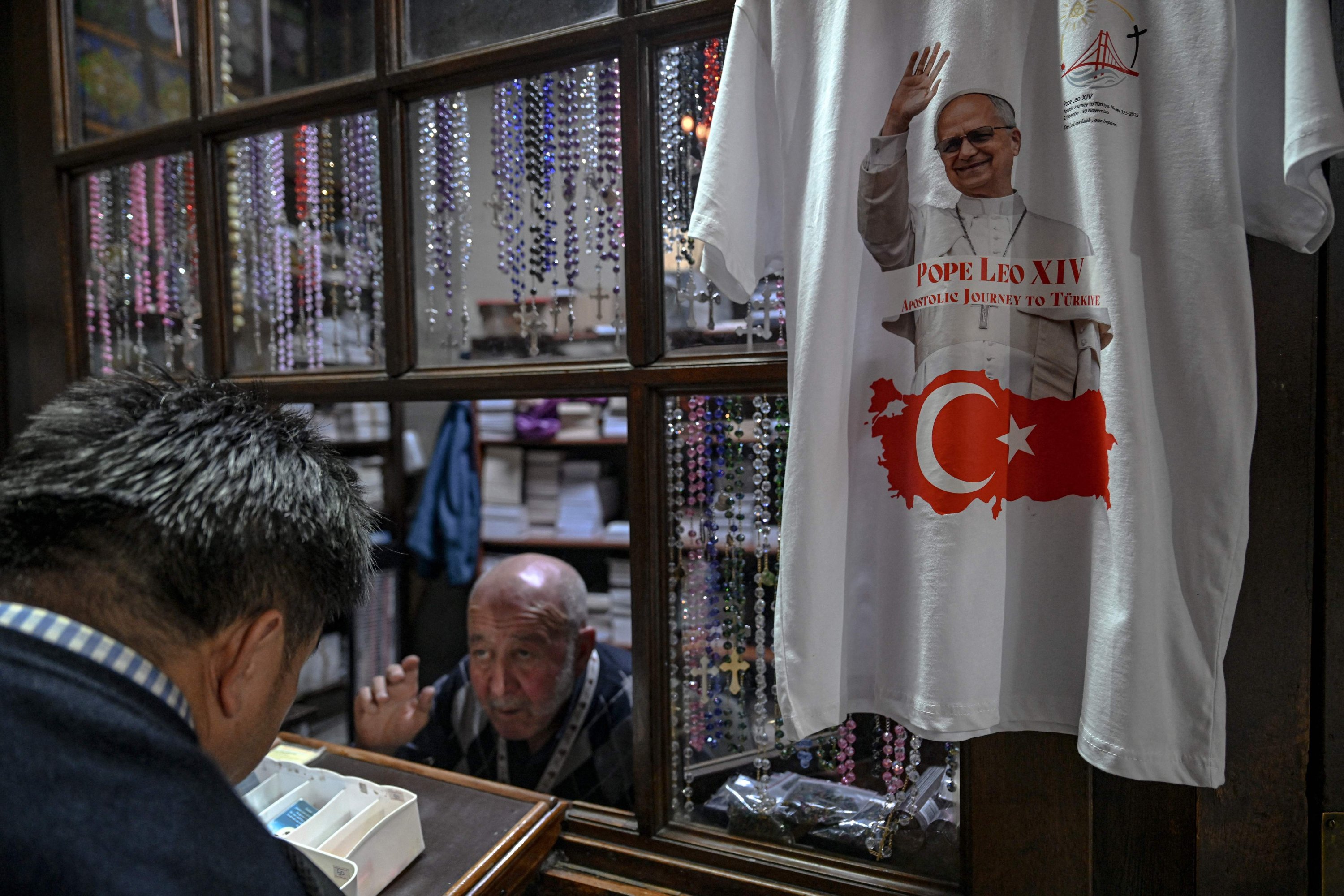
Pope Leo’s decision to open a prayer room in the Vatican Library for Muslims to worship, as well as inviting Türkiye’s first lady, Emine Erdoğan, to speak at the Vatican, reflects the depth of Türkiye-Vatican relations. These actions have been criticized by radical Catholic groups. However, his act of praying for the Muslims in Gaza embodied the true message of Jesus: compassion and love.
Türkiye’s growing global influence and expanding international reach make its relations with the Vatican a welcome development. Pope Leo’s visit is a step that strengthens Türkiye’s diplomatic influence beyond its religious and cultural dimensions. Türkiye’s preservation of its historical heritage and its multicultural, multireligious identity, along with its role in hosting such an important international commemoration ceremony, demonstrates the country’s growing influence and its balanced position between the Orthodox and Catholic worlds.
The fact that the Catholic Vatican and Muslim Türkiye stand together in support of global peace is especially meaningful in an emerging, increasingly polarized world, shaped by proxy conflicts and defined by a U.S.-Israel axis on one side and a China-Russia axis on the other.
In this context, Türkiye-Vatican relations should be viewed within the framework of realist, conjuncture-driven interactions between states of different faiths. In today’s increasingly fragile global environment – one that demands both strength and international cooperation – alliances must be built on socio-economic and strategic interests rather than religious animosities.
The views and opinions expressed in this article are solely those of the author. They do not necessarily reflect the editorial stance, values or position of Daily Sabah. The newspaper provides space for diverse perspectives as part of its commitment to open and informed public discussion.