Physical Address
Indirizzo: Via Mario Greco 60, Buttigliera Alta, 10090, Torino, Italy
Physical Address
Indirizzo: Via Mario Greco 60, Buttigliera Alta, 10090, Torino, Italy

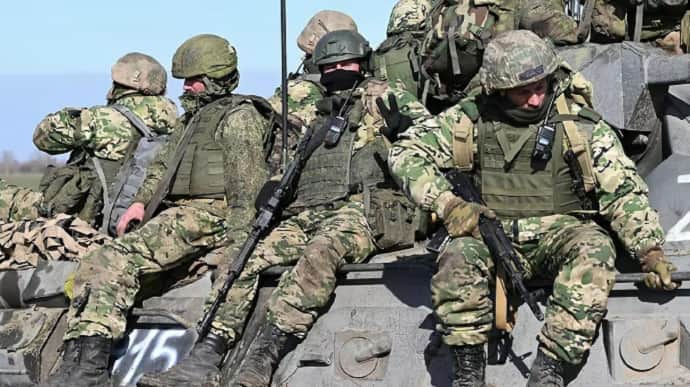
Russian soldiers. Stock photo: Kremlin-aligned Russian news agency RIA Novosti
Experts from the Institute for the Study of War (ISW) believe that the Russians are trying to compensate for Ukrainian drone strikes as a way to get out of the positional war.
Source: ISW
Details: Russian military bloggers (milbloggers) claimed that the Russian army was trying to compensate for Ukrainian drone strikes and rear-area attacks at the level necessary to break out of a positional war.
Advertisement:
A Russian milblogger claimed on 23 January that Russian troops were struggling to figure out how to break out of a positional war, adding that they were unable to amass enough forces to break through Ukrainian lines as Ukrainian units were targeting all Russian formations larger than a battalion [roughly 250-950 soldiers and officers – ed.].
He noted that Ukrainian troops were striking Russian forces even in the near rear.
The milblogger also claimed that Ukrainian forces were using drones and targeting small Russian formations consisting of one or two infantry companies and 10 armoured vehicles, preventing the Russians from even reaching Ukraine’s forward defensive lines.
The Russian complained that the only solution the Russian troops have had so far has been to mount attacks by 10-20 dismounted infantrymen with armoured vehicles supporting them at an “extreme” distance behind the soldiers.
A Kremlin-affiliated milblogger responded by agreeing with the first blogger, arguing that Ukrainian technological advances have complicated the ability of Russian forces to concentrate multiple divisions in a single geographic area without Ukrainian units detecting them.
The military blogger stressed that Russian troops would have to both gain indirect fire superiority over Ukrainian forces and modernise Russian command and control (C&C or C2) to get out of positional warfare. He emphasised that Russian soldiers on the front line need to be able to communicate quickly to minimise the time between target detection and engagement, adding that this change will only happen if there are significant changes in C2 processes.
The attributes and challenges of positional warfare identified by Russian bloggers in recent discussions overlap with many of the systemic flaws in the Russian army that bloggers have been lamenting for a long time.
ISW analysts noted that there is currently no indication that the Russian military command has significantly improved any of these identified problems at the operational level necessary to break through a positional front in one or more of the combat theatre zones.
However, Russian forces have recently proven their ability to achieve minor tactical successes during intense offensives despite these systemic problems, notably near the towns of Kupiansk (Kharkiv Oblast) and Avdiivka (Donetsk Oblast).
Furthermore, the report noted, given the series of missile strikes on Ukraine, ISW further estimated that Russia is likely to be trying to acquire more foreign ballistic missiles, including from Iran and North Korea, as ballistic missiles can be more successful in hitting Ukrainian targets under certain circumstances.
To quote the ISW’s Key Takeaways for 23 January:
Support UP or become our patron!