Physical Address
Indirizzo: Via Mario Greco 60, Buttigliera Alta, 10090, Torino, Italy
Physical Address
Indirizzo: Via Mario Greco 60, Buttigliera Alta, 10090, Torino, Italy

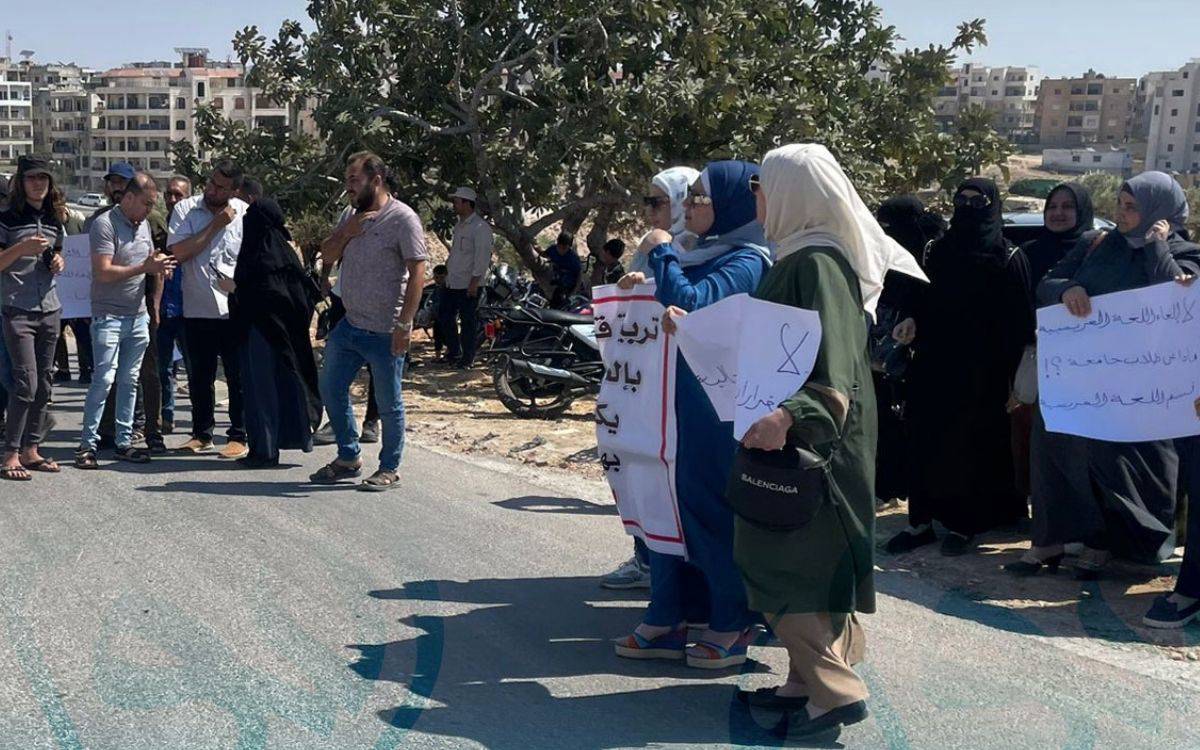
Tens of teachers working in the town of Idlib and its rural areas in Syria have gone on strike in reaction to the irregular payment of their salaries since June, and a deduction of 50% in the last two months.
According to the report of the London-based Syrian Observatory for Human Rights (SOHR), yesterday (30 December) teachers carried out a protest action in front of the İdlib Directorate of Education.
Teachers reacted to the irregular payments of monthly salaries, large deductions from salaries, and the failure to pay any salary at all during the summer period and issued a call to the government for the solution of these problems.
Teachers in Idlib are trapped between low salaries and heavy workload, and they emphasized that this rights’ struggle was not only for their own living but also for the sustainability of the entire educational system.
The teachers also stated that the ‘Syrian Salvation Government’ affiliated with Hay’at Tahrir al-Sham (HTS) was failing in coming up with lasting solutions.
According to the report of Istanbul-based Syrian opposition news agency Enab Baladi, the average salary in Idlib is around 125 US dollars (4420 TL), while the average residential rent is around 75 US dollars (2659 TL).
Salaries range according to the position, family status, experience and educational level of the employee and generally, government employees’ salaries begin at around 80 US dollars (2830 TL), with additional payments of 5 US dollars (177 TL) to the partner of the employee and 2,5 US dollars each (88,5 TL) for every child.
According to the Enab Baladi reporter in Idlib, salaries are paid to the employees’ accounts via the “Cash” application. Employees can then go to foreign currency exchange bureaus contracted to the ‘Salvation Government’ and take out their salaries in cash.
Prices in general in Northern Syria are constantly increasing, including in basic needs and food. This has led to a weakening of the general purchasing power of the public and deepened economic difficulties.
The ‘Salvation Government’ last made a 25% increase in the salaries of employees on 29 January 2023. This decision aimed to increase the income level of individuals in order to meet living conditions in the region.
The decision included both permanent staff and employees on temporary contract. All employees benefited from this increase regardless of the contract period. However, public institutions subject to certain financial systems were left out.
At the same time with the salary increase decision, the ‘Salvation Government’ also increased the number of work days from five to six, with Friday the only holiday.
(VC/NHRD)