Physical Address
Indirizzo: Via Mario Greco 60, Buttigliera Alta, 10090, Torino, Italy
Physical Address
Indirizzo: Via Mario Greco 60, Buttigliera Alta, 10090, Torino, Italy

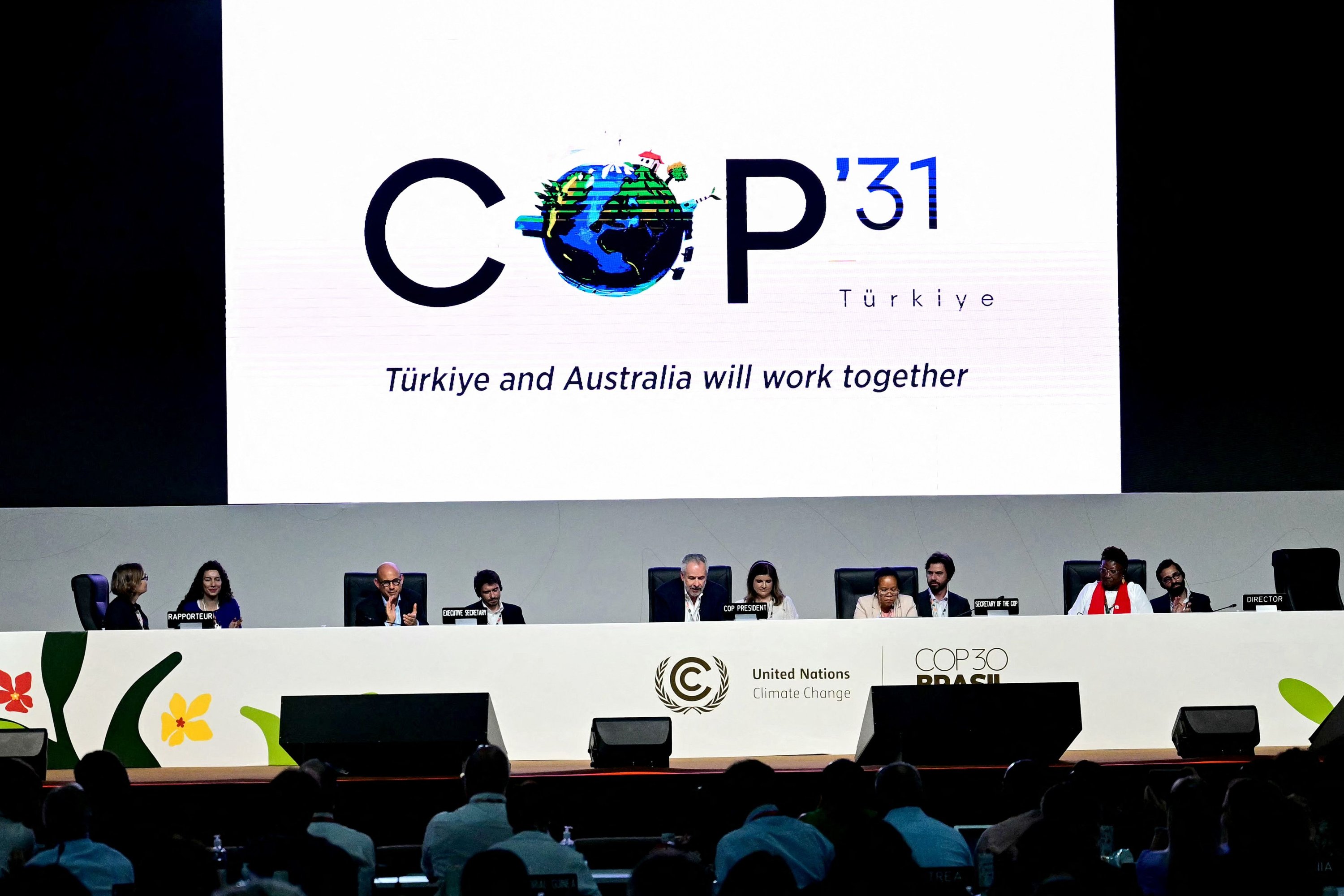
Türkiye scored another diplomatic victory this week when it beat Australia to host COP31 in 2026, an international summit on climate change. Raising its profile as a global actor, especially in conflict mediation and as a defense powerhouse, Türkiye will now give a platform to dozens of countries, especially smaller ones, seeking assistance to address the fallout of climate change.
Environment, Urban Planning and Climate Change Minister Murat Kurum led talks at COP30 in Brazil this week to negotiate the hosting duties, and a dispute with Australia was finally resolved over the weekend. Australia consented to lead negotiations among countries on cooperation to address the impacts of climate change, while Türkiye will host the official summit.
“We hope our decision will be good for all relevant parties, our region and the global climate fight,” Kurum said in a statement early Sunday as he “invited everyone to heavenly Türkiye, the intersection of humanity, continents and civilizations.”
The minister said they would give a voice to all people suffering from the impact of climate change and all victims of displacement. Kurum, on the other hand, also highlighted that their cooperation with Australia would remain steadfast in finding the most efficient solutions to humanity’s urgent needs during COP31.
He said two countries drew inspiration from their “common pains in Çanakkale,” referring to the World War I battle in Gallipoli, in the modern-day western Turkish city, that pitted defending Turks against Anzac soldiers from Australia and New Zealand. Australia and Türkiye established warm relations after the war and the collapse of the Ottoman Empire, and the relations continue to this day, with Türkiye hosting grandchildren of Anzac troops every year and paying tribute to the fallen buried near Turkish martyrs of the battle.
“Australia and Türkiye turned their common pain into cooperation and an instrument to serve humanity. I wish this big step we took with our Australian friends will set an example for humanity,” Kurum said, referring to Canberra’s decision to hand over hosting duties to Türkiye.
President Recep Tayyip Erdoğan has also praised the deal at COP31, calling it a meaningful achievement for multilateralism.
“Taking into consideration that multilateralism has in recent times lost ground, I find this agreement that we reached with Australia to be meaningful,” Erdoğan told an event at the G-20 summit in Johannesburg on Saturday evening.
Australian Prime Minister Anthony Albanese said on Sunday that his country would have “exclusive authority in relation to the negotiations,” guiding decision-making at the summit.
In a statement, Albanese said the Pacific region would host a special pre-COP meeting to bring “attention to the existential threat climate change poses to the region.” A bloc of 18 Pacific Island nations, many of which are at risk from rising seas, had backed Australia’s bid.
Two cities will host COP31. A leaders’ summit will be held in Istanbul while the main summit will be held in Antalya, the Mediterranean city that also hosts the annual International Diplomacy Forum.
Hosting a COP brings countries diplomatic, economic and environmental gains. When a nation hosts the summit, it moves to the center of global climate policy and gains significant diplomatic visibility. The tens of thousands of delegates attending the event generate substantial economic activity across the tourism, accommodation, transportation, and service sectors.
The process also accelerates green transition efforts in the host country. Renewable energy, sustainable urban development, and climate-adaptation projects are rising higher on the national agenda. As international financial institutions and climate funds increase their interest, the country gains more substantial potential to attract investment in clean energy and climate finance. Meanwhile, the host city becomes the center of climate diplomacy for two weeks, drawing global attention and boosting its international profile.
COP meetings have been held on a rotating basis across continents since 1995. Some notable hosts include Germany (Berlin) for COP1, Japan (Kyoto) for COP3 Denmark (Copenhagen) for COP15, France (Paris) for COP21, where the Paris Agreement was adopted, the United Kingdom (Glasgow) for COP26, Egypt (Sharm el-Sheikh) for COP27, the United Arab Emirates (Dubai) for COP28, Azerbaijan (Baku) for COP29 in 2024 and Brazil (Belem) for COP30 in 2025.
Hosting a COP requires large-scale organizational capacity. The host country must prepare infrastructure capable of serving more than 100,000 participants, including expansive meeting halls and media centers, as well as spaces for side events, and comprehensive security arrangements. An event of this scale also demands strong logistics and transportation planning.
The host nation is responsible for meeting United Nations security standards and implementing zero-waste practices, sustainability criteria and a carbon-neutral operations plan. Because heads of state and government attend the summit, the country must also conduct high-level diplomatic preparations and coordinate pre-negotiation meetings and technical committee sessions without disruptions.
In this sense, the host country is not only responsible for managing the logistics of a massive event but also for ensuring that global negotiations take place in a constructive environment.
For Türkiye, hosting the summit would position the country as a hub of global climate diplomacy for two weeks. The process is expected to significantly increase international interest in Türkiye in areas such as climate finance, clean energy and green technology.
Türkiye’s climate policies, emissions-reduction targets, and green transition programs would serve as a global example.
Vice President Cevdet Yılmaz said on Sunday that Türkiye’s hosting is a strong confirmation of the country’s growing influence on international platforms and its capacity to manage multilateral processes successfully.
In a post on his NSosyal account, Yılmaz said they were pleased to assume the COP31 presidency and host responsibilities following lengthy, intensive diplomatic negotiations. Yılmaz emphasized that climate change is not only an environmental issue but a shared challenge that threatens gains in many areas, from sustainable development goals to global economic stability. “During our COP31 presidency, which we will conduct in close cooperation with Australia, we aim to run a process that builds bridges between the global north and south and proceeds fairly, equitably, inclusively, with full transparency and with all parties’ views taken into account,” he said.
Yılmaz said Türkiye has placed sustainability and the green transition at the center of its development policies in line with President Recep Tayyip Erdoğan’s 2053 net-zero emissions target.
“Thanks to our investments in renewable energy, we have increased the share of renewables in total installed capacity to more than 60 percent. With the Climate Law we enacted this year, we further accelerated our transition process. We continue to take concrete steps in many areas, including energy efficiency, clean transportation, the circular economy and Zero Waste, a program successfully carried out under the patronage of First Lady Emine Erdoğan.”
Yılmaz added that Türkiye has become a constructive and influential global actor in recent years under Erdoğan’s leadership. “Hosting COP31, alongside next year’s NATO summit in our country, will further strengthen Turkey’s contribution to international cooperation and global governance,” he said.