Physical Address
Indirizzo: Via Mario Greco 60, Buttigliera Alta, 10090, Torino, Italy
Physical Address
Indirizzo: Via Mario Greco 60, Buttigliera Alta, 10090, Torino, Italy

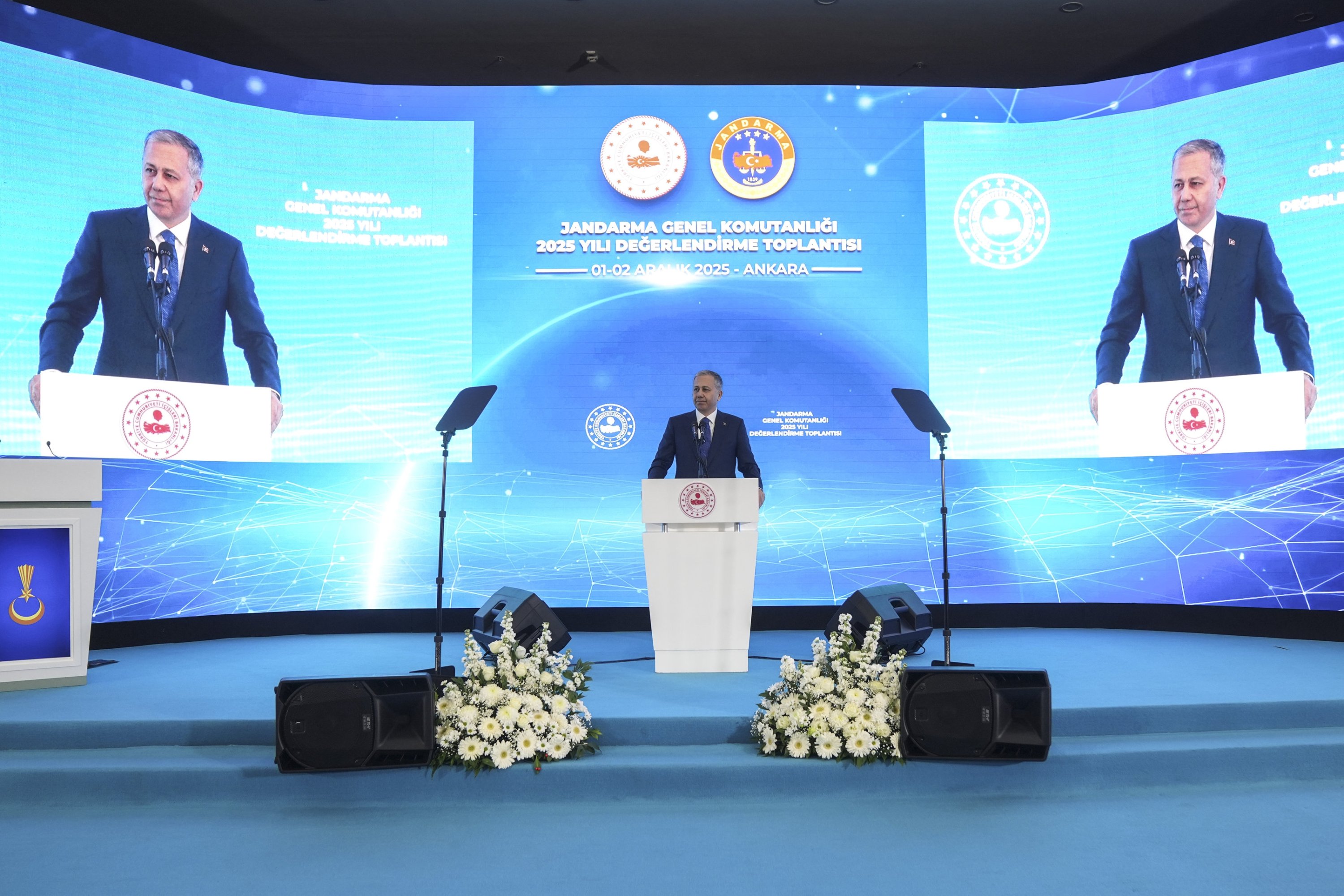
Interior Minister Ali Yerlikaya addressed the 2025 Year-End Evaluation Meeting at the Gendarmerie General Command on Monday in Ankara, presenting an in-depth overview of Türkiye’s security landscape. He emphasized the country’s progress toward the vision of a “Türkiye free of terrorism,” marking a shift from a nation overshadowed by terror to one strengthened by unity, brotherhood and prosperity.
Yerlikaya began by underscoring the historic role of the gendarmerie, an institution with 186 years of dedicated service. He reiterated its core mission to protect social cohesion, safeguard lives and property, and uphold the rule of law across every region of Türkiye. The gendarmerie, according to Yerlikaya, is the guardian of public peace and national security.
Highlighting ongoing modernization efforts, the minister noted the integration of highly qualified personnel and cutting-edge technology. Operating under the motto “Türkiye’s Peace,” the gendarmerie has waged a robust battle against terrorism, organized crime, narcotics, and cyber threats, always upholding the supremacy of law. He stressed that alongside supporting the broader goal of eradicating terrorism, the force maintains stringent control over public order.
Detailing operational achievements, Yerlikaya reported that in 2025, the gendarmerie conducted 91 field operations, 14 large-scale and 77 medium-scale, primarily focused on rural terrorist hideouts. These missions resulted in the destruction of 306 caves and shelters, seizure of 3,442 kilograms of explosives, confiscation of 403 weapons, and recovery of 45,465 rounds of ammunition. Unmanned aerial vehicles and armed drones contributed significantly, accumulating 43,193 flight hours to support surveillance and tactical operations.
A notable development was the voluntary surrender of 103 terrorist organization members, including 10 children of Diyarbakır mothers who returned from abroad, signaling success in deradicalization and reintegration efforts.
Statistical data demonstrated a positive trend in crime reduction. 10 major crimes against individuals within gendarmerie jurisdictions decreased by 10.5%, from 100,773 incidents in 2024 to 90,205 in 2025. The case clearance rate was an impressive 99.8%, underscoring effective law enforcement and judicial processing. Intentional injury and homicide rates fell by 9.1% and 6%, respectively.
Property crimes across 9 key categories declined by 20.8%, with incidents dropping from 11,381 to 9,010. Motorcycle thefts decreased sharply by 47%, and residential burglaries declined by 32%. Additionally, the rate of prosecuting and handing suspects over to justice increased from 82.6% to 89.3%. These figures reflect targeted successes in protecting citizens’ assets.
In the fight against organized crime, 328 operations dismantled an equal number of criminal groups in the first 11 months of 2025, including 241 linked to organized crime, 62 to narcotics, and 25 to cybercrime. These actions led to the arrest of 1,934 individuals.
The joint narcotics war, coordinated with the General Directorate of Security and Coast Guard Command, yielded substantial results. From January to November 2025, 4,120 suspects were arrested in narcotics-related operations in gendarmerie zones.
Authorities seized 73 tons of narcotics and over 16 million pills. The ministry deployed innovative systems, including the NARVAS alert system, Narkogöz monitoring, satellite-assisted eradication, TB2 drones, and educational programs in partnership with the Turkish Green Crescent (Yeşilay) to enhance operational capacity.
Cybercrime enforcement also intensified, with 43,040 accounts and individuals identified as engaging in cyber offenses, of which 17,121 were linked to terrorism. These efforts culminated in 1,200 arrests, reflecting a comprehensive approach to securing Türkiye’s digital environment.
Regarding traffic safety, the Interior Ministry launched the “highway gendarmerie” as a critical component of its strategic initiatives. Since Oct. 15, 2024, this unit expanded to cover 3,524 kilometers, approximately 75% of Türkiye’s highway network.
The organizational structure comprises 27 highway gendarmerie commands, 26 station commands, and three facility protection teams, totaling 56 main units. With 3,793 personnel and 731 vehicles, the force is equipped with 3,220 facial recognition-enabled body cameras and 100 domestically produced night-vision radar systems.
This initiative aims to reduce traffic fatalities by 50% by 2030 and to reach zero deaths by 2050. Inspection efforts increased substantially, with 63 million vehicles checked during the first 11 months of 2025, a 58% rise compared to the same period in 2024.
Yerlikaya further noted modernization achievements, including the addition of 9,728 new land vehicles and 35 new aircraft to the gendarmerie’s fleet. The number of body cameras surged from 4,655 to 50,000 as of Oct.31. Infrastructure development includes 393 new service buildings, 259 of which are complete, with the remainder progressing rapidly.
Concluding his remarks, Yerlikaya reaffirmed the Interior Ministry’s unwavering commitment to sustaining and enhancing the gendarmerie’s infrastructure, technological assets, and operational capacity to meet evolving security challenges.
Gendarmerie General Commander Ali Çardakcı echoed the minister’s optimism, stating that the vision of a “Türkiye free of terrorism,” promoted decisively under President Recep Tayyip Erdoğan’s leadership, has now materialized on the ground.
Çardakcı attributed this progress to the sacrifices of martyrs, valor of veterans, and relentless efforts of security personnel who have suffocated terrorist operations across Türkiye’s mountains, cities, and borders. He expressed gratitude to the defense industry for rapidly providing advanced capabilities to the forces.
He described the current security environment as one where terrorist organizations have lost their safe havens, logistical routes have collapsed, and funding sources have been cut off.
Looking ahead, Çardakcı outlined three key priorities for 2026 counterterrorism efforts: clearing areas liberated from terrorism, maintaining continuous territorial control and severing terror financing channels. These measures aim to institutionalize a permanent, peaceful and terror-free Türkiye.