Physical Address
Indirizzo: Via Mario Greco 60, Buttigliera Alta, 10090, Torino, Italy
Physical Address
Indirizzo: Via Mario Greco 60, Buttigliera Alta, 10090, Torino, Italy

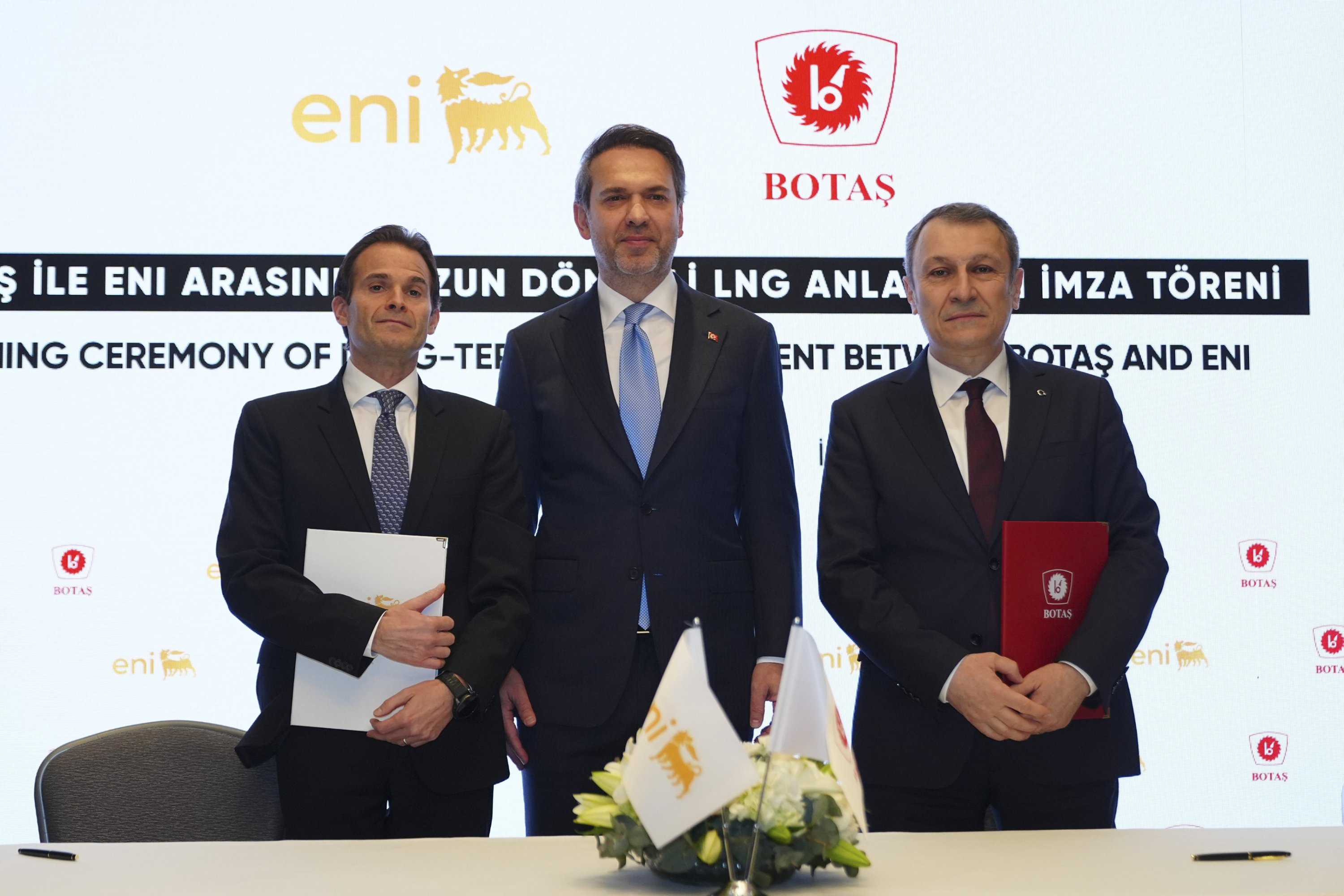
Türkiye’s state energy company BOTAŞ has signed two separate 10-year liquified natural gas (LNG) supply agreements with Germany’s state-owned SEFE and Italy’s Eni, Energy and Natural Resources Minister Alparslan Bayraktar announced on Wednesday.
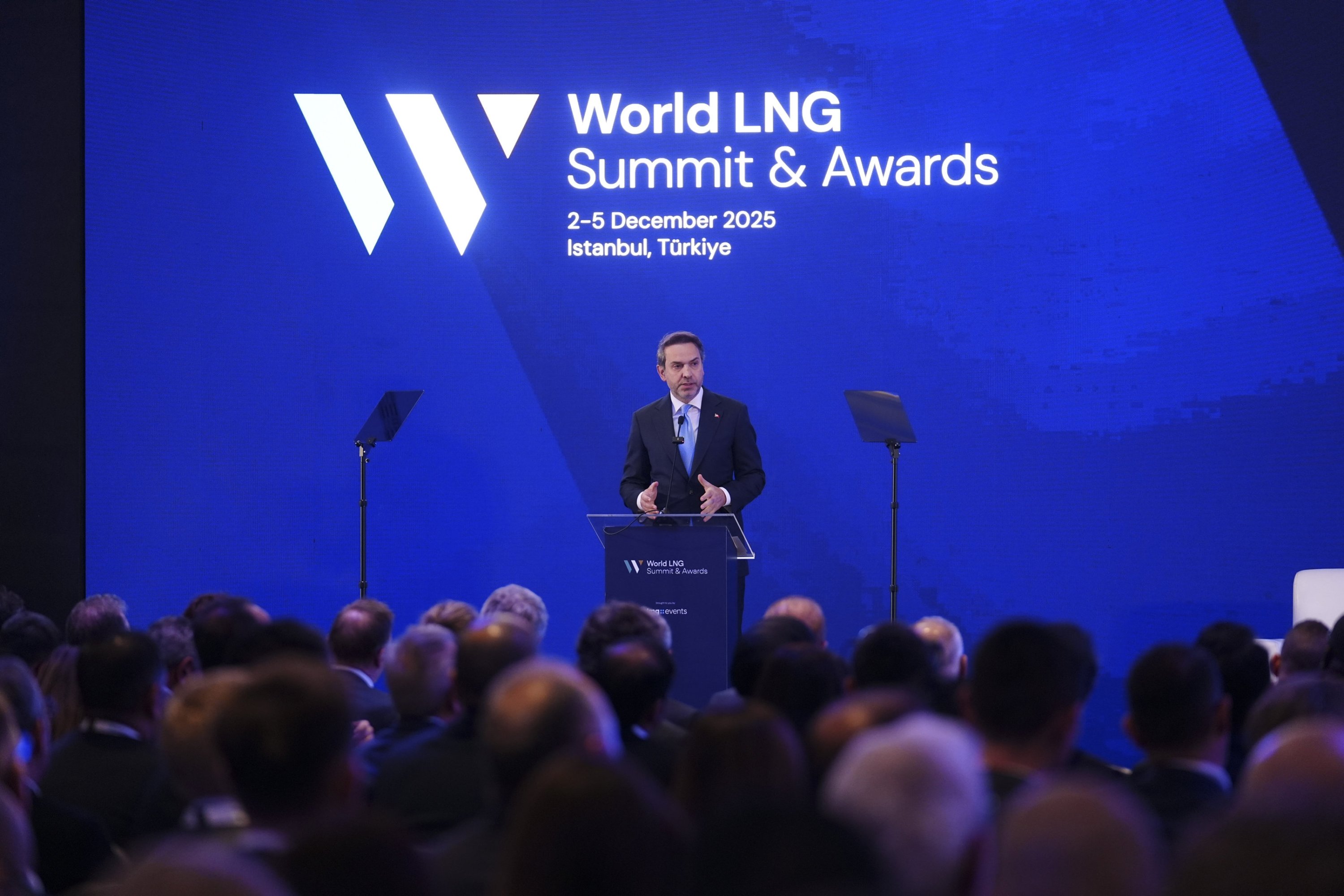
The deals, signed on the margins of the World LNG Summit in Istanbul, lift Türkiye’s total long-term liquified natural gas contracts signed this year to 106 billion cubic meters (bcm), Bayraktar said.
Under the agreement with SEFE, deliveries will start in 2028 and total around 6 bcm of gas-equivalent LNG over 10 winter seasons. The deal with Eni will also begin in 2028, with supply totaling 5 bcm of LNG over 10 winter seasons.
Including agreements signed since last September, Türkiye has now secured more than 155 bcm of long-term LNG commitments, Bayraktar said. “This is an important strategic step for the purpose of diversifying our products at more competitive prices and is an alternative to the gas we receive via pipelines,” he noted.
Türkiye has invested heavily in gas infrastructure over the past decade to diversify supply sources and strengthen energy security.
“Since 2016, we have made serious infrastructure investments to be able to benefit from the developing LNG market worldwide and to bring this flexible and more competitive gas to Türkiye,” said Bayraktar.
“We have increased the capacity of our regasification facilities fivefold.”
As a result, from 2021-2022 onward, nearly one-third of Türkiye’s gas consumption in some years has been met by LNG, the minister added. “This has been a remarkable development.”
Türkiye imported around 50 bcm of natural gas last year, including 14.3 bcm in the form of LNG. Russia is the largest pipeline gas supplier, while the U.S. is the main supplier of LNG.
Bayraktar emphasized that Türkiye is not only enhancing its own supply security but also increasingly contributing to that of its neighbors.
He highlighted new arrangements for gas sourcing from Turkmenistan, exports to Nakhchivan through the new connection line and continued deliveries of Azerbaijani gas onward to Syria via the Kilis connection.
Türkiye has reached the position of a gas exporter with its own production and diversified supply portfolio, Bayraktar said, adding that the country is also exporting gas to several European countries
Türkiye is Europe’s fourth-largest gas market with an annual consumption of around 60 bcm.
BOTAŞ now sources gas from 22 countries through 33 companies, Bayraktar said, with excess gas distributed to neighboring markets or networks.
“Even a 2%-3% decline in domestic demand creates export opportunities,” the minister noted. “For Europe, these gas volumes of 2 bcm to 3 bcm carry substantial significance.”
Türkiye currently exports pipeline gas to Bulgaria, Romania, Hungary and Greece, and supplies LNG to North Macedonia and Serbia.
“We have created an important alternative for European countries to purchase LNG through our regasification terminals,” Bayraktar said, adding that Ankara is ready to offer access to its infrastructure for LNG cargoes delivered to Türkiye.
“We can make long-term or short-term commitments to Europeans regarding the use of our infrastructure by bringing their LNG cargoes to us,” he added.
Türkiye is also expanding its international upstream portfolio, with exploration projects underway or planned in Pakistan, Libya, Iraq and Central Asia, he said.
On Tuesday, the state-owned Turkish Petroleum Corporation (TPAO) signed agreements to explore for oil and natural gas at three offshore and two onshore blocks in Pakistan as of next year.
Bayraktar said the country’s rapid expansion of LNG and storage infrastructure has transformed Türkiye into a regional hub for natural gas trade. Regasification capacity has increased fivefold and has reached 161 million cubic meters per day.
He reiterated Türkiye’s plans to scale up production from the Sakarya Gas Field in the Black Sea, estimated to contain 710 bcm of gas. The reserve was gradually discovered between 2020 and 2022. It will meet approximately 30% of the nation’s annual gas needs once the production reaches total capacity.
In mid-May, Türkiye announced the discovery of a new reserve of 75 bcm in the Black Sea.
The first phase at the Sakarya field has been completed, supplying gas sufficient for 4 million households, according to Bayraktar. The second stage is expected to double production next year, while the third phase, planned for 2028, is expected to quadruple current output.