Physical Address
Indirizzo: Via Mario Greco 60, Buttigliera Alta, 10090, Torino, Italy
Physical Address
Indirizzo: Via Mario Greco 60, Buttigliera Alta, 10090, Torino, Italy

Türkiye is evaluating various options to bolster its air power and has intensified efforts to rapidly procure advanced fighter jets from European countries and the United States as it seeks to make up ground on regional rivals such as Israel, a report said Wednesday.
NATO-member Türkiye, which has the alliance’s second-largest military, aims to leverage its best relations with the West in years to add 40 Eurofighter Typhoons warplanes, for which it inked a preliminary agreement in July, and later also U.S.-made F-35 jets, despite Washington sanctions that currently block any deal.
Strikes by Israel, the Middle East’s most advanced military with hundreds of U.S.-supplied F-15, F-16 and F-35 fighters, on Türkiye’s neighbors Iran and Syria, as well as on Lebanon and Qatar, unnerved Ankara in the last year.
These have prompted its push for rapid air power reinforcement to counter any potential threats, according to officials.
President Recep Tayyip Erdoğan has sharply criticized Israel’s relentless attacks on Gaza and elsewhere in the Middle East, and once warm relations between the two countries have sunk to new lows.
Israeli Prime Minister Benjamin Netanyahu has claimed that Türkiye’s bases, allies and support for the army in Syria posed a threat to Israel.
Greece, a largely symbolic but sensitive threat to Türkiye, is expected to receive a batch of advanced F-35s in the next three years.
In years past, jets from the two NATO states often conflicted during patrol flights above the Aegean Sea and occasionally had dogfights, and Greece has previously expressed concerns about Turkish military buildup.
For the Typhoons, Türkiye is nearing a deal with Britain and other European countries in which it would promptly receive 12 of them, albeit used, from previous buyers Qatar and Oman to meet its immediate needs, a person familiar with the matter told Reuters.
Eurofighter consortium members Britain, Germany, Italy and Spain would approve the secondhand sale proposal, in which they would provide Türkiye with 28 new jets in the coming years, pending a final purchase agreement, the person said.
Erdoğan was expected to discuss the proposal on visits to Qatar and Oman on Wednesday and Thursday, with jet numbers, pricing and timelines the main issues, Reuters and Agence-France (AFP) reported, citing sources.
Erdoğan is then expected to host British Prime Minister Keir Starmer and German Chancellor Friedrich Merz later this month, when agreements could be sealed, sources say.
A U.K. government spokesperson told Reuters that a memorandum of understanding that Britain and Türkiye signed in July paves the way “for a multibillion-pound order of up to 40 aircraft,” adding: “We look forward to agreeing the final contracting details soon.”
German Foreign Minister Johann Wadephul, who was in Ankara last week, said Berlin supported the jet purchase and later told broadcaster NTV that a deal could follow within the year.
Türkiye’s Defense Ministry said no final agreement had been reached and that talks with Britain were moving in a positive direction, adding that other consortium members backed the procurement.
Acquiring the advanced F-35s has proven trickier.
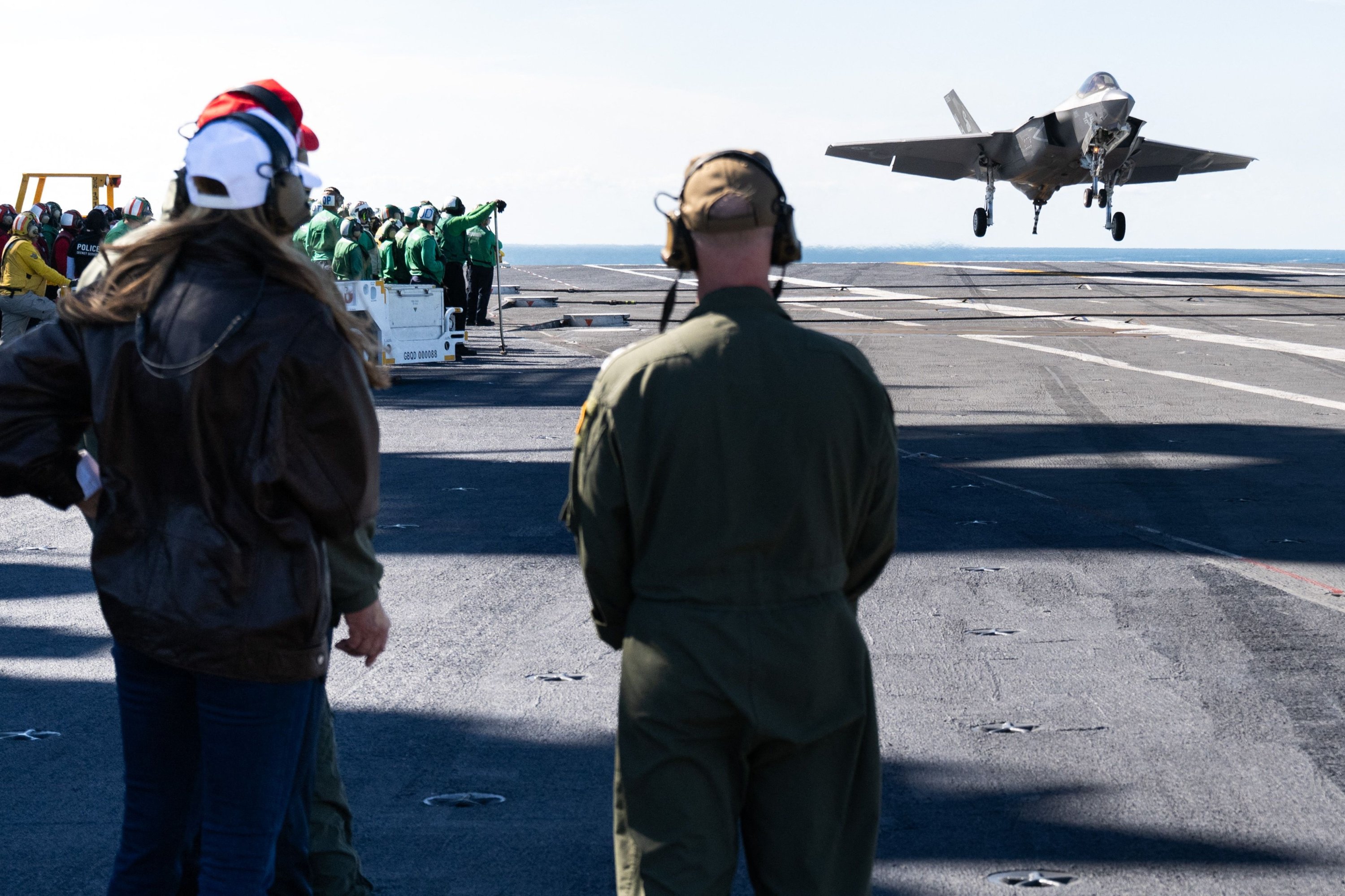
Türkiye was removed from the U.S.-led multinational program building and buying the jets in 2019, and Washington imposed Countering America’s Adversaries Through Sanctions Act (CAATSA) sanctions following its purchase of Russian-made S-400 missile defense systems.
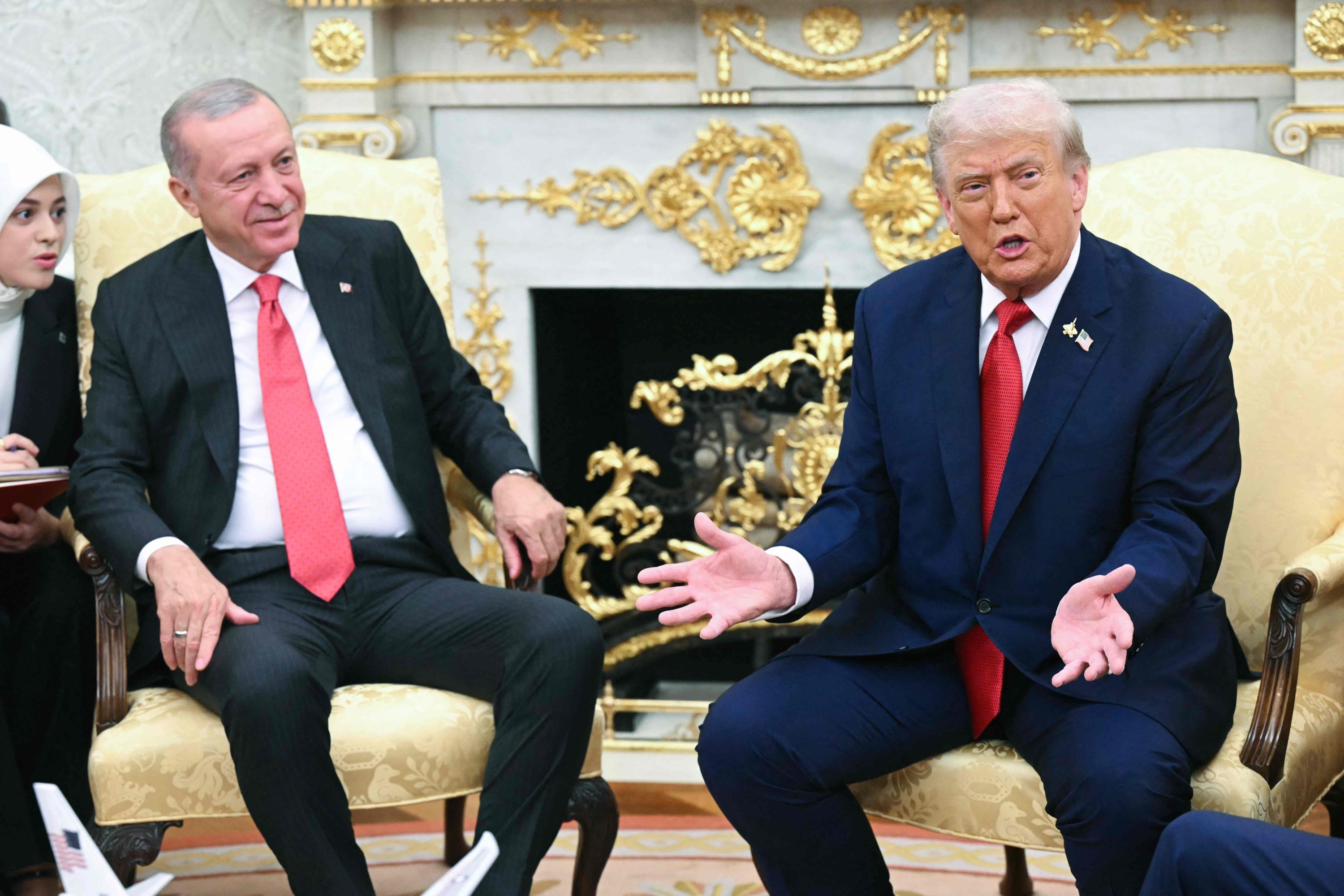
In May, Erdoğan expressed confidence that the sanctions would quickly be ended, and his meeting last month with U.S. President Donald Trump further cemented those hopes.
Washington’s Türkiye Ambassador Tom Barrack said in June that U.S. sanctions could be over by the year’s end.
Türkiye aims to capitalize on the two leaders’ good personal ties and Erdoğan’s help in sealing Trump’s Gaza cease-fire agreement to eventually reach a deal. Erdoğan previously said Trump was “well-intentioned” on delivering the fighter jets.
Separate sources have said that Ankara considered proposing a plan that could have included a U.S. presidential “waiver” to overcome the CAATSA sanctions and pave the way for an eventual resolution of the S-400 issue and F-35 purchase.
Ankara and Washington have publicly stated a desire to overcome this, saying the allies have the political will to do so.
The potential temporary waiver, if given, could help Ankara increase defense cooperation with Washington and possibly build sympathy in the U.S. Congress, the sources said.
“Both sides know that resolving CAATSA needs to be done. Whether it is a presidential waiver or a congressional decision, that is up to the United States,” Harun Armağan, vice chair of foreign affairs for Erdoğan’s ruling Justice and Development Party (AK Party), told Reuters.
“It looks awkward with all of the other diplomacy and cooperation happening at the same time.”
Türkiye’s Foreign Ministry did not respond to questions about floating a waiver to U.S. counterparts or discussions on resolving the S-400 issue. The White House did not immediately comment on whether Ankara raised a waiver option.
A State Department spokesperson said Trump recognizes Türkiye’s strategic importance and that “his administration is seeking creative solutions to all of these pending issues,” but did not elaborate further.
Asked about Türkiye’s separate agreement to buy 40 F-16s, an earlier-generation fighter jet, a U.S. source said that talks have been dogged by Turkish concerns about the price and desire to buy the more advanced F-35s instead.
Despite boasting NATO’s second-largest army, Türkiye often faced arms embargoes in the past. That pushed it to significantly boost domestic capabilities and curb foreign dependence over the last two decades.
Today, it produces a wide range of vehicles and arms types domestically, including its own drones, missiles and naval vessels. It’s also developing its own fifth-generation fighter jet.
Named Kaan, the stealth fighter is sought to replace the Air Force Command’s aging F-16 fleet, which is planned to be phased out starting in the 2030s. Its mass production is expected to start in 2028.
Kaan is also said it could be evaluated as an option to be included in the arrangement to get the Qatari Eurofighters, AFP reported.
“Türkiye has offered access to its new-generation fighter jet, the Kaan, as part of a potential technology transfer arrangement,” its source said.
So far, “no concrete progress” had been made with the negotiations still ongoing, the source added.
In 2017, Qatar placed an order for 24 Eurofighter jets, and in December, Doha reportedly said it was looking to acquire 12 more, according to several defense news outlets.
Ankara’s request might receive a lukewarm reception, according to the Turkish source, in light of Qatar’s own defense requirements following Israeli strikes on Palestinian resistance group Hamas figures in Doha last month.
Jet upgrades are part of a broader effort to strengthen layered air defenses that also includes Türkiye’s domestic “Steel Dome” project and an expansion of long-range missile coverage.