Physical Address
Indirizzo: Via Mario Greco 60, Buttigliera Alta, 10090, Torino, Italy
Physical Address
Indirizzo: Via Mario Greco 60, Buttigliera Alta, 10090, Torino, Italy

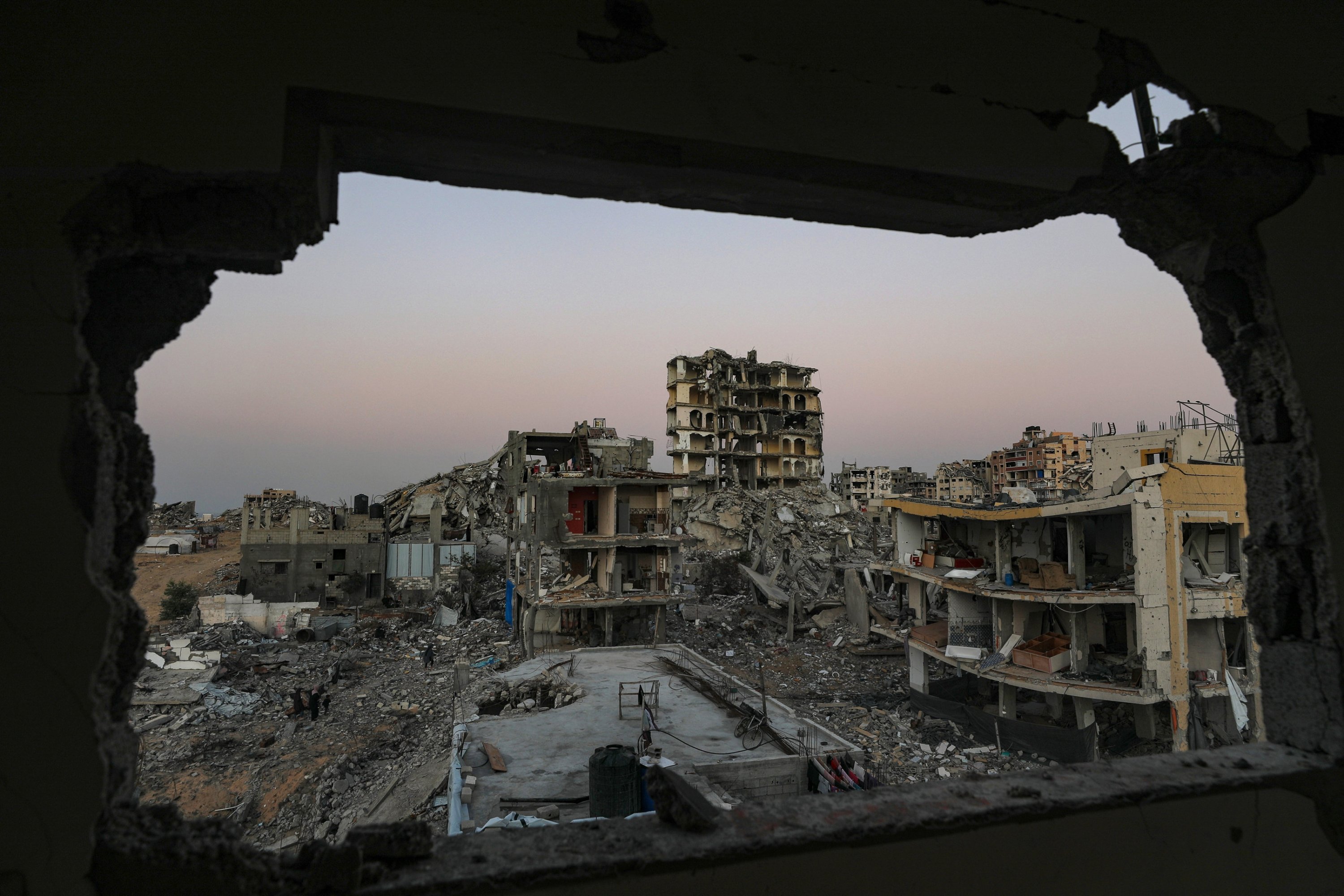
After years of heavy Israeli bombardment and high civilian casualties since Oct. 7, 2023, the cease-fire in Gaza took effect on Oct. 10, 2025, under a plan advanced by U.S President Donald Trump and accepted by both Hamas and Israel to pave the way for a new safe structure in Gaza.
Before and after the cease-fire process, Türkiye played a key role in ending the devastating humanitarian crisis in Gaza and bringing peace and stability to the Middle East. President Recep Tayyip Erdoğan, Foreign Affairs Minister Hakan Fidan and other Turkish political figures urged to make constructive steps to revive Gaza and end the Israeli aggression since the beginning of the conflict.
During his speeches, Erdoğan often reminded the international community that Türkiye is always ready to do what is required for the recovery of Gaza and enhance the living conditions of Gazan brothers and sisters, pointing out that Israel rendered 85% of Gaza unlivable because of the polluted waters, bombed buildings, schools, hospitals, mosques and destroyed gardens.
In this respect, Fidan also emphasized lately that Türkiye is ready to shoulder any responsibility and fulfill its obligations in Gaza with a strong sense of duty, if the necessary conditions arise. Referring to their role in the negotiations held in Sharm el-Sheikh to bring the cease-fire into effect, Fidan said: “Egypt, Qatar and Türkiye. Each fulfilled its part, making it possible to implement this cease-fire.”
Moreover, Defense Minister Yaşar Güler also asserted that Türkiye’s commitment to ongoing humanitarian assistance efforts and the readiness of the Turkish Armed Forces (TSK) to participate in a multinational task force to be established in Gaza, recalling Türkiye’s regional and global missions in history and the modernization of the advanced Turkish weapon systems.
On the other hand, as a global reaction to reassure the cease-fire, the U.N. Security Council last week approved the U.S plan to establish a multinational International Stabilization Force (ISF) and a Peace Council with a formal international mandate to oversee security and reconstruction. The resolution passed with 13 votes in favor and abstentions from Russia and China.
According to the decision adopted, the ISF is planned to secure Gaza’s borders, protect civilians, guarantee the flow of humanitarian assistance, train Palestinian police units and most critically, implement the disarmament of Gaza.
In this context, Hüseyin Fazla, founder and director of STRASAM and a retired air force brigadier general, noted that: “In the Gaza geopolitical landscape where, in line with the U.N. Security Council decision, the Peace Council and the 30,000-strong ISF will operate, Türkiye must play an absolutely active role in the protection of civilians, coordination of humanitarian aid and supervision of the withdrawal of Israeli soldiers reminding that Türkiye courageously declared to the world that it does not consider Hamas a terrorist group while many countries labeled as it is during since the beginning of the process.”
On the concrete steps Türkiye can take in the reconstruction of Gaza, Fazla drew attention to the most critical points that the Turkish military must act in coordination with Washington to ensure a presence in Gaza and must be included in the ISF. “There would have been no cease-fire without Türkiye. Washington sees Ankara as a strong and consistent partner in implementing the Trump Plan and reinforcing regional security,” he said, noting that the Israeli government’s objections about the presence of the Turkish military would be overcome through indirect pressure that Trump will apply on Netanyahu.
In addition, he also pointed out that “Türkiye should use the Gaza peace initiative as a tool to reassert its regional influence, under Erdoğan’s leadership,” stressing the presence of Turkish construction and aid organizations in Gaza’s territory should be strengthened; Türkiye should play a leading role in broader reconstruction efforts; and Turkish companies, institutions and financial mechanisms should be mobilized.
On the other hand, Merve Suna Özel Özcan, associate professor and the vice chair of the International Relations Department at Kırıkkale University, also drew attention to another dimension of renewal. “Türkiye should activate a broad reconstruction and rehabilitation mechanism involving TIKA, AFAD, TOKI, the Ministry of Health, the Ministry of Education, and Turkish energy companies. This mechanism would support the transfer of food, medicine and essential supplies; the management of population movements and refugee flows; and coordination with international NGOs and humanitarian organizations,” she advised.
While Hamas has been repeatedly accusing Israel of daily violations, including small-scale fire and drone overflights, the most glaring contradiction concerns humanitarian aid. Under the agreement, Israel was to authorize 600 truckloads of food, medical supplies and essential goods into Gaza daily. Yet between Oct. 10 and Nov. 6, only 4,453 trucks entered, which is less than one-third of the expected 15,600, according to figures issued by Gaza’s media office.
Regarding the global cooperation and organizational efforts that might shape in following days, Fazla asserted that Türkiye should act together with Arab and Islamic States as well as members of the Council of Europe to ensure that the U.S. continues to support the two-state solution. “Restrictions on the flow of aid to Gaza should be lifted, the ISF should be deployed to Gaza without delay, suitable conditions for a two-state structure should be created and ultimately, Palestinians should be supported in taking the right steps toward self-determination and statehood,” he added.
Fazla further offered that “Turkish companies should receive a share from the fund allocated for Gaza’s reconstruction,” and continued that they should act jointly with the leading commercial, construction and industrial firms of the countries potentially involved in Gaza, such as Saudi Arabia, the United Arab Emirates, Qatar, Egypt, etc.
“Through the Ministry of Foreign Affairs, Ankara should take the lead in establishing consortia with these countries and seek paths for cooperation,” he said, indicating that Turkish companies should be guided to take part as subcontractors in major projects likely to be won by American and European firms.
In this context, Özcan also underlined that “it is evident that Türkiye will act in coordination with numerous international organizations – particularly within the UN framework – such as the WTO, the World Health Organization and UNICEF. This collaborative structure will not only contribute to the initial stabilization of Gaza but also help lay the groundwork for a political order in which the territorial integrity and legal personality of the State of Palestine are recognized and shaped by adherence to the 1967 borders.”
Since Oct. 7, 2023, Türkiye has delivered humanitarian assistance to Gaza through 14 cargo planes and 18 ships with the contributions of institutions, nongovernmental organizations (NGOs), the support of citizens under the Disaster and Emergency Management Authority (AFAD) and Turkish Red Crescent (Kızılay) coordination, delivering food, shelter and other essential supplies to the region.
In Israel’s genocidal war, more than 67,000 Palestinians have been killed in Gaza and nearly 170,000 wounded during the war, mostly women and children, according to official figures.