Physical Address
Indirizzo: Via Mario Greco 60, Buttigliera Alta, 10090, Torino, Italy
Physical Address
Indirizzo: Via Mario Greco 60, Buttigliera Alta, 10090, Torino, Italy
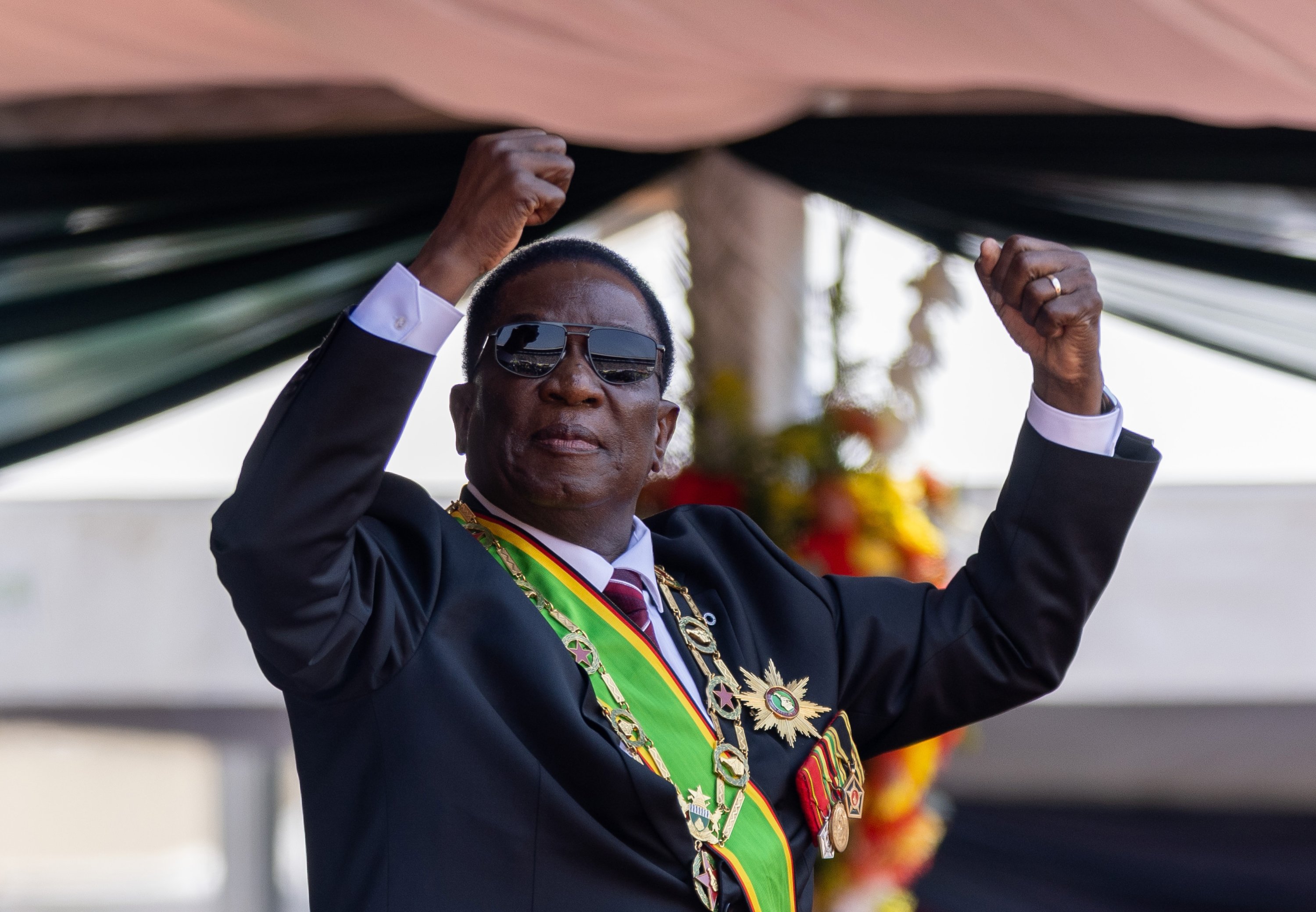
As Zimbabwe’s President Emmerson Mnangagwa assumes the chairmanship of the Southern African Development Community (SADC), Turkish businesses stand at the threshold of a unique opportunity to deepen their ties with the region.
This transition is more than a mere change in leadership; it marks a pivotal moment for economic collaboration and growth.
President Mnangagwa will take over the SADC reins from the outgoing chair, Angola’s President Joao Lourenco, during the 16-member bloc’s 44th Annual Summit on Aug. 17 in Zimbabwe’s capital, Harare.
The summit will be held under the overarching theme: “Promoting Innovation to Unlock Opportunities for Sustainable Economic Growth and Development Towards Industrialised SADC.”
The 7th SADC Industrialisation Week (SIW) will take place from July 28 to Aug. 2, 2024, at the Harare International Conference Centre (HICC). This event will feature an investment conference with a keynote address by Zimbabwe’s Vice President, Constantino Chiwenga, on July 29.
Mnangagwa will officially open the SIW on July 31.
SIW is an annual platform that fosters public-private engagement to create new opportunities for intra-African trade, develop cross-border value chains, and identify investment prospects in Southern Africa.
It gathers regional and global policymakers, investors, industrialists, and international partners to promote trade and investment in the region.
The main event will be held in a hybrid format, with official and ministerial-level meetings starting on Aug. 8.
The Organ Troika on Politics, Defense, and Security Cooperation will meet on Aug. 15 and 16, leading up to the summit attended by SADC heads of state and government.
Side events include the SADC-Arab Bank for Economic Development in Africa (BADEA) Investment Conference on Aug. 14 at the HICC and the SADC Public Lecture on August 15 at the University of Zimbabwe.
Mnangagwa will build on his predecessor’s achievements and steer the economic bloc toward industrialization, leveraging his vast experience and knowledge of regional and global dynamics, including socio-economic, political, and integration issues.
SADC is a grouping of mostly southern, eastern, and central African countries established in 1992 after the transformation of the Southern African Development Coordination Conference (SADCC), which was founded in 1980 in Lusaka, Zambia, by the Frontline States (Angola, Botswana, Lesotho, Mozambique, Swaziland, Tanzania, Zambia, and Zimbabwe).
Under the tutelage of leaders of the Frontline States, SADCC’s major goal was to effectuate complete political emancipation of all Southern African countries through aggressive international diplomacy and solidarity, including armed struggle, and to wean themselves off economic dependency on apartheid South Africa, which became the 11th SADC member in 1994 after the end of apartheid.
To that end, the Frontline States formulated a coordination mechanism to utilize each member’s comparative advantage or strengths in national endowments for mutual benefit while embracing regional integration and development.
For instance, Zimbabwe had the most viable agricultural sector and therefore ensured regional food security.
The transformation of SADCC into SADC through the SADC Treaty of 1992 shifted the goals of the bloc towards economic integration, as all member states had gained political independence.
However, SADC continued with the defense and security agenda of the Frontline States.
The fundamental objectives of SADC thus include economic development and growth, poverty alleviation, improved standards of living, and maintenance of peace and security in the region “through increased regional integration, built on democratic principles, and equitable and sustainable development.”
SADC, as one of the eight building blocs (Regional Economic Communities) of the African Union (AU), closely collaborates with other international strategic partners like Türkiye, which was granted observer status in the AU in 2015 and designated a strategic partner of the continent in 2008.
The SADC Summit of Heads of State and Government is the highest authority for overall policy direction and control over the community’s activities and functions.
SADC’s priorities include trade and market integration; industrialization; infrastructure development; regional social cohesion; human development and equality; youth development; sustenance of democratic principles and institutions; regional peace and security; and effective contribution to international matters.
Zimbabwe has a good track record in these matters.
The SADC region has untapped wealth in natural resources: pristine wildlife and nature, fertile agricultural land, and the most sought-after minerals for industrial feedstocks.
Zimbabwe aspires to achieve its Vision 2030 for an Empowered and Prosperous Upper Middle-Income Society through a series of developmental plans: National Development Strategies 1 and 2 (2021-2025, 2026-2030) that clearly explain the crafting of this year’s SADC Summit theme.
The country’s development thrust is intertwined with the SADC Industrialization Strategy and Roadmap (2015-2063) approved in Harare in 2014, SADC’s Regional Indicative Development Plan (RISDP 2020-2030), and the African Union Agenda 2063.
All these plans prioritize industrial development and market integration and place industrialization as the cog of the region’s economic agenda.
During the 34th SADC Summit in Victoria Falls in 2014, Zimbabwe initiated natural resources value addition and beneficiation-based themes, an area that the community has since focused on putting the region on course to achieve higher industrialization.
The country is making noticeable strides in value addition and beneficiation of crucial minerals and other resources, rural industrialization, development of innovation hubs, and implementation of Education 5.0.
The region will benefit from Zimbabwe’s rapid experience since 2017 when Mnangagwa assumed power.
The country will champion SADC’s development by fostering regional value chains and building synergies with like-minded international players to enhance intra-SADC trade and the region’s competitiveness.
Thus, in pursuit of region-wide industrialization, SADC can take a cue from Mnangagwa’s leadership that has steered Zimbabwe toward sustainable growth, witnessed by concrete achievements through his policies and international partnerships.
Turkish businesses with advanced mining and manufacturing technology can participate in these regional value chains to meet the needs of SADC, the African Continental Free Trade Area (AfCFTA), and global markets.
Working closely with the SADC secretariat and cooperating partners, Zimbabwe will also actively promote the region as an attractive destination for critical infrastructure development: energy (hydro, solar, and other alternative sources of smart energy and interconnectivity), regional transport corridors (railways, trunk roads and bridges, inland waterways, and one-stop border posts), ICTs (internet and rural connectivity), and the water sector (water supply, sanitation, and treatment).
As Zimbabwe takes over the front seat, it will utilize its chairmanship to champion the cause of SADC in particular and Africa in general on the global stage.
Inspired by Harare’s successes and experience through its mantra “Friend to all and Enemy to None,” SADC will become an equal, effective, and relied-upon player in the global community of nations.
Zimbabwe will utilize its rich history in peace missions across the globe to achieve the maintenance of peace, security, and stability in SADC in collaboration with the bloc’s Organ Troika on Politics, Defense, and Security Cooperation, AU Standby Force, and the SADC Brigade.
Partners like Türkiye can contribute to the efforts through training of the SADC Brigade and civilians on peace operations.
There are vast opportunities for developing mutually beneficial cooperation between Ankara and SADC at international fora such as adopting common positions on climate change, regional conflicts, and reform of the United Nations Security Council because “The World is Bigger than P5.”
In this context, Zimbabwe is contesting for a non-permanent seat in the UN Security Council for the period 2027-2028 and solicits Türkiye’s support to push forward the reform agenda.
Turkish companies have an urge to supply or manufacture agricultural and industrial equipment and machinery componentry.
The demand for equipment and machinery in SADC is on the rise as the region embarks on transnational projects as well as industrialization through the development of integrated value chains.
SADC has prioritized six clusters for regional value chains: agro-processing, mineral beneficiation and related mining operations, pharmaceuticals, consumer goods, capital goods, and services.
Companies and businesses from Türkiye have strengths in these sectors and can supply SADC with critical equipment and machinery that are tailor-made to the region’s requirements.
Leveraging the demand for their goods, products, and services in Southern Africa, the Turkish private sector should set up manufacturing hubs in SADC, taking advantage of the abundance of raw materials and a broad educated human resource base.
SADC is embracing the value addition of its critical resources, and this is the time for Turkish companies to move into the region and consolidate both downstream and upstream partnerships.
In addition, Turkish companies have access to local and international finance, and investing in regional public-private partnership projects and other sectors will be profitable.
The reputation of Turkish contractors is well documented, and SADC can facilitate their participation in regional business ventures.
Turkish companies have implemented quality infrastructure projects locally and abroad and are welcome to participate in the region’s infrastructure projects, while SADC can also benefit from skills, technology, and know-how transfer.
Zimbabwe is ready to give all its efforts in coordinating SADC regional integration programs, tackling obstacles thereto, contributing to continental decisions within the AU and AfCFTA, promoting regional peace and security, and representing the region on international and global platforms.
Building upon Harare’s engagement and re-engagement drive, the Embassy of Zimbabwe in Türkiye will provide information and network Turkish businesses with relevant authorities and local partners in Zimbabwe and the SADC region to actualize these opportunities.
In this context, Turkish and SADC businesses must forge strong strategic partnerships for mutually beneficial and sustainable development.
The Ministry of Foreign Affairs and International Trade, and the Ministry of Industry and Commerce of the Republic of Zimbabwe are the lead institutions in implementing bilateral and regional economic development and cooperation.
With Türkiye looking to enhance its diplomatic ties in Africa, Zimbabwe, with its historic and strategic leadership role in the SADC region, provides a natural gateway for Turkish businesses to explore opportunities in Southern Africa.
Türkiye’s technological expertise, combined with SADC’s rich resources, can drive sustainable industrial growth and development, benefiting both regions.
Investors should seize the moment to explore partnerships in the infrastructure, manufacturing, and resource development sectors.
Collaborative ventures can foster economic resilience and innovation, aligning with the SADC’s goals for sustainable growth.
The upcoming summit serves as a vital platform for Turkish businesses to establish and expand their presence in Southern Africa.